Get Full Government Meeting Transcripts, Videos, & Alerts Forever!
Get email alerts on the Short Term Rentals topic
No spam. Unsubscribe anytime.
Austin moves short‑term rental rules into business code; platforms to collect hotel tax beginning April 1
Summary
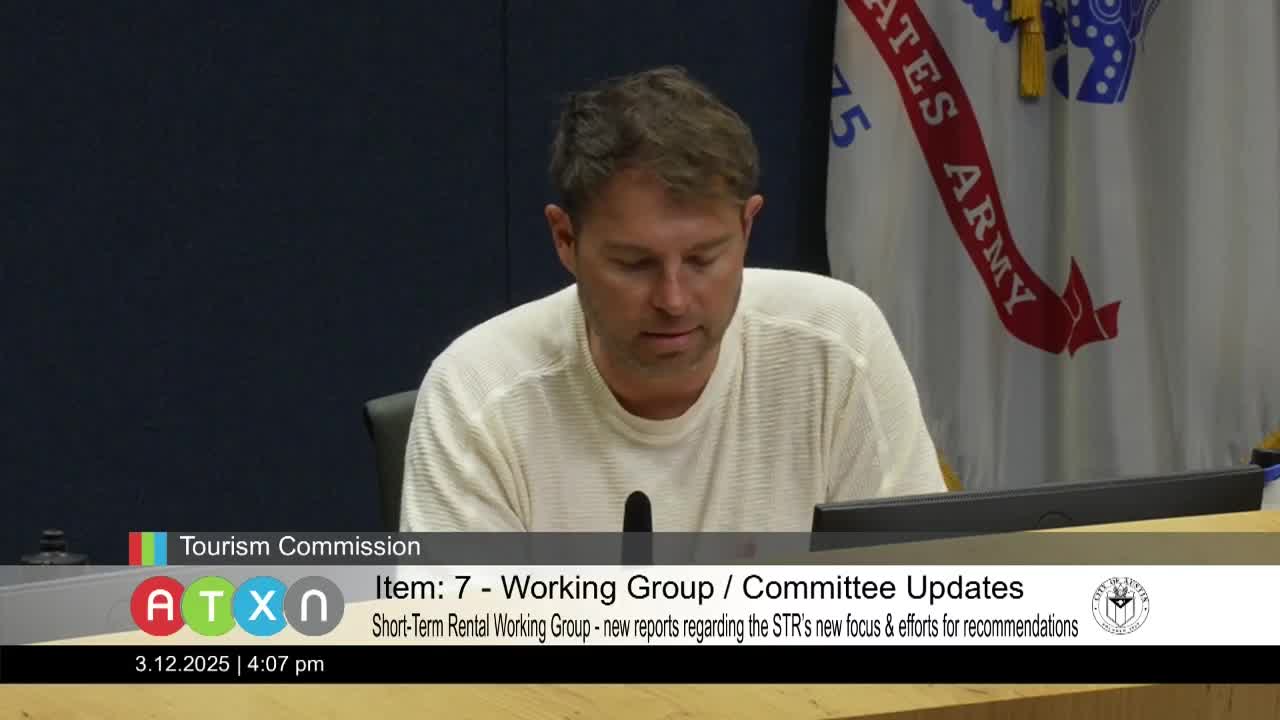
The Tourism Commission on March 12 received an STR working group update describing a shift of short‑term rental regulation into Austin’s business code and a platform tax‑collection requirement starting April 1, 2025.
The Tourism Commission received an update on short‑term rental (STR) regulation on March 12 from the STR working group, which summarized recent council action and outstanding implementation questions.
Why it matters: STR regulation affects taxable lodging inventory, enforcement, neighborhood impacts and hot tax revenues that fund tourism‑related programs. The working group and commissioners said the changes are intended to make enforcement more straightforward and improve revenue collection.
Key points presented by Commissioner Chappell, who summarized the working group’s work: - STRs will be regulated under Title 4 of the Austin City Code (business regulations) rather than the land development code. The change shifts STR oversight into a business licensing framework. - Short‑term rental platforms (for example, major listing sites) will be required to collect and remit the hotel occupancy tax on behalf of their users effective April 1, 2025. - Most new STR regulations are scheduled to go into effect Oct. 1, 2025; enforcement goals are aimed at cracking down on unlicensed operations and improving compliance. - A new spacing rule was described: a property owner cannot have a second licensed STR within 1,000 feet of an existing licensed STR (commissioner discussion cited this restriction).
The working group and commissioners noted outstanding implementation issues: city intake and licensing systems need better mapping and database capabilities, and the working group recommended the city seek geocoordinates and better license intake so future caps or area‑specific rules can be enforced. The group also said some proposed changes may be affected by actions of the 89th Texas Legislature, which could alter municipal authority over platforms.
The STR working group offered to stay engaged as the city operationalizes the new Title 4 rules to help shape reporting from platforms (for example, counts of heads and beds) and to improve enforcement and licensing intake systems.
Clarifying details: - Effective date for platform collection of hotel occupancy tax: 2025-04-01 (stated by working group summary). - Effective date for most new STR regulations and enforcement: 2025-10-01 (stated by working group summary). - New spacing rule referenced: 1,000‑foot minimum between licensed STR units (as discussed by presenters).
What happens next: Implementation will depend on city licensing system improvements and potential state legislative developments. Commissioners recommended continued oversight by the working group and requested better data reporting from platforms to support enforcement and planning.
Speakers (as listed in the meeting record): - Commissioner Chappell — STR working group update (commissioner presenter) - Felicia Burleson — Commission staff liaison (staff) - Commissioners and meeting attendees asked clarifying questions (see meeting record)
Searchable tags: short-term rentals, Title 4, hotel occupancy tax, STR enforcement