Get Full Government Meeting Transcripts, Videos, & Alerts Forever!
Get email alerts on the Pregnancy Resource Centers topic
No spam. Unsubscribe anytime.
House rejects proposal to restore funding for pregnancy resource centers and maternity homes
Summary
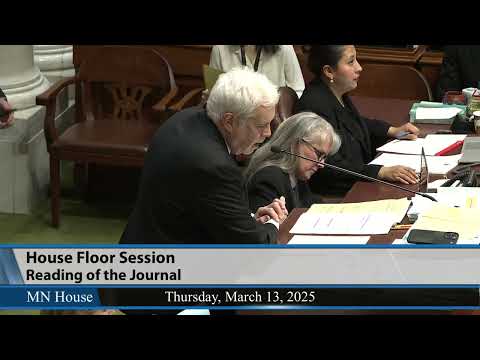
House File 25, a bill to reinstate state grants for pregnancy resource centers and maternity homes and to create conditions on record confidentiality and facility transparency, failed on final passage after a lengthy floor debate and multiple unsuccessful amendment votes; the clerk recorded 67 ayes and 65 nays and announced the bill did not pass.
House File 25, a bill to restore and fund pregnancy resource centers and maternity homes (often labeled “positive alternatives” grants), failed on the Minnesota House floor on March 12, 2025. Multiple substantive amendments were offered and rejected during the debate; the clerk recorded a final tally of 67 ayes and 65 nays and announced the bill did not pass.
Representative Mary Zalesnikar (St. Louis), the bill author, framed HF 25 as restoring a bipartisan program that existed from 2006 to 2023 and that provided housing, parenting classes, supplies and other non‑clinical supports for pregnant people who choose parenting or adoption. “Choice implies there are options,” Zalesnikar said, urging restoration of the funds.
Opponents and some amendment sponsors criticized crisis pregnancy centers for lacking medical licensing and for sometimes adopting messaging or intake procedures that can be misleading. Representative Cher Gomez described a personal experience she said involved being greeted by a woman in scrubs and given an over‑the‑counter pregnancy test at a facility that presented itself like a clinic. Representative Elyse Ryer and others cited a 2021 national analysis presented during debate that found low percentages of crisis pregnancy centers reported having an on‑site physician or registered nurse; Ryer said Minnesota figures were lower in that dataset and proposed an amendment requiring centers to disclose whether licensed medical professionals were on site.
Several amendments to HF 25 were offered and rejected on roll calls. Notable defeated amendments included:
• Amendment A5 (struck language said to limit client options) — failed (66 ayes, 67 nays). Representative Her urged members to support the amendment as a protection of choice.
• Amendment A6 (required disclosure if licensed medical professionals were not on site) — failed on roll call (66 ayes, 67 nays). Representative Ryer explained it would require clear signage at facilities that no licensed medical professional was on site if that was the case.
• Amendment A7 (renaming the measure, sponsored by Representative Gomez) — failed on roll call (66 ayes, 67 nays); Gomez said the change was intended to describe misleading practices she said she had experienced.
• Amendment A8 (grant oversight and privacy protections, sponsored by Representative Bierman) — failed on roll call (66 ayes, 67 nays); Bierman described the amendment as a first step to add health‑impact oversight and basic privacy rules.
• Amendment A9 (redirect funds to existing Sexual and Reproductive Health Services grants, sponsored by Representative Purcell) — failed on roll call (66 ayes, 67 nays); Purcell argued the SRHS program already targets comprehensive family planning services in underserved counties.
Supporters emphasized that the prior bipartisan program had helped thousands of families statewide; Representative Joe McDonald and others offered statistics from past grant cycles — including figures for diaper and crib distribution, car‑seat education and infant‑safety programs — and urged renewal of funding. Critics argued crisis pregnancy centers are unregulated, may provide misleading or religiously framed counseling, are not consistently staffed by licensed medical personnel, and should not receive taxpayer dollars without stronger oversight or clear transparency requirements.
After the roll calls on amendments and final passage, the clerk announced, “There being 67 ayes and 65 nays. The bill does not pass.”
Why it matters: The debate addressed whether public dollars should fund non‑clinical pregnancy resource centers and maternity homes and under what conditions. Supporters called the funding a pro‑choice expansion that broadens options for pregnant people; opponents said the grants risk funding organizations that lack medical oversight and may not fully inform clients of all medical options.
What’s next: The House did not pass HF 25 on March 12; proponents argued for restored funding in future proposals and fiscal negotiations.