Get Full Government Meeting Transcripts, Videos, & Alerts Forever!
Get email alerts on the Affordable Housing topic
No spam. Unsubscribe anytime.
Council backs ‘density plus’ approach to spur affordable housing south of El Camino, asks staff to study limiting single‑family redevelopment
Summary
Mountain View councilmembers directed staff to pursue a ‘density plus’ zoning approach to implement housing element programs 1.4 and 2.6 targeting sites south of El Camino Real, and asked staff to study measures that would reduce the chance those sites are redeveloped as single‑family homes.
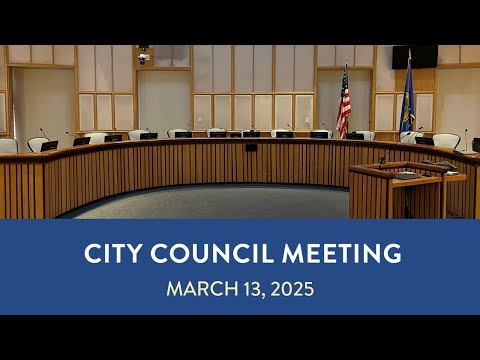
Mountain View City Council members on March 13 signaled support for a middle‑path approach to implement two housing‑element programs aimed at creating affordable housing south of El Camino Real, asking staff to pursue a “density plus” package while also studying ways to reduce the likelihood that those target sites are later redeveloped as single‑family homes.
The study session reviewed housing element programs 1.4 (encouraging affordable housing on religious and community assembly sites) and 2.6 (affirmatively furthering fair housing on commercial parcels). Principal Planner Diana Pancholi told the council that, under recent state laws such as Senate Bill 4 and SB 35, city staff had identified enough theoretical capacity on a small number of sites to meet the element’s unit targets but that local zoning adjustments could encourage more and different kinds of development.
Staff presented three implementation approaches: adopt standards that mirror state law (fastest), adopt state‑mandated density and explore relaxing objective standards (“density plus”), and a site‑specific approach that would aim for higher intensity on a few parcels (most staff time). After discussion and a straw poll, a council majority favored the density‑plus approach for program 1.4 and for program 2.6, with members also asking staff to explore (separately) mechanisms to reduce the chance the properties are converted to single‑family developments instead of producing affordable units.
Councilmembers emphasized outreach and realistic prospects for development. Pancholi and Advanced Planning Manager Eric Anderson said staff had contacted eight religious congregations south of El Camino and multiple commercial property owners; while some expressed conceptual support, none had volunteered to pursue housing on their property. Affordable‑housing developers told staff that project feasibility often depends more on total unit count (developers noted about 50 units is often needed for viability) than on marginal density changes alone. Based on an initial site‑by‑site assessment staff identified two religious sites that could, at SB 4 densities, accommodate the housing element’s 65‑unit target for program 1.4, and two commercial parking areas (behind a 99 Ranch and behind Nob Hill) that could accommodate at least about 50 units under existing entitlements for program 2.6.
Councilmembers pressed staff about outreach strategy, whether the work should be limited to the South of El Camino area (the housing element focus) or broadened citywide, and the time impacts of the different approaches. Staff said option 1 could be implemented most quickly (roughly six months), option 2 would take longer (eight to 12 months), and option 3 would be the most time‑intensive. Staff also said the state’s SB 4 and other streamlining laws already make headway on implementing program 1.4 but that the council could take local steps to encourage earlier or different outcomes.
Council direction included: pursue the density‑plus approach for the South of El Camino programs, staff to analyze ways to discourage single‑family redevelopment of targeted sites, and (by majority) explore a “density plus plus” or higher‑density variant to see what additional options would look like. Staff will incorporate the council’s direction into draft zoning amendments and return with draft ordinance language for formal adoption.
Staff said they would continue to report to the state Department of Housing and Community Development on progress; the housing element called for zoning amendments by Dec. 31, 2024, a deadline staff said was missed but where state law changes (e.g., SB 4) have partially advanced the local objectives.
Why it matters: The council’s direction affects a small number of properties in an area the housing element designates as a priority for “high‑opportunity” affordable housing. The choice to pursue a city‑crafted density and standards package, rather than relying entirely on state law, commits staff time to design local incentives and regulatory changes that could shape how — and whether — affordable units are actually built on underutilized church and commercial sites.
What comes next: Staff will prepare draft ordinance language reflecting the preferred approach, continue targeted outreach to congregations and property owners, and return to the council with specific zoning amendments and implementation materials for formal consideration.