Get Full Government Meeting Transcripts, Videos, & Alerts Forever!
Get email alerts on the Un Global Updates topic
No spam. Unsubscribe anytime.
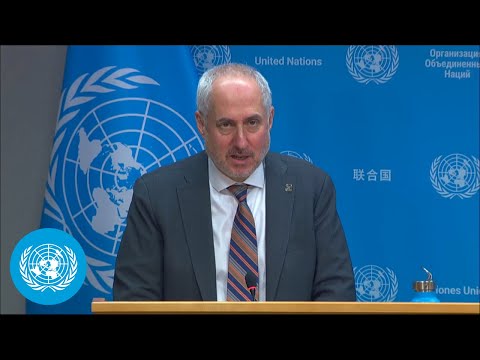
UN spokesperson outlines Secretary‑General’s Bangladesh visit and issues urgent appeals on Haiti, Sudan, Gaza and other crises
Summary
At a United Nations press briefing, a UN spokesperson summarized the Secretary‑General’s Ramadan solidarity visit to Bangladesh and issued appeals for expanded humanitarian funding and access amid escalating crises in Haiti, Sudan, Gaza and elsewhere.
The UN spokesperson said the Secretary‑General has arrived in Dhaka, Bangladesh, for a Ramadan solidarity visit and will travel to Cox’s Bazar to meet Rohingya refugees and host communities, and will share an iftar with refugees.
The spokesperson summarized a string of UN statements and operational warnings about multiple humanitarian emergencies and political developments, and called on the international community to increase funding and restore access for aid operations.
The Secretary‑General’s visit to Bangladesh will include meetings with the country’s chief adviser and civil society, the spokesperson said, and is intended to highlight the needs of Rohingya refugees who were forcibly displaced from Myanmar and of Bangladesh communities hosting them.
On Syria, the spokesperson repeated the UN response to a constitutional declaration by the caretaker authorities, saying the UN special envoy welcomed moves that could help “restore the rule of law” but added that “proper implementation will be key.” The briefing recited the Secretary‑General’s statement that the Syrian people’s calls for freedom and dignity remain and that “we stand with the Syrian people towards the promise of a better Syria for all Syrians.”
The spokesperson welcomed a treaty signed in Bishkek that sets the official border between the Kyrgyz Republic and the Republic of Tajikistan and said the Secretary‑General “warmly welcomes the signing of the treaty” and urged continued engagement between the two countries to foster neighborly relations.
Turning to humanitarian crises, the briefing highlighted sharply rising displacement and funding shortfalls in Haiti, saying more than 40,000 people were displaced in the Port‑au‑Prince metropolitan area between Feb. 14 and March 5 and that the UN‑led $908,000,000 humanitarian response plan for Haiti is only about 5% funded, with roughly $46.5 million received. The spokesperson said camps are overcrowded, some lack basic latrines and at least one displacement site was struck by stray bullets, causing at least one death.
On Sudan, the UN relayed UNICEF warnings that nearly two‑thirds of the country — more than 30 million people — will require humanitarian assistance this year and that roughly 16 million of them are children. The spokesperson said funding shortages have forced the closure of more than 70% of about 1,400 community kitchens, and described Zamzam Camp in North Darfur as hosting an estimated 500,000 displaced people where severe food shortages and shortages of therapeutic medicines have driven rising malnutrition.
The briefing warned that the continued closure of cargo crossings into Gaza is constraining the UN and partners’ ability to deliver essential food, water and sanitation supplies; partners have reduced food rations and limited access to two main landfills, heightening public‑health risks, the spokesperson said. UN teams are distributing mattresses, tarps, blankets and other relief items and assessing shelter and school needs.
On the occupied West Bank the spokesperson said recent military operations damaged health facilities and other infrastructure; the World Health Organization had verified damage to 54 health centers in the West Bank since January, with several centers closed and civilians affected by water contamination and shortages.
Other points briefed to reporters included a UN envoy’s meetings in Riyadh about Yemen, concern about developments in Bosnia and Herzegovina, monitoring of tensions in Tigray, Ethiopia, and a sharp rise in measles cases in the WHO European region. The spokesperson also announced that applications are open for the Dag Hammarskjöld Fund for Journalism Fellowship (deadline April 30) and took questions about a reported U.S. questionnaire sent to some UN agencies asking about links to certain political parties; the spokesperson said several agencies had received such questionnaires but that the UN did not have a comprehensive list and would follow up.
Throughout the briefing the spokesperson repeatedly urged greater funding and unimpeded humanitarian access, saying, “The people of Haiti need more resources, and they need them now,” and calling for immediate de‑escalation in conflict zones to allow civilians to reach lifesaving assistance.
No formal UN decisions, votes or new mandates were announced during the briefing; the session provided statements of position, operational updates and appeals for funding and access.