Get Full Government Meeting Transcripts, Videos, & Alerts Forever!
Get email alerts on the Education Legislation topic
No spam. Unsubscribe anytime.
District official outlines major education bills headed to governor's desk, including 'ACCESS' omnibus
Summary
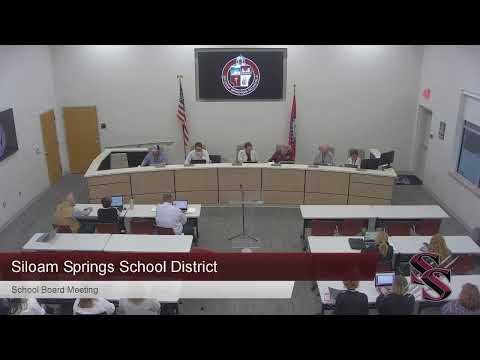
Shane Patrick, a district administrator, gave a legislative briefing to the Siloam Springs School District Board summarizing several state bills that would affect K–12 funding, concurrent credit costs, school breakfast reimbursement, athletic transfer rules and oath-of-office procedures for school board members.
Shane Patrick, a district administrator, told the Siloam Springs School District Board that the current legislative session includes “189 bills filed that have something to do with education,” and highlighted several measures the district is tracking.
Patrick said the largest package is Senate Bill 246, the governor’s ACCESS proposal — an omnibus 122‑page measure (with later amendments) that he said is often described as a higher education bill but that “over half of the bill pertains to K‑12 education.” He described ACCESS as covering acceleration, common sense, cost, scholarship and standardization, and said the district had met with state officials to request and obtain some amendments.
Patrick outlined provisions he said will directly affect local districts: a broadened definition of “acceleration” that promotes earlier exposure to career and technical education and concurrent credit; a district obligation to pay college tuition and fees for students taking concurrent credit unless another bill provides funding; and a move toward standardized course codes across Arkansas institutions so credits transfer more smoothly.
He also summarized several other bills: Senate Bill 59, which he said would provide free breakfast for all students by having the state pick up reimbursements for students who do not already qualify for free or reduced-price meals; House Bill 1633, which he said would standardize athletic transfer rules statewide and set the transfer cutoff at the start of 10th grade for both public and private students; and a proposal that would change the administrative responsibility for administering the oath of office for newly elected school board members from county clerks to the elected officials themselves.
Patrick cautioned that several provisions in the ACCESS bill would be new costs for districts unless companion funding bills pass; for example, he said, “Currently, we are kids that do concurrent credit. Our parents are paying for whatever the college fees that are tied to that... Under this bill, the school district is gonna have to take that on.” He also noted that the bill includes caps on what community colleges may charge districts, which he said “is still gonna be expensive, but it's a great opportunity.”
Patrick said some measures were already on the governor’s desk and that lawmakers were likely to be in session several more weeks. He called the session “a work in progress” and said district staff will continue to monitor and provide feedback.
No action was taken by the board on any of the bills during the meeting; Patrick presented the information as an update.