Planning official outlines dozens of recent state land-use changes, warns cities to update codes
Loading...
Summary
A planning official told the Kaysville City Planning Commission on March 13 that the 2025 Utah Legislature adopted numerous detailed land-use provisions that will require cities to revise codes and plans.
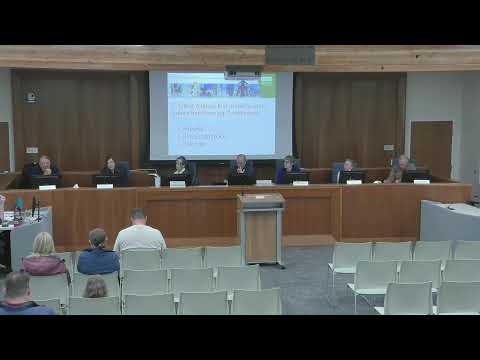
KAYSVILLE, Utah — A planning official who represents local planners briefed the Kaysville City Planning Commission on March 13 about an extensive set of land-use changes passed this legislative session and urged local staff and elected officials to review and update city codes and plans.
The presenter, who said he has served as legislative chair of the American Planning Association’s Utah chapter for many years, described the state Land Use, Development, and Management Act (LUDMA) as having grown substantially and said the recent session added several hundred lines and many detailed requirements that local governments must interpret and implement.
Why it matters: the changes affect multiple routine planning processes — general plans, subdivision administration, appeals, parking standards and more — and in several cases require cities to add new provisions or perform new analyses. The presenter emphasized that staff time and legal review will be necessary to bring local ordinances into compliance.
Key points reported to the commission: - Connectivity requirement: by July 1, 2027 each community’s transportation element must include a consideration of connectivity. The requirement extends beyond isolated cases to generally require an assessment of incomplete street networks, cost estimates, funding sources and impediments to construction. - Energy development zones and Utah Energy Council: the legislature created an entity called the Utah Energy Council and authorized designated electrical energy development zones. State land-use entities and some statewide authorities can propose those zones; proposals must demonstrate consistency with land-use plans and regulations and are subject to review by the new council. - State higher education property designations: trustees of state universities may designate areas for development on campus properties after a public hearing; the presenter said those processes may proceed with limited required local coordination beyond the hearing and trustee response. - Moderate-income housing options: the law now offers multiple options (transit-oriented, density options, other zone tools) that can be counted toward state-mandated housing plan compliance; the presenter said the result is complex and will require close reading to determine how local plans can take credit. - Appeals and variances: the state code now precludes public hearings for administrative appeals and variances, reflecting the quasi-judicial nature of those proceedings. - Process for unlisted or "similar" uses: a new statutory process requires local codes to establish criteria and timelines to determine whether a proposed business or use is similar to allowed uses; the presenter said the statutory language appears to permit the legislative body to make case-by-case determinations that function like use variances. - Parking and related standards: the state now specifies parking stall dimensions and counts that must be recognized for certain housing types; tandem spaces and garage spaces are counted under the state standard defined in statute. - Landscaping and certificates of occupancy: communities may no longer withhold a certificate of occupancy solely because landscaping is not yet installed; state code includes procedures for releasing bonds and for allowing occupancy where essential public-safety infrastructure (e.g., emergency access, hydrants) is available. - Other topics: new rules on stormwater controls, billboard relocation tied to highway construction, expanded rights for gravel operations in jurisdictions with pits, and a provision to allow certain certified-threat individuals to make property modifications limited only to building and fire code compliance (not land-use standards).
The presenter noted several items that drew discussion or concern from planners elsewhere, including language that could permit the legislative body to grant uses that are not listed in a zone (a form of use variance), and the practical burden of implementing highly detailed general plan requirements that now require cost estimates and funding strategies.
What city staff will do: the presenter said staff will need to identify which local ordinances must change, update processes and public-notice templates, and allocate staff time or legal review to ensure compliance. The presenter also observed that planners will be in demand because of the volume of implementing work.
Speakers and attributions in the meeting record include the presenter (legislative chair, American Planning Association Utah chapter), Melinda (staff), Chair Packer and several commissioners who asked clarifying questions. Direct quotes are taken from the meeting transcript.