Get Full Government Meeting Transcripts, Videos, & Alerts Forever!
Get email alerts on the Water And Wastewater Rates topic
No spam. Unsubscribe anytime.
Rio Rancho leaders advance water-rate changes amid public concern over aquifer injection
Summary
The Rio Rancho governing body approved first reading of a water and wastewater rate adjustment after staff presented a five‑year funding plan; public speakers and councilors raised concerns about aquifer injection, long‑term water supply and conservation investments.
The Rio Rancho governing body on first reading approved a proposed multi-year adjustment to water, wastewater and water-rights rates as staff said the increases are needed to maintain and operate the city's utilities and preserve system reliability.
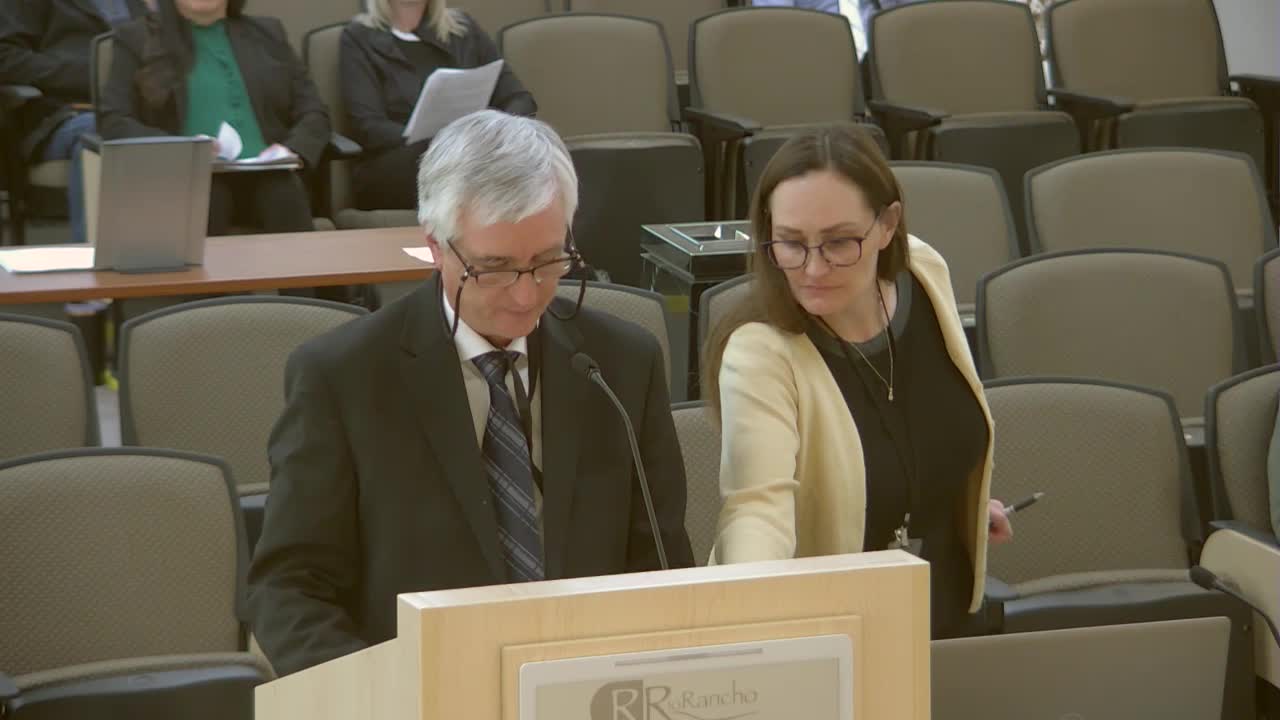
The proposed ordinance would establish a 3% adjustment to water, wastewater and water-rights rates for the multiyear period presented by staff, and a 5% increase for the bulk fill station. Director Isaac Gallegos told the council the adjustments follow a rate study conducted with consultant Water Works and are intended to provide revenue for operations and capital needs over the next five years. "The rates before you will ensure that the utilities will have the revenue required to maintain and operate a reliable and safe water wastewater system, over the next 5 year period," Gallegos said.
The issue drew public comment and discussion. Steve Van Horn, a Rio Rancho resident and former chair of the Utilities Commission, warned the council that refreshing the aquifer by injecting treated effluent carries high cost and potential risks. "Refreshing the aquifer by injection of treated sewer water is very costly and has the highest risk of negative effects on the aquifer," Van Horn said, adding that many hydrologic projections show less available water over coming decades. Van Horn asked the council to pursue broader public discussion of the injection program and its long-term consequences for ratepayers.
At the start of the meeting, public forum speaker David Starr raised broader concerns about water availability and urged the city to study sustainable living plans and regional water strategies. Council members and the mayor responded by pointing to investments and conservation measures the city has taken. Councilor Lindentine said Rio Rancho "is leading the state in water innovation and sustainability," citing aquifer injection, arsenic treatment and system investments; she urged residents to consult the city's water reports for details. Mayor Gregg Hall also noted extensive work with the state engineer and regional partners to manage supply and downstream impacts.
Action and next steps: The governing body voted in favor of the ordinance on first reading; the transcript records assent votes for Councilor List, Councilor Weimer, Councilor Dapson, Councilor Linnentine and Mayor Hall. The ordinance will return for a second reading at a subsequent meeting before any rate changes take effect. Staff told the council it stands ready to answer follow-up questions and provide the underlying rate-study materials used to recommend the adjustments.
Why it matters: The rate changes are intended to fund operations and planned capital projects for water and wastewater infrastructure. Public commenters framed the vote within broader regional concerns about long-term aquifer health and the costs and risks of managed aquifer recharge by injection. Councilors emphasized both conservation gains the city reports and the need for ongoing public outreach about technical decisions.
The city's presentation and the public comments focused on financial and technical trade-offs; no final policy beyond the first reading was adopted at the meeting.