Get Full Government Meeting Transcripts, Videos, & Alerts Forever!
Get email alerts on the Appointments topic
No spam. Unsubscribe anytime.
Lynnwood council debates vetting, re-interviews as vacancy deadline nears
Summary
At a March 13 special business meeting, the Lynnwood City Council discussed next steps after a councilappointee withdrew, debating whether to re-interview the top four candidates, expand the candidate pool, or run expedited vetting before a 90-day appointment deadline on April 5.
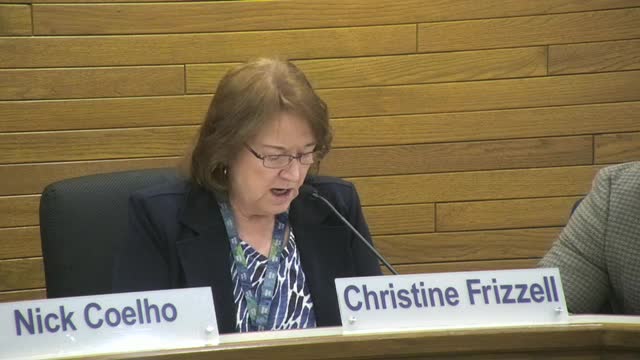
Mayor Christine Frizzell called a special business meeting Thursday, March 13, to address the council vacancy created earlier this year and to set next steps after an applicant withdrew from consideration.
The council is operating against a statutory calendar: “we had 90 days from the date that the the council position was vacated, and that 90 days is April 5,” Mayor Frizzell said. The meeting focused on whether to (a) proceed with the four remaining vetted candidates, (b) re-interview those four with new questions, or (c) bring in four additional candidates from the ranked pool.
Council President Patrick Coelho presented three options to members, calling them “Plan A, Plan B, and Plan C,” and asked colleagues whether to expand the candidate pool or proceed with additional vetting of the top four. Coelho said he heard “a broad consensus that we do not wanna bring in new candidates into this process,” and proposed revisiting a second round of interviews for the current top four.
Council Member John Decker argued against changing the selection rules midstream: “This is the same rules that we've used previously. There's no reason to be changing the rules at this point,” he said, and urged the council to stick with the applicants who had already been scored and scheduled for interviews.
Other members urged more vetting before any additional interviews. Decker and others asked the mayor to secure a rapid, objective check of candidates’ public records and social media. “Anything more than what was done last time will be a huge improvement,” Decker said, while acknowledging the council did not have time for a full, multiweek background investigation.
Council Member Amber Hurst agreed that social media checks should be part of vetting but said formal background checks for elected positions are uncommon. “Background checks are not done on any candidate,” Hurst said, but added that “social media has changed the whole thing” and that quicker vetting steps might be possible.
The city attorney briefed the council on legal constraints and deadlines. The attorney said state law gives local governments broad discretion in filling vacancies but reminded the council that the 90-day limit is the most significant constraint: “It is entirely up to you as long as the OPMA is complied with and you're meeting that deadline,” the city attorney said. The attorney also noted staff expects some forms of public-safety or criminal-history checks to be faster than comprehensive employment-style investigations.
Council Member Maria Bridal advocated offering four additional ranked applicants a chance if members did not want to proceed solely with the remaining four. Bridal said expanding the pool would give “more community members a chance to come up here and advocate for themselves,” but she signaled willingness to accept the council’s consensus if members preferred not to expand the list.
Several members said they wanted staff to contact the four remaining candidates—identified in the meeting as Naus Laskari, Robert Lutweiler, Boris Baum and Chelsea Wright—to confirm whether they still want to be considered and to determine what vetting could be completed within the time available. Coelho and others asked the mayor to report back at the council’s next regular meeting on Monday with options, timelines and costs for expedited checks.
Council Member Juan Escamilla said he had heard public interest in reopening the larger ranked pool but acknowledged the practical drawbacks: “I do wonder because I'm not a mathematician, if with the 4, we end up in the same scenario again of the ties and the ties and the ties.”
Council members repeatedly emphasized fairness and consistency in the process. Several speakers said they did not want to change written procedures in the middle of the selection and urged any additional vetting to be applied equally to all remaining candidates. Council Member Decker suggested that if the earlier tie-breaking process left one candidate with the most council support, that candidate should be offered the position if vetting turns up no new disqualifying information.
No formal vote was taken at the March 13 special business meeting. The council agreed to pause further action and asked the mayor to return with more information about what vetting can be completed quickly, how much it would cost, and to confirm whether the four remaining candidates remain willing to serve. The meeting closed with the mayor saying she would bring the information back at the next meeting so the council can decide whether to re-interview the top four or take another path before the April 5 deadline.
Next steps: the council expects a follow-up at its next business meeting to decide whether to re-interview the top four, expand the candidate pool, or proceed to appointment, after receiving details on expedited vetting and candidate availability.