Get Full Government Meeting Transcripts, Videos, & Alerts Forever!
Get email alerts on the Native Prairie Forest Restoration topic
No spam. Unsubscribe anytime.
Local conservationist outlines post‑oak restoration plan for Flower Mound, urges organized acorn collection
Summary
Environmental commission member Alton Bowman presented to the Flower Mound Historical Commission on post‑oak forest decline and restoration, describing seed‑collection methods, threats from pests and mistletoe, and how tree mitigation funds could support replanting.
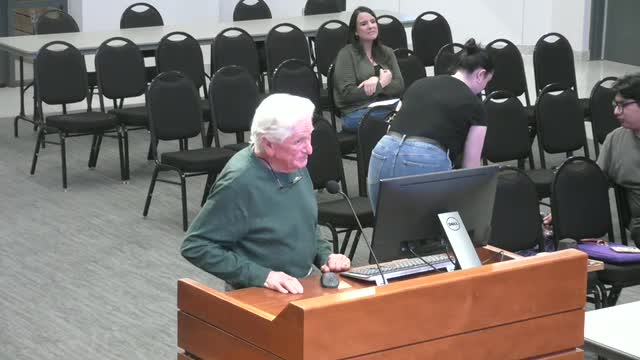
Alton Bowman told the Flower Mound Historical Commission that the town’s post‑oak habitat is a remnant of a much larger Cross Timbers forest and urged an organized restoration effort built around local acorn collection and planting.
Bowman described the ecological value of post oaks — each mature tree can produce thousands of acorns and can host hundreds of insect species that in turn feed songbirds. “If we lose 20% of our trees, we also lose 20% of our insects, and then we've lost 20% of our birds,” Bowman said.
He outlined an informal restoration method the commission’s volunteers have tested: collecting acorns in the fall, using a float test to discard bad seed, refrigerating the good acorns in sawdust for stratification, and planting in winter so the taproot establishes. Bowman said volunteers had gathered thousands of acorns and propagated starter plants in experimental plots.
Bowman also described biological constraints and pests. He noted that acorn weevils can consume a large share of dropped acorns and that mistletoe infestations on post oaks must be removed mechanically. Asked how to mitigate mistletoe on trees on public land, Bowman said the town’s crews “will go up there and just physically cut them out,” adding that birds spread mistletoe seeds.
On policy, Bowman said Flower Mound’s tree ordinance requires mitigation when trees are removed, and that mitigation funds currently provide some resources for restoration; he cautioned, however, that post oaks are not widely available at nurseries and that restoring a forest will take decades of planting and care.
Commissioners discussed protective measures for young plantings, such as chicken‑wire guards against browsing, and local volunteers offered to host seed‑sorting and grafting days. Bowman offered to distribute starter plants to commissioners for neighborhood planting next season.