Get Full Government Meeting Transcripts, Videos, & Alerts Forever!
Get email alerts on the Energy Affordability topic
No spam. Unsubscribe anytime.
CPUC presents energy-affordability report highlighting rooftop solar and wildfire costs as major drivers of rising rates
Summary
Rachel Peterson, CPUC executive director, told the Senate subcommittee the two largest drivers of electric rates are rooftop solar tariff structures and wildfire-related costs; the commission proposed options including repurposing the climate credit and seeking non-ratepayer funding sources.
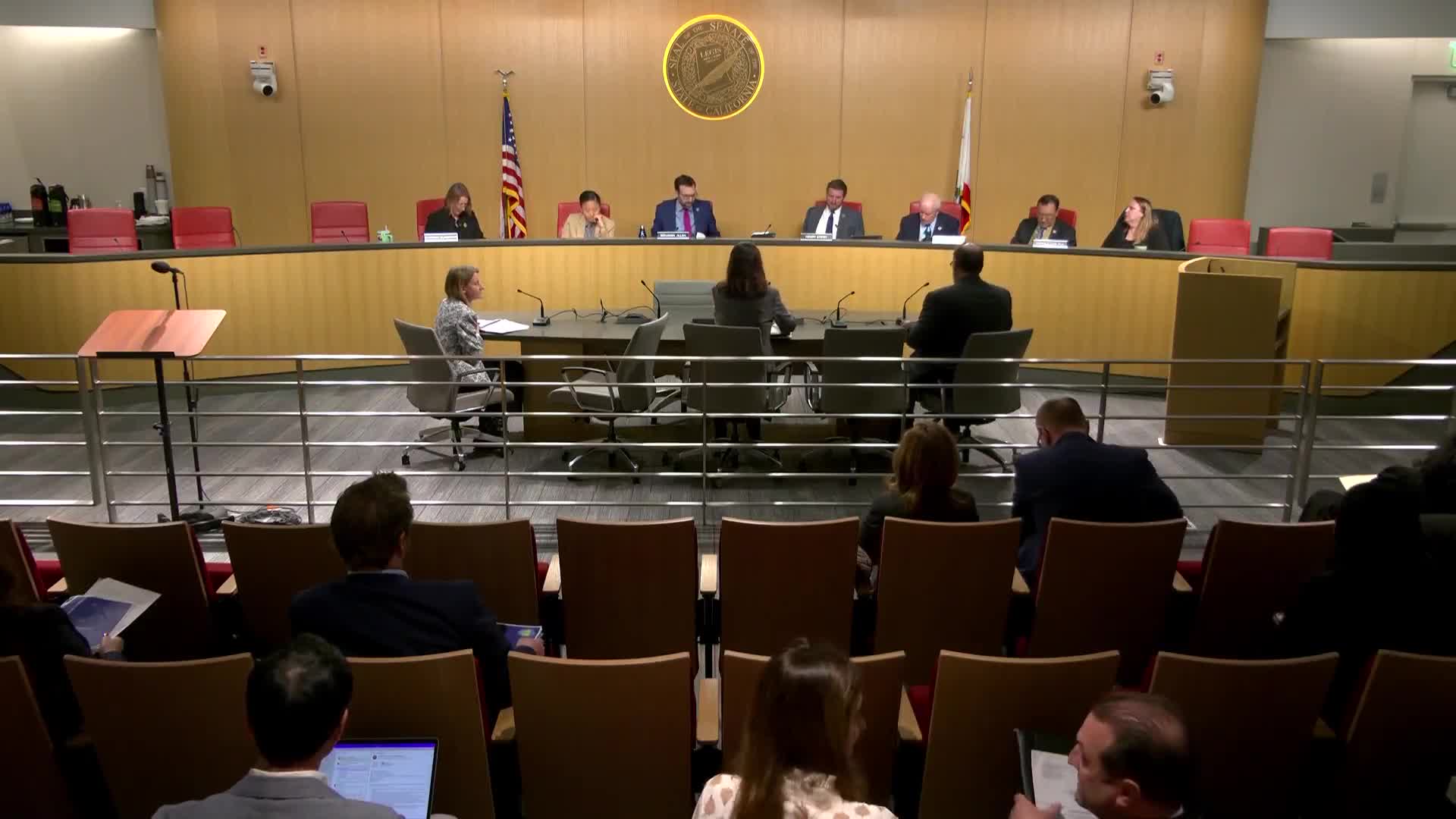
Rachel Peterson, executive director of the California Public Utilities Commission, presented the CPUC's analysis in response to the Governor's energy-affordability executive order, telling the subcommittee that the two largest drivers of electric rates are the legacy rooftop solar tariff structure and wildfire-related costs.
The CPUC explained the mechanics of cost-shifting: programs that reduce direct bills for participating customers (for example legacy net metering) can increase the share of fixed system costs that must be recovered from other ratepayers. Peterson summarized staff modeling showing how growth in participation in some programs increases the fixed-cost burden on non-participants.
Key options discussed - Non-ratepayer funding: CPUC staff suggested seeking federal funds and reallocating existing non-ratepayer revenue streams as possible options to reduce ratepayer burdens. - Climate credit reallocation: the CPUC showed scenarios for alternative uses of the state's Climate Credit (currently distributed as modest bill credits). One scenario reallocating the credit toward CARE/FARA customers in hot climate zones would deliver a larger bill benefit (staff showed an illustrative figure: approximately $445 for those targeted households in the modeled scenario) rather than smaller universal payments. - Program cost-effectiveness review: the CPUC noted that assessing cost-effectiveness for many programs is resource intensive and often litigated, and that some programs are designed to achieve legislative policy goals other than explicit cost-effectiveness.
Why it matters: The CPUC framed affordability as a multi-faceted problem requiring an all-of-the-above approach (federal funds, program redesign, reassessment of credits and rate design). Several senators pressed for greater CPUC scrutiny of utility cost forecasts and program spending in general rate cases.
Ending: The CPUC said staff will continue analysis, work with the Energy Commission and present additional options. No legislative actions were voted on during the hearing.