Get Full Government Meeting Transcripts, Videos, & Alerts Forever!
Get email alerts on the Prop4 Spending Plan topic
No spam. Unsubscribe anytime.
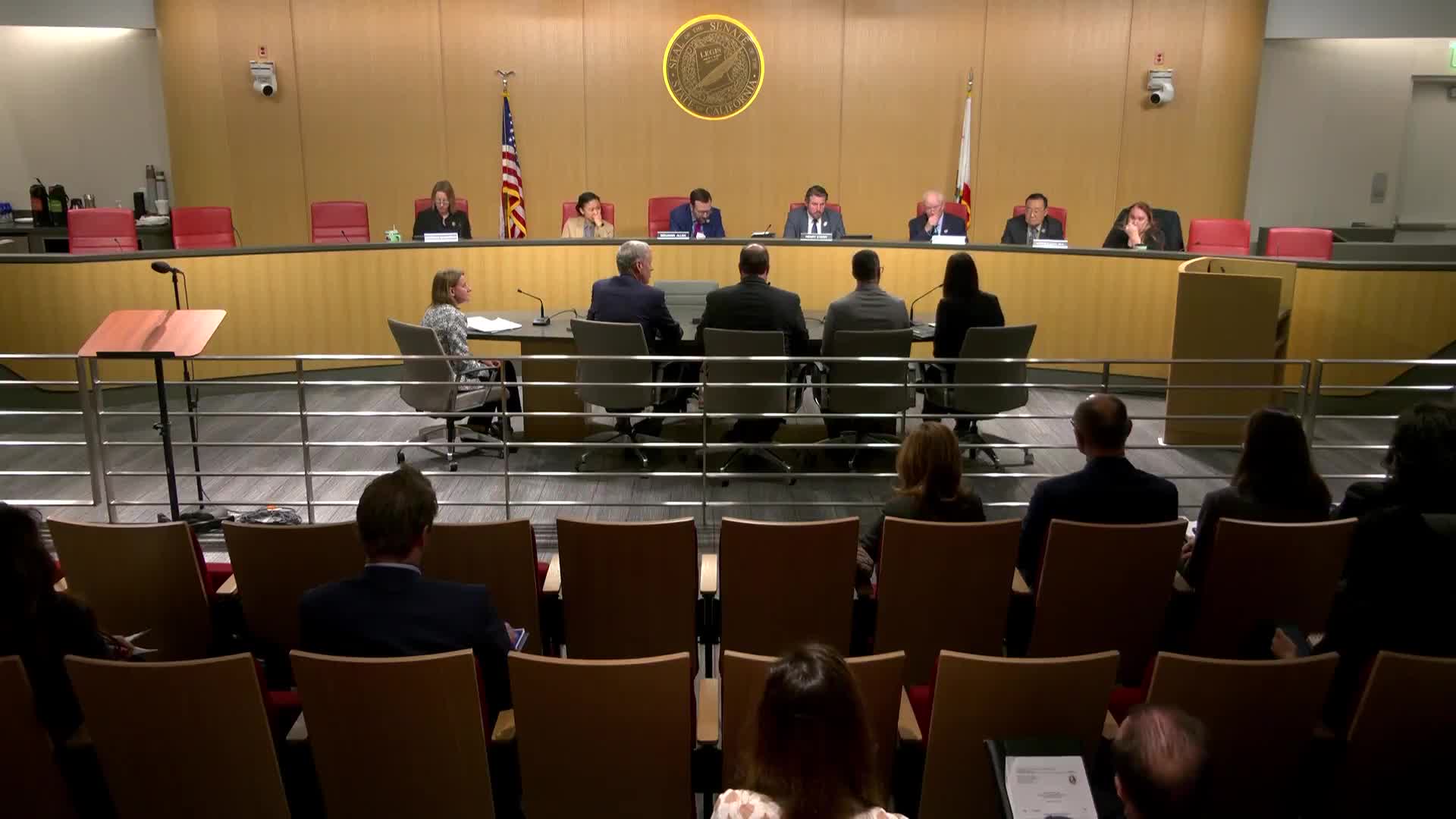
Lawmakers and agencies debate Prop 4 plan: ports, DSGS/DEBA and transmission timing
Summary
Committee members and the Legislative Analyst questioned early Prop 4 allocations for offshore wind port infrastructure and the proposed use of Prop 4 to backfill other programs such as demand-side grid support (DSGS); the CEC and LAO urged caution on timing and recommended staged approaches.
The Senate Budget Subcommittee No. 2 spent substantial time on the proposed Proposition 4 expenditure plan for clean-air and energy investments, with a focus on two categories: port infrastructure for offshore wind and demand-side/grid-support programs (DSGS and DEBA).
CEC testimony and rationale DAMIEN MIMNAAUGH (California Energy Commission) told the subcommittee the governor's budget requests $275 million from Prop 4 for the CEC: $47 million for Demand-Side Grid Support and $228 million for offshore-wind port infrastructure. CEC staff defended early allocation for projects that can match federal grants and said the agency is prioritizing grants where projects are ready to absorb public funds. Staff described a two-step grant approach for port infrastructure to limit upfront solicitation burden and provide informational guidance for applicants.
LAO and committee concerns The Legislative Analyst Office urged caution and recommended holding some or all offshore-wind funds until the administration and CEC develop firmer implementation plans and federal-level certainty. LAO staff also highlighted a programmatic shift: some GGRF or other funds originally intended for clean-energy reliability would be replaced or "backfilled" by Prop 4, raising questions about whether Prop 4 dollars should be additive or used to substitute for other state funds.
Demand-side programs and DEBA CEC program manager Ashley Emery described DSGS's rapid enrollment growth (over 260,000 participants and ~500 MW enrolled) and explained DEBA is designed to incentivize new assets in strategic locations, distinct from DSGS's use of existing customer-owned resources. Emery said a pause on flexible spending last year intentionally provided multi-year certainty to aggregators, boosting enrollment. Several senators and LAO raised concerns that Prop 4 funds should not be used to backfill GGRF or general fund commitments; CEC and Department of Finance staff said the proposed swaps would leave DSGS with additional funds overall but recommended oversight on allocation.
Offshore wind and port grants Industry speakers and port representatives urged prompt release of Prop 4 money, arguing that port upgrades are necessary to attract private investment and to match federal grants (noting sizable matching needs at ports such as Humboldt and Long Beach). Commissioners and finance staff said bond proceeds will only be sold as needed and that, administratively, funds can be staged while programs mature. LAO urged attention to federal lease and grant uncertainties.
Transmission timing LAO and some senators recommended delaying large transmission allocations until the Energy Commission's transmission study (statutory deadline summer 2025) provides data to shape priorities. Staff said the budget request reflects these considerations and that not all transmission funds are included in the current budget.
Ending The committee asked the CEC to return with more details on selection criteria, timing and the interplay between Prop 4, federal grants and existing state programs. No appropriation votes occurred at this hearing.