Get Full Government Meeting Transcripts, Videos, & Alerts Forever!
Get email alerts on the Utilities Regulation topic
No spam. Unsubscribe anytime.
Committee weighs bill to bar utilities from charging customers for lobbying, trade dues
Summary
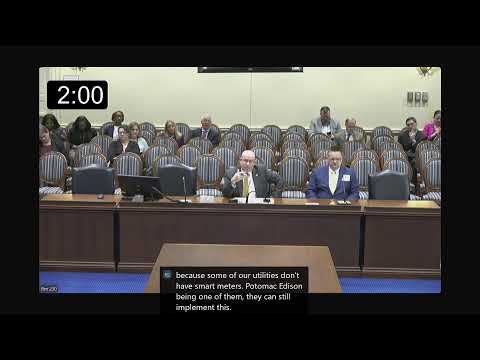
House Economic Matters Committee members heard testimony on HB 960, the Ratepayer Freedom Act, which would bar utilities from charging customers for lobbying, certain advertising and trade-association expenses and require itemized reporting to the Public Service Commission.
Members of the House Economic Matters Committee heard hours of testimony on House Bill 960, the "Ratepayer Freedom Act," which would tighten limits on the corporate expenses that investor-owned utilities can recover through customer rates, and would require itemized disclosures to the Public Service Commission (PSC).
Proponents, including consumer advocates and policy groups, said ratepayers should not unknowingly underwrite lobbying, public-relations campaigns, entertainment or trade-association expenses. "This bill does not prevent utility companies from engaging in lobbying activities or political activities, but what it does is it makes the utilities use their own money instead of rate payer dollars," a witness said. Supporters pointed to studies and recent decisions in other states where regulators disallowed recovery of hundreds of thousands of dollars as evidence that clearer law and reporting would yield savings and accountability.
Utilities and industry representatives urged an unfavorable report. Witnesses from BGE, PEPCO/Delmarva and Columbia Gas said existing statutes, PSC regulations and rate-case scrutiny already limit or exclude recoverable lobbying expenses and warned the bill's expanded definitions could sweep in routine planning and technical work. BGE testified that lobbying costs as defined in Maryland ethics law are already charged to shareholders, not customers, and that the bill would inappropriately single out investor-owned utilities.
Committee questions focused on the bill's definitions (including how to treat industry membership dues and whether briefings or invited appearances count as lobbying), administrative burdens, and the fiscal note. Panelists debated examples from other states and past rate cases: supporters cited Connecticut and Colorado regulators who disallowed over $600,000 and $775,000 respectively in requested recoveries; proponents also referenced a 2011–2020 national figure cited in testimony of about $1.1 billion in recovered lobbying costs. Utilities countered that PSC review already assesses the portion of trade-association dues attributable to lobbying and that fare allocation is made in rate-case proceedings.
No formal committee vote was recorded during the hearing. Supporters asked for a favorable report to allow the bill to proceed; utilities requested an unfavorable report, saying the proposal is duplicative and would impose new compliance costs and uncertainties.
Supporting testimony and written materials were entered for the record; committee staff indicated some written testimony would be added to the bill file for members' review.