Get Full Government Meeting Transcripts, Videos, & Alerts Forever!
Get email alerts on the Late Night Releases topic
No spam. Unsubscribe anytime.
Committee study session flags transportation, housing and data gaps for late‑night jail releases
Summary
A committee study session on March 13 examined late‑night releases from county jails and identified bottlenecks — paper‑based processes, limited release‑processing staffing, and gaps in transportation and immediate housing — that can leave individuals released overnight without safe options; members asked staff to study models and report back.
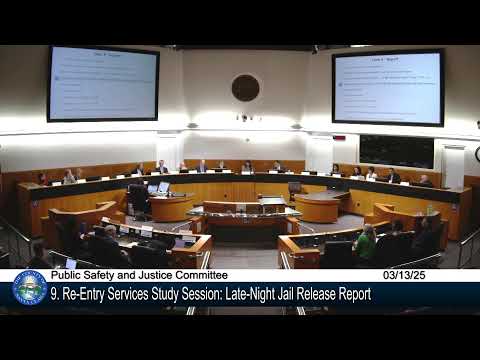
A Public Safety and Justice Committee study session on March 13 identified several system gaps that contribute to late‑night releases from Santa Clara County jails and leave people released after 11 p.m. with little or no safe transportation or short‑term housing.
Captain Rita Roland, Elmwood Division commander, told the committee the county aims to count individuals who leave custody “out the front door or to the street” and that the sheriff’s data show a six‑year dataset of releases totaling 103,725. Roland said most releases occur during the day, but late‑night releases (defined in the presentation as releases between 11 p.m. and 6 a.m.) remain substantial and the county has a higher rate of late‑night releases compared with peer counties.
County staff identified three structural contributors to the county’s late‑night releases: an older paper‑based minute and jail‑management workflow that slows processing; extended bail and pretrial service activity that can occur late into the night; and staffing constraints in release processing. Roland cited a March 2024 to 2024 comparison showing rising release counts and noted that San Francisco, Los Angeles and some other counties maintain voluntary delayed‑release programs that allow people to request to be released during daytime hours; staff said uptake of voluntary delayed release is low in counties that offer it.
Community partners and people with lived experience told the committee that late‑night release without transport or a confirmed place to sleep increases safety risks and can spur recidivism. Mark Ashford, acting chair of the Lived Experience Advisory Board, urged including lived‑experience members in policy design and in choosing what data the county collects. Brett Bymaster of Healing Grove Health Center described a recent case in which a person walked several miles at night, bleeding through his shoes, after a late‑night release; Bymaster said a CalAIM‑funded enhanced care management pathway could fund rides and short‑term hotel stays if administrative hurdles to Medi‑Cal and CalAIM enrollment are resolved.
Participants discussed short‑term options already in place: Mission Street Recovery Station operates an overnight pilot to accept people released between 11 p.m. and 6 a.m., the county provides taxi vouchers and bus tokens in some cases, reentry staff and rehabilitation officers make direct referrals and faith‑based partners operate resource tables in the Elmwood lobby during evening hours. Staff also noted a plan to launch a modern jail‑management system in September, which they said should speed processing.
Requested next steps: Supervisors and partners asked county staff to explore practical, near‑term options including a transportation contract (the sheriff noted Riverside County has contracted with ride‑share services for releases), motel/hotel voucher processes near Elmwood, and ways to ensure reentry staff receive timely notice of imminent releases. Committee members also requested off‑agenda clarification about assessment processes used by behavioral‑health partners and about CalAIM enrollment timing and eligibility for people in custody.
Vote and closing: The committee voted to receive the study session report. Members asked staff to return with follow‑up information — including a possible study of a transportation contract and options for short‑term housing — and to clarify how case assessments and enrollment in CalAIM‑funded supports can be aligned with release timing.
Ending: Committee members and community partners framed the issue as operational and solvable: staff said modernized systems, better pre‑release coordination and targeted partnerships for rides and short‑term lodging could reduce late‑night street releases pending larger facility and policy changes.