Get Full Government Meeting Transcripts, Videos, & Alerts Forever!
Get email alerts on the Homelessness Shelter Operations topic
No spam. Unsubscribe anytime.
Richmond officials outline shelter closures, transition plan and costs as overflow operations wind down
Summary
City staff and the Salvation Army described inclement-weather and overflow shelter operations, reported costs and client counts, and said outreach will connect clients to a Community Resource and Training Center before the April 15 closure. Council members asked for a detailed cost and demographic breakdown and a plan for a year-round option.
Richmond City Council’s Education and Human Services Standing Committee heard updates on inclement-weather shelter and overflow operations on a meeting where staff said the Salvation Army-run cold-weather shelter will close April 15 and clients will be offered transition support.
The committee was told the Salvation Army operates a 106-bed inclement-weather shelter (66 men’s beds, 40 women’s beds) that runs Nov. 15 through April 15; overflow activations were used during more extreme conditions. “This is a cold weather shelter. It was never meant to be a long term shelter,” Tiffany Ford, who led the presentation for the Office of Homeless Services, said during the meeting.
Why it matters: Committee members said they want more data so the city can plan a sustainable response rather than relying on ad-hoc operations and volunteers. The committee scheduled a public, deeper-dive meeting for March 26 to develop written triggers and an operational plan ahead of next winter.
Most important details: - Use and counts: Nightly averages rose from 59 in November to 105 in February. During overflow activations the shelter served an average of 74 people per night, with per-night counts ranging from 57 to 94 depending on the activation. - Demographics: Most shelter users were single adults and predominantly men. Ford said women nightly counts ranged from about seven to 12; the largest family presence in any activation was three family units. The shelter initially set aside several family rooms but converted many to single-adult beds to meet demand. - Activations: The overflow shelter was activated four times this season; three activations followed gubernatorial state-of-emergency declarations and one was opened for single-digit temperatures. - Costs reported: The city accounted for $89,377.83 in supplies, cleaning, portable toilets, security and food across overflow operations. Staff did a conservative calculation that, if all 649 reported shift hours were paid at a $20-per-hour minimum, labor would total about $51,924; many shifts were covered by volunteers and regional partner staff.
Transition and resources: The Salvation Army will begin informing clients in early March that the shelter will close on April 15 and will connect those who want assistance to the Community Resource and Training Center and the Homeless Connection Lab for housing help, rental support, job training and mental-health resources. Diane Wilmore, the city’s homeless-services liaison, will lead public outreach to notify clients and partners.
Follow-up, operations and policy implications: Committee members pressed for a more precise breakdown of per-night costs (food, security, shelter operations), the number of empty beds vs. occupied beds, and more accurate demographics, including children and families the shelter might not directly see (for example, families in hotels). Ford said the office will provide a more detailed cost and demographic breakdown and described the city’s desire to move to a third-party operator for sustained shelter operations rather than relying on city staff and volunteers.
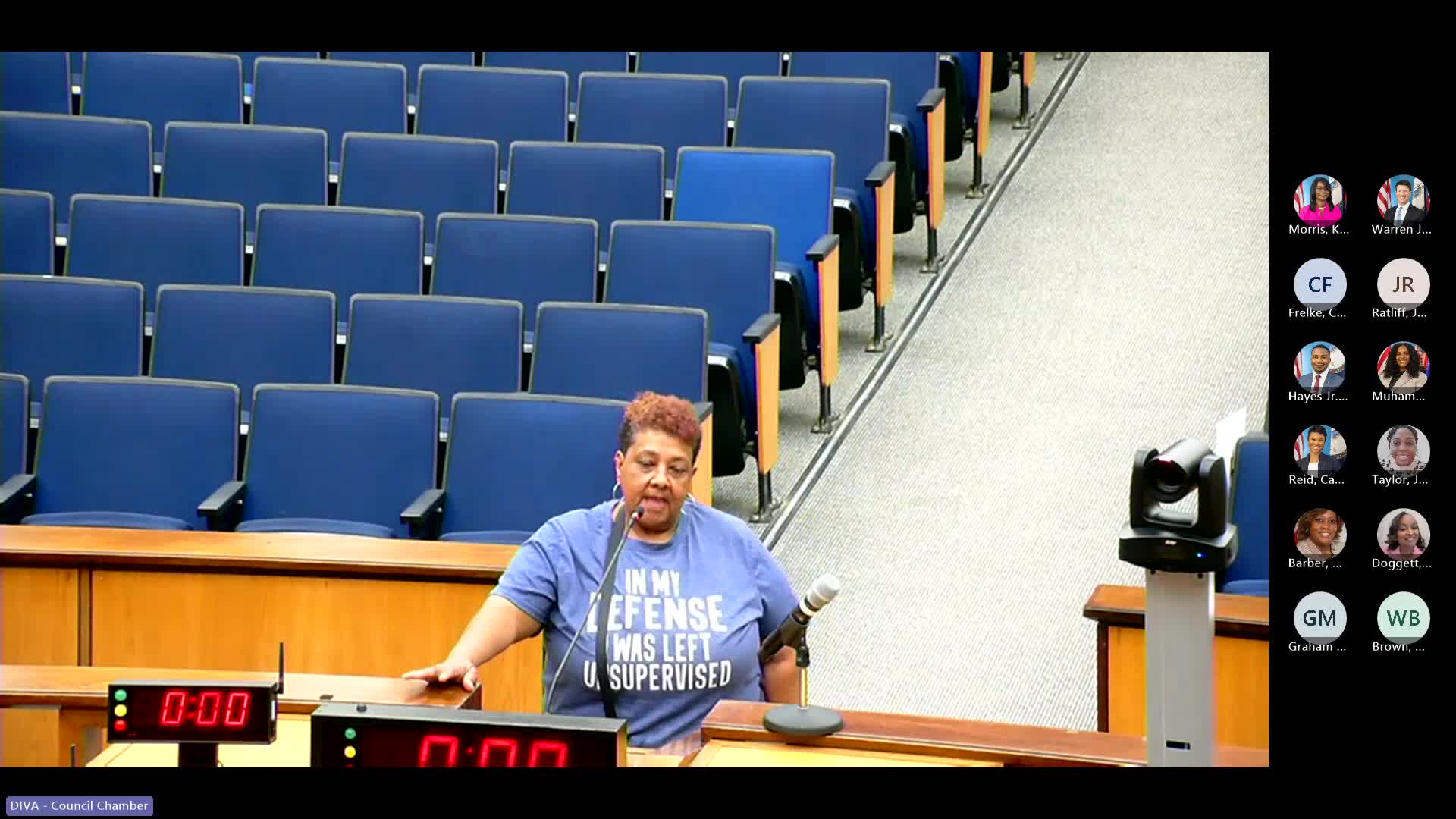
Public concern over food and contracts: During public comment a resident criticized the quality of meals provided and stated the city’s contractor was being paid roughly $20 per person per day. The resident said some people were ill after eating meals and asked whether community providers who had supplied better meals should be reimbursed. The committee chair and staff agreed to follow up with the city’s audit office or inspector general to review contract compliance, invoices and receipts and to verify that funds were spent per contract terms.
Next steps: The committee plans a community meeting on March 26 (3–5 p.m.) to gather stakeholders, including regional partners and Richmond Public Schools representatives, to map triggers and a longer-term plan for single adults and families. Committee members said they want written plans and budgets well ahead of next winter.