Get Full Government Meeting Transcripts, Videos, & Alerts Forever!
Get email alerts on the Teacher Recruitment Pipeline topic
No spam. Unsubscribe anytime.
Senate advances pilot to diversify and expand teacher pipeline; bill moved as emergency measure
Summary
Senate Bill 212, a pilot program to encourage innovation in teacher preparation and expand pathways into teaching, was advanced by the Senate; debate focused on whether existing programs already address gaps and whether incentives should target underperforming preparation programs.
Senate Bill 212, a two-year pilot program designed to encourage innovation in teacher preparation and to expand pathways for nontraditional candidates, passed the Oklahoma Senate and was advanced as an emergency measure.
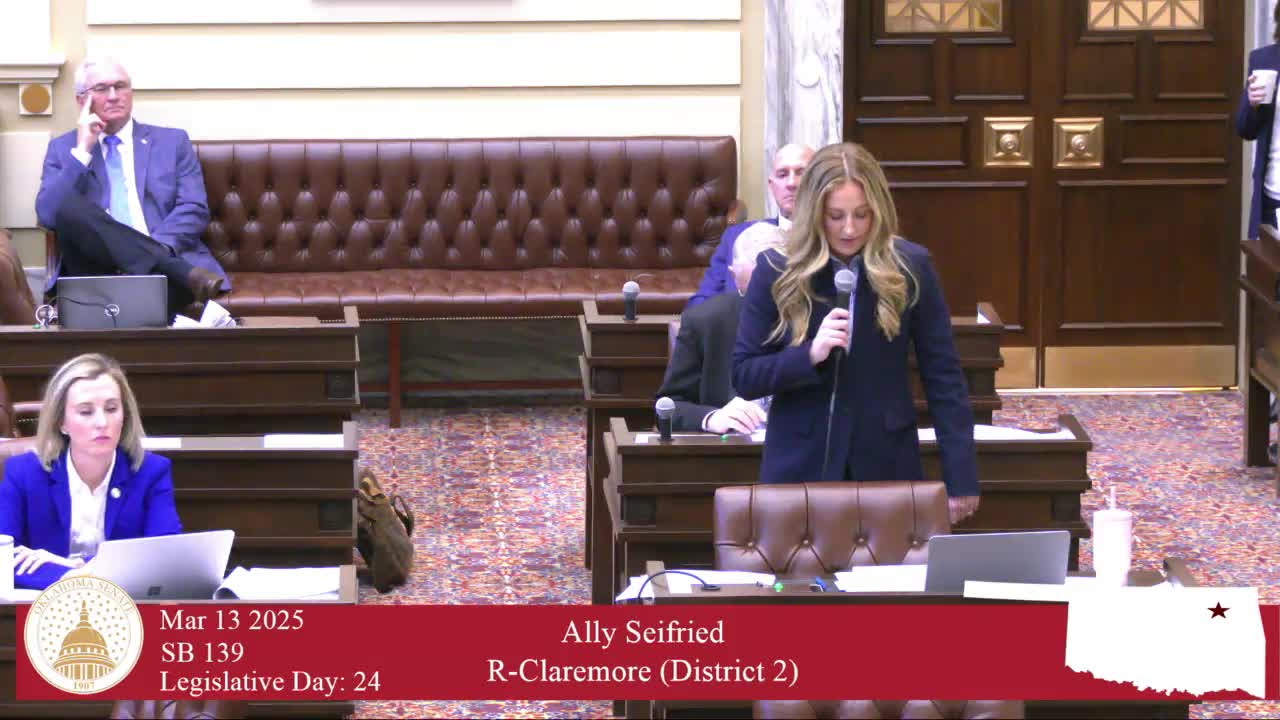
The author explained the pilot seeks to incentivize and evaluate new approaches in colleges of education and to create alternative pipelines, including pathways from paraprofessional roles to teacher certification and dual-enrollment strategies for high school students considering teaching careers. "This is a pilot program trying to encourage innovation and entrepreneurship in our colleges of ed to make sure that our teacher candidates coming out are more prepared," the sponsor said on the floor.
Opponents questioned whether higher-education programs are already delivering adequate preparation and whether outside technical assistance providers and incentive grants would simply reward poor performance. Senator Saccheri raised concerns that the bill could “award” institutions instead of fixing core problems and sought clarification on program oversight and fiscal accountability.
Supporters said the measure targets recruiting nontraditional and paraprofessional candidates and creates incentives for institutions to pilot new approaches rather than relying solely on existing pipelines. Senate debate closed with sponsors urging a yes vote and the Senate voted to advance the measure and declare it an emergency; transcript records indicate the measure advanced as an emergency, and a roll call was conducted on the floor.