Get Full Government Meeting Transcripts, Videos, & Alerts Forever!
Get email alerts on the Criminal Justice topic
No spam. Unsubscribe anytime.
Assembly passes Better Informed Decisions Act to allow judges to revisit wobbler charges
Summary
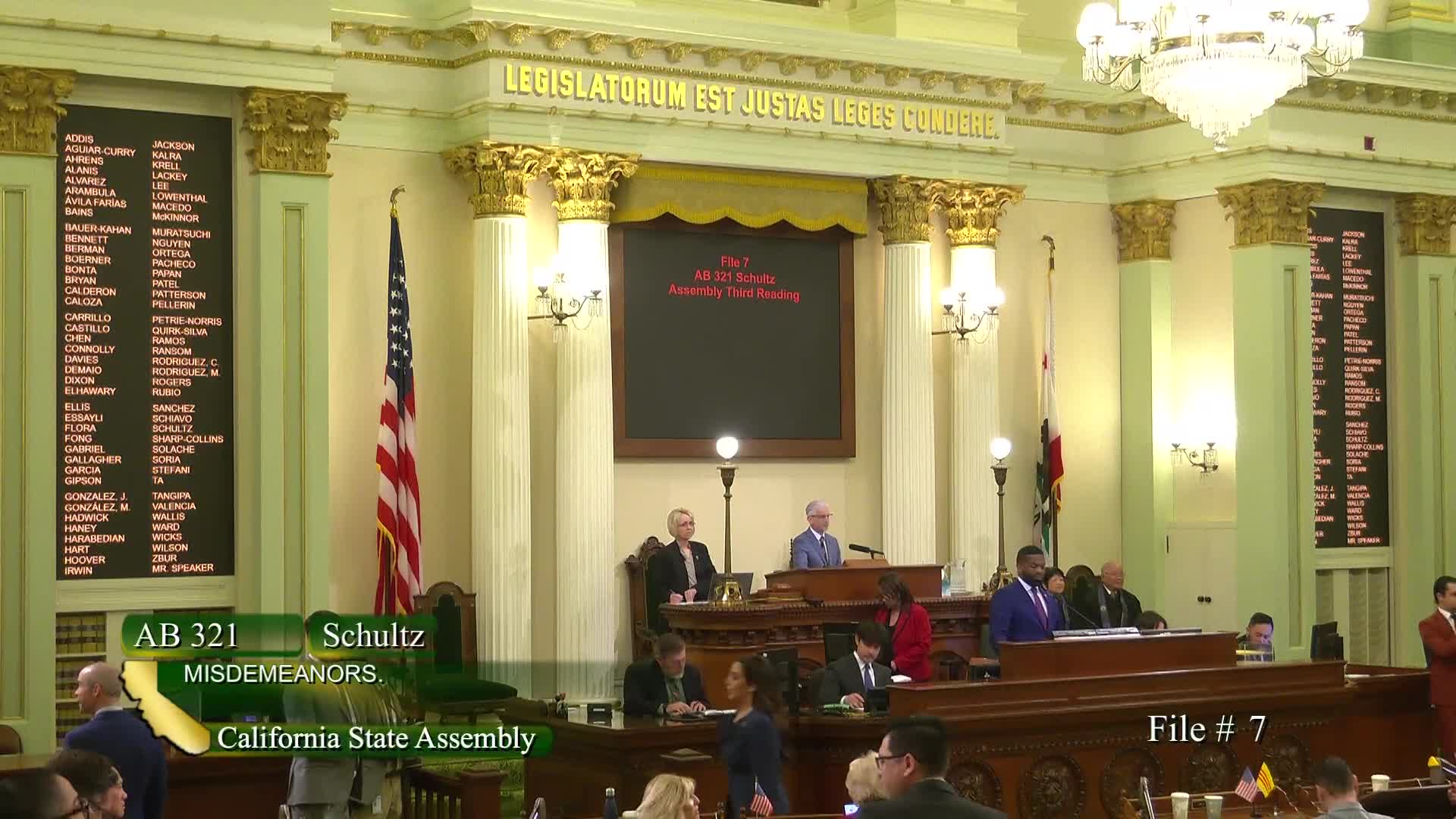
The California State Assembly on March 6, 2025, passed Assembly Bill 321, the Better Informed Decisions Act, on a 46-5 roll call vote.
The California State Assembly on March 6, 2025, passed Assembly Bill 321, the Better Informed Decisions Act, on a 46-5 roll call vote. The measure gives courts the authority to review prosecutorial charging decisions in “wobbler” cases — offenses prosecutors can charge either as a felony or a misdemeanor — at any stage of a proceeding.
Supporters said the bill updates practice to reflect modern evidence-gathering and prevents unnecessary time and expense when evidence emerges after preliminary hearings. “The Better Informed Decisions Act does not add to the courts any power that they do not already possess, but what it does do is give the courts the ability to review that prosecuting decision at any stage of the proceeding,” Assemblymember Schultz said on the floor.
Schultz, the bill’s author, told colleagues that consolidation of California courts and advances in digital forensics often mean material evidence appears after a preliminary hearing — for example, images taken from electronic devices that require forensic processing. He said the bill allows judges to use evidence developed later in proceedings to determine whether a felony-level charge should instead be a misdemeanor.
Opponents said the bill risks undercutting prosecutors’ discretion and could conflict with voter intent. “California voters literally just voted in the November election to indicate their desire that they do not want to see us watered down felonies to misdemeanors,” Assemblymember De Maio said during debate, urging colleagues to “listen to the voters.” De Maio and other critics argued the change could weaken prosecutors’ ability to hold offenders accountable and raised public-safety concerns.
Other supporters included members with prosecutorial backgrounds who said the bill is evidence‑based and aimed at getting charging decisions correct. “This is all about trying to get the decision right based on the evidence,” Assemblymember Harbidian, speaking in support, said, adding that victims “are still going to get their day in court.” Assemblymember Kalra described the bill as a means to let judges decide with a fuller evidentiary record, saying it could yield taxpayer savings by avoiding unnecessary trials.
The bill’s author told the Assembly that the California District Attorneys Association had supported the measure in committee and pledged to consult with district attorneys if the bill advances to the Senate. The floor clerk recorded the final tally as Ayes 46, Noes 5; the measure passed and will proceed to the next legislative step.
Votes and next steps: the Assembly vote was 46-5 in favor; the bill moves to the Senate for further consideration.