Get Full Government Meeting Transcripts, Videos, & Alerts Forever!
Get email alerts on the Suicide Watch topic
No spam. Unsubscribe anytime.
CDCR requests funds to cover rising suicide-watch costs and to staff new 50-bed mental health crisis facility at CIM
Summary
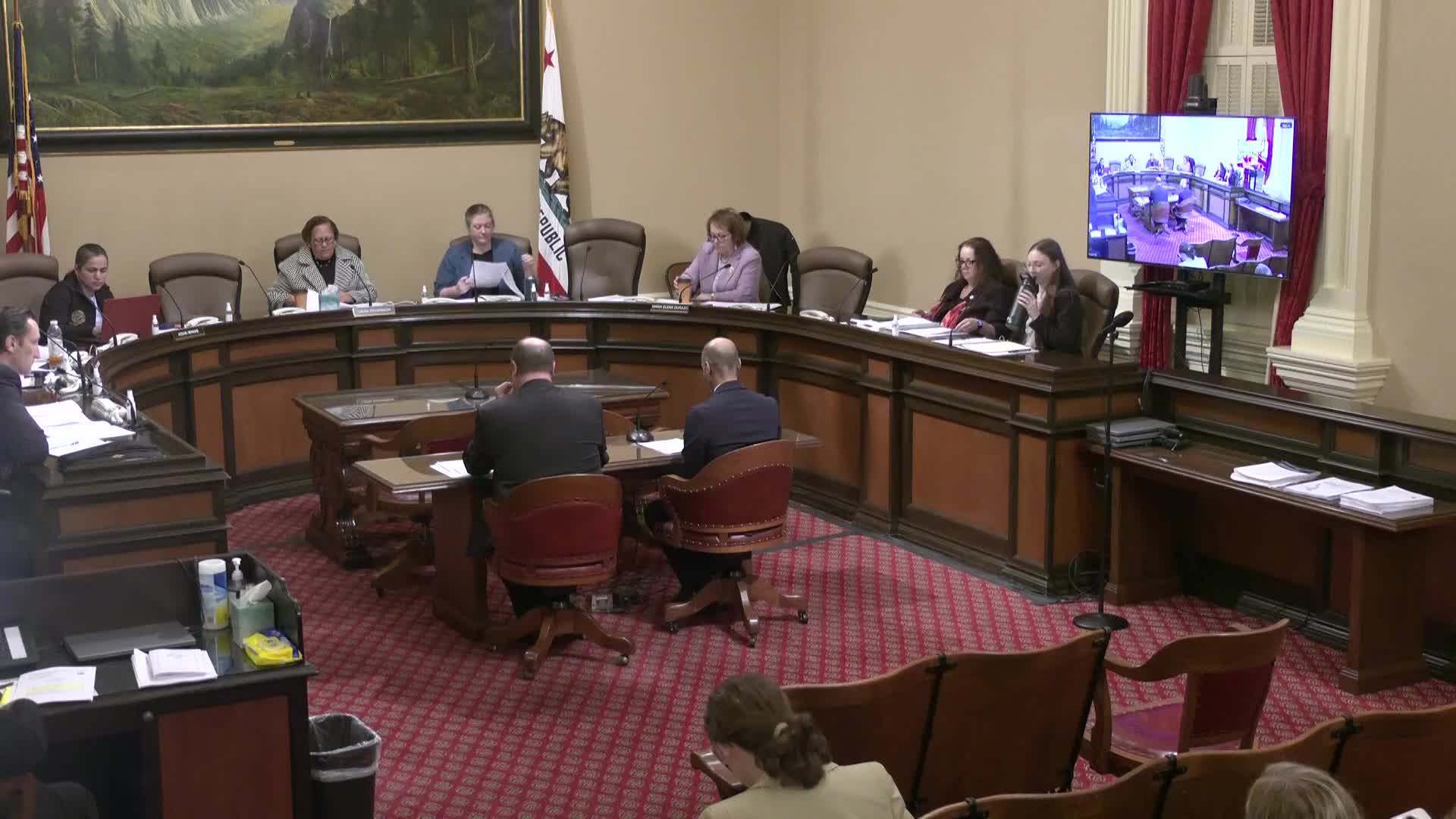
CDCR and California Correctional Healthcare Services requested millions in the budget to fund suicide-watch costs and to staff a new 50-bed mental health crisis facility at California Institution for Men (CIM); the Legislative Analyst’s Office recommended one-time rather than ongoing funding and urged steps to control costs.
The California Department of Corrections and Rehabilitation said it seeks funding to address two related mental-health cost drivers: ongoing suicide-watch staffing and the activation of a 50-bed licensed mental health crisis facility at the California Institution for Men (CIM).
Dwayne Reeder of CDCR said the department and CCHCS requested $13.6 million in 2025–26 to cover increased suicide watch workload and to help sustain temporary staffing costs driven by one-to-one suicide-watch coverage. Reeder said nursing staff provide much of the coverage and filling certified nursing assistant positions is a persistent challenge.
Reeder also described a budget request to staff a new 50-bed licensed mental health crisis facility at CIM that would replace 34 unlicensed beds; the proposal seeks a net of 13.4 positions and $3 million in 2025–26, expanding in later years. The Legislative Analyst’s Office recommended approving the activation of crisis beds but urged CDCR to coordinate statewide bed capacity reductions because recent bed-needs studies suggest the system may operate with surplus licensed inpatient beds.
The LAO recommended the Legislature direct CDCR to seek adjustments to bed capacity and to account for potential savings such as reduced transportation costs if excess beds are deactivated. Department of Finance attendees warned that suicide-watch costs are a structural shortfall for the medical program and that some proposed cost controls must be approved by the Coleman court before implementation.
Officials said that suicide-watch costs had driven recurring temporary-help costs in recent budget cycles and that efforts to increase certified nursing assistant hires, create alternative lower-cost classifications, and to develop a population-driven funding methodology could reduce future costs. The LAO recommended one-time rather than ongoing funding to allow time to implement cost-control measures and to evaluate their effect.