Get Full Government Meeting Transcripts, Videos, & Alerts Forever!
Get email alerts on the Adap Budget And Rebate Loans topic
No spam. Unsubscribe anytime.
AIDS Drug Assistance Program seeks expanded eligibility and warns rebate fund constraints
Summary
CDPH's Office of AIDS presented a larger ADAP budget estimate for 2025-26, described two prior loans from the ADAP rebate fund to the General Fund and outlined planned program changes including higher income eligibility and expanded premium supports; stakeholders urged earlier repayment of loans.
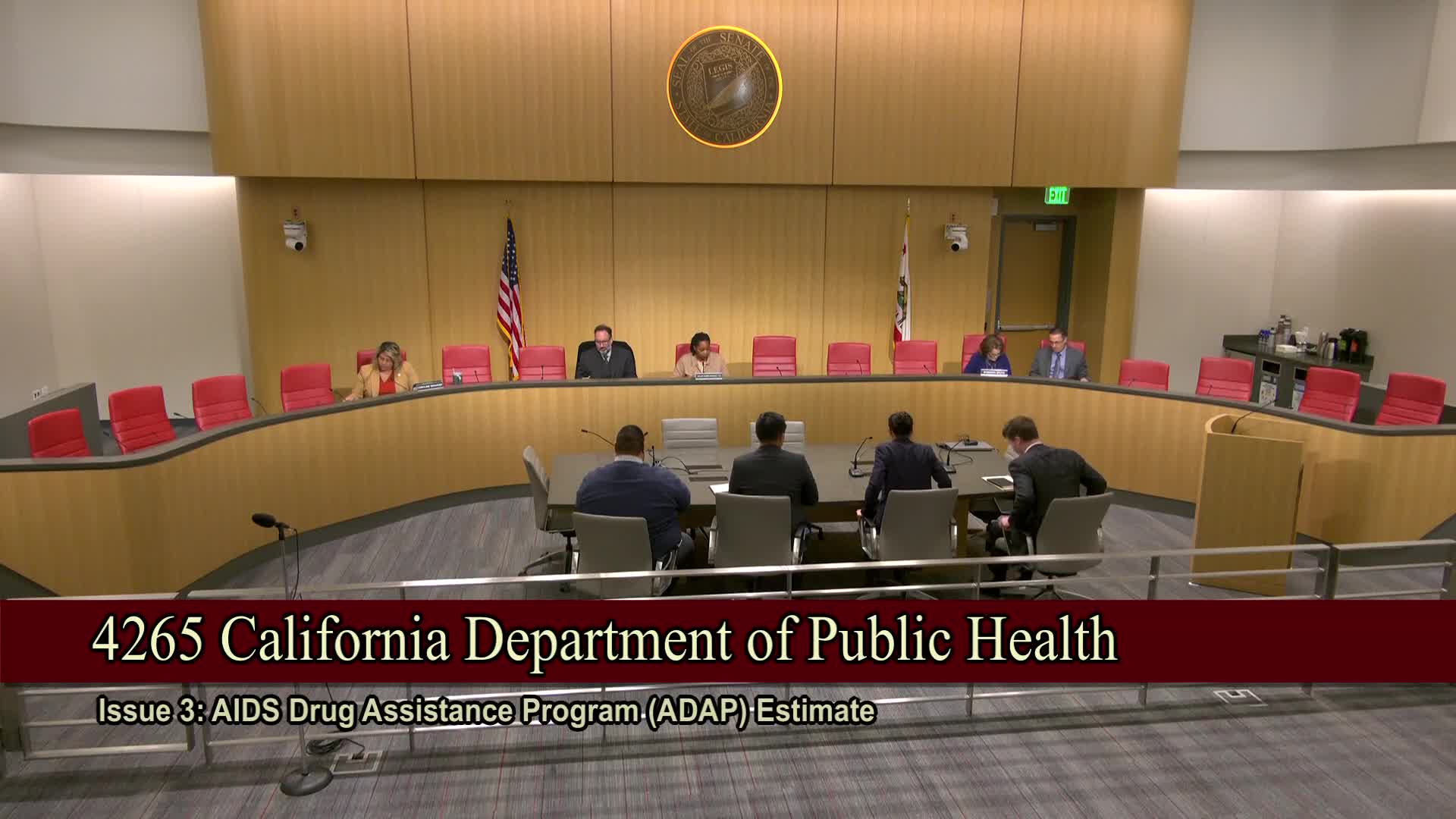
Joseph Agrama, branch chief of the AIDS Drug Assistance Program (ADAP) branch at the California Department of Public Health, told the subcommittee that the ADAP estimate for fiscal year 2025-26 is $462.3 million, an increase of about $51.8 million from the prior year.
Agrama said proposed increases in the estimate reflect expansions and early-action enhancements including raising financial eligibility for ADAP and PREP AP from 500% to 600% of the federal poverty level, higher premium-payment caps for employer-based and Medicare premium assistance, and a planned shift from a closed to an open formulary for ADAP.
He outlined two loans from the ADAP rebate fund to the state General Fund: a $400 million loan included in the 2023 budget act and a $500 million loan included in the 2024 budget act. Absent statutory repayment triggers, Agrama said the loans are scheduled for repayment in FY 2027-28 (the $400 million) and FY 2028-29 (the $500 million), and that the ADAP rebate fund had a weekly cash balance of approximately $269 million as of Monday, March 10.
Agrama described implementation details: income-eligibility increases and premium-cap changes were implemented on Jan. 1, 2025; an open formulary is planned for FY 2025-26 with a contract amendment in development; and some program enhancements are constrained by federal Health Resources and Services Administration (HRSA) requirements governing Ryan White Part B funds and rebate monies.
Committee members and public commenters urged repayment of the loans as soon as the fund condition allows. During public comment, HIV-service providers and advocacy groups asked the committee to prioritize repayment to avoid compliance risk with federal rules and to fund HIV prevention and equity-focused programs. Agrama said some of the $900 million in proposed rebate-fund resources will be subject to federal spending requirements and cannot be used for non-Ryan-White Part B activities.
The department described stakeholder engagement plans for developing expenditure plans and said it will continue monthly and bimonthly stakeholder calls and needs assessments to inform proposed enhancements.