Get Full Government Meeting Transcripts, Videos, & Alerts Forever!
Get email alerts on the Correctional Healthworkforce topic
No spam. Unsubscribe anytime.
CDCR healthcare officials outline pay differentials, hiring events and challenges responding to Coleman class-action oversight
Summary
California Correctional Healthcare Services described a suite of recruitment and retention steps tied to Coleman litigation remedies: one-time and ongoing pay differentials, referral bonuses, regional hiring events and classification changes to allow marriage and family therapists and professional clinical counselors to work in prisons.
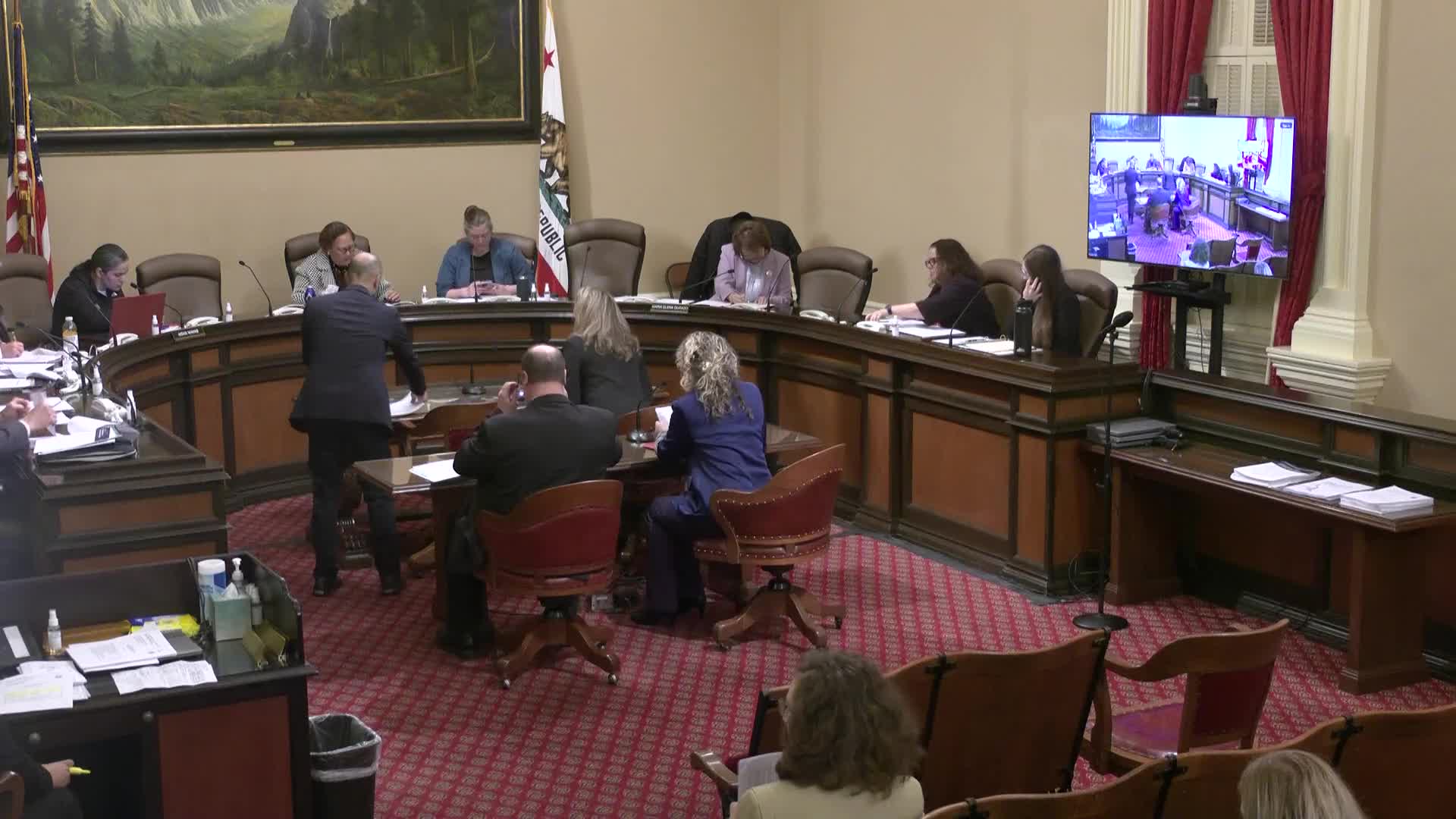
Andrea Carter, Assistant Deputy Director for California Correctional Healthcare Services (CCHCS), told the Senate subcommittee the agency created three pay differentials in response to a court order tied to the Coleman class-action oversight. The measures are currently on hold because of a court-ordered stay.
Carter said the differentials, established October 31, 2024, include: a one-time $10,000 recruitment-and-retention payment for eligible mental-health clinician classifications (pay differential 501); a monthly recruitment-and-retention differential (pay differential 502) that pays $5,000 or $20,000 divided over 12 months depending on classification; and a $5,000 referral bonus per successful hire (pay differential 503) for referring employees if the referral remains employed 90 days.
CCHCS officials said they have stood up a unit to process pay-differential payments and that hiring contractors and human resources consultants will be procured through request-for-proposal (RFP) processes once the court stays are lifted. The department described ongoing regional hiring events, one-stop “1-day” hiring events, and new civil-service classifications to expand the licensed clinician pool by enabling marriage and family therapists (MFTs) and professional clinical counselors (PCCs) to work in CDCR/CCHCS.
Dr. Amar Mehta, deputy director for statewide mental health programs, and Human Resources witnesses told senators that some classifications — psychiatrists and clinical social workers — have reached above 90 percent fill rates, while psychologists lag (about 57 percent statewide). They said the nationwide shortage of mental health clinicians and background checks, certification and merit-based hiring requirements explain some hiring attrition. The department reported hosting multiple hiring events in 2024 and early 2025 with hundreds of applicants and hundreds of hires from those events.
Committee members asked whether moving more patients to Department of State Hospitals (DSH) beds would reduce costs and improve care. Officials said inpatient state hospital beds are among the highest-acuity, highest-cost beds; a Legislative Analyst’s Office (LAO) figure cited during the hearing put an estimated annual per-bed cost for DSH at about $393,000 and for CDCR inpatient beds at about $364,000. CCHCS officials said inpatient care costs reflect 24-hour nursing care, intensive specialty services and suicide-watch requirements.