Get Full Government Meeting Transcripts, Videos, & Alerts Forever!
Get email alerts on the Public Health State Of The State topic
No spam. Unsubscribe anytime.
California public health chief urges sustained investment as pandemic funding winds down
Summary
California's newly appointed state public health officer outlined public health gains since COVID-19 and warned that one-time federal pandemic funds will lapse in 2026, highlighting rising challenges including silicosis, overdose deaths and mental-health trends.
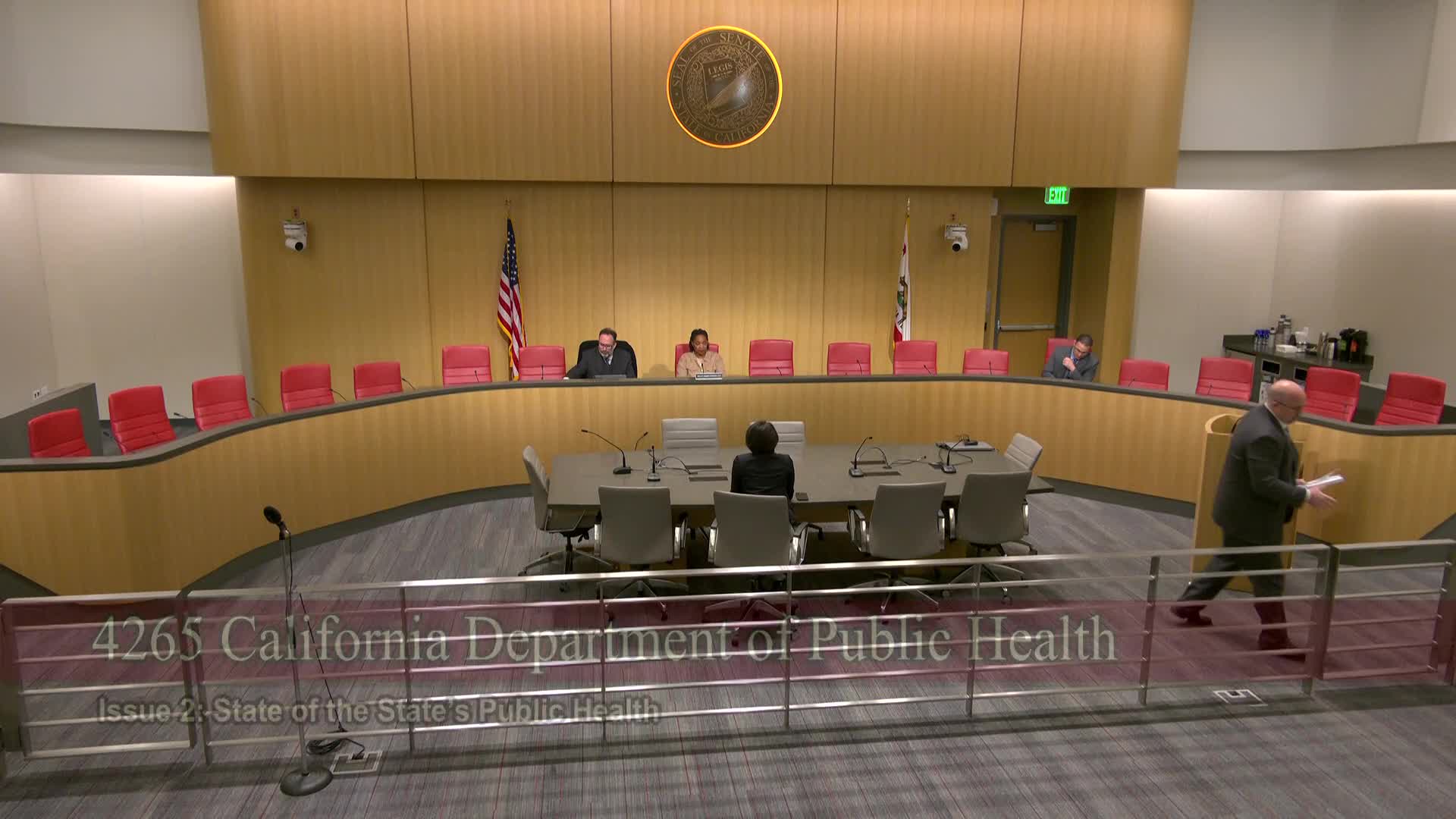
Dr. Bridal Pon, California's State Public Health Officer, told the Senate Budget Subcommittee No. 3 on March 10 that public health investments made during the COVID-19 pandemic improved capacity statewide but that many gains rely on one-time federal funding that expires in 2026.
"It will take continued commitment to address ongoing and future threats and improve population health for our future generations," Dr. Bridal Pon said, summarizing the department's priorities for prevention, workforce and data modernization.
The director gave a high-level review of trends and risks. She said life expectancy in California fell from about 81 years in 2019 to 78.4 years in 2021 during the pandemic but has since rebounded. She credited tobacco control, stigma reduction and improved access to care for large reductions in heart-disease and cancer death rates over the last two decades, while noting that Alzheimer's-related deaths have increased.
Dr. Pon described persistent and growing challenges including drug overdoses, which reached an all-time high in 2023 and now rank among the top causes of death for people ages 25 to 54. She also flagged rising rates of anxiety and depression among young people and said suicide and injury remain leading drivers of premature death.
On infectious disease, Pon said California's improved surveillance and response systems have allowed faster reaction to new threats such as H5N1 (avian influenza) and to recent urban wildfires in Los Angeles County. She told the committee that the department is pursuing a "One Health" approach coordinating human, animal and environmental health partners to protect farm workers at higher risk of exposure.
Members asked for updates on several specific issues. On silicosis, Pon said the disease was made reportable in February 2019; the department has identified 258 cases and 15 deaths since it became reportable and has recorded approximately 30 lung transplants among affected patients. She said the department is sharing cluster and geographic information with Cal/OSHA and doing outreach and prevention work with manufacturers and workers.
On measles, Pon said California has had five imported cases this year and that local health departments perform the investigations and contact tracing; she stressed statewide kindergarten MMR coverage of about 96 percent and said no secondary transmission has been identified in the state this year. In response to questions about maternal mortality disparities and closures of labor-and-delivery units in some communities, Pon said the department is prioritizing maternal health equity but did not provide a direct analysis tying closures to mortality and offered to follow up with additional data.
The State Public Health Officer concluded by asking for continued legislative partnership to sustain investments in public health infrastructure, workforce and data systems so the state can continue to prevent illness and reduce disparities.
Looking ahead, Pon and subcommittee members agreed the upcoming expiration of one-time federal pandemic funds in 2026 creates a fiscal test for maintaining surveillance, workforce and prevention programs.