Get Full Government Meeting Transcripts, Videos, & Alerts Forever!
Get email alerts on the Mainecare Supplemental Budget topic
No spam. Unsubscribe anytime.
Maine Senate fails to enact emergency supplemental budget after votes fall short of two-thirds
Summary
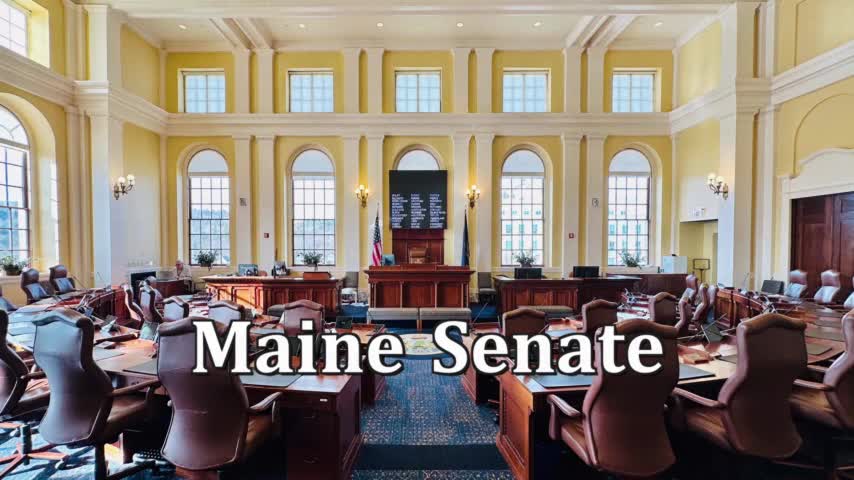
On March 11, 2025, the Maine State Senate debated an emergency supplemental appropriations bill intended to cover MaineCare and other obligations. Multiple roll calls failed to reach the two-thirds threshold required for enactment; senators split along rural/urban and fiscal-priority lines during debate.
A vote to enact an emergency supplemental appropriations bill failed in the Maine State Senate on March 11, 2025, after multiple roll calls fell short of the two-thirds margin required to pass emergency legislation.
The measure under consideration was described on the floor as "an emergency on a bill, an act to make supplemental appropriations and allocations." Senators debated provisions tied to MaineCare payments, hospital and nursing-home funding, a $2 million request related to spruce budworm timber protection, and changes to General Assistance (GA) and MaineCare eligibility rules.
The debate produced sharply divided views. Senator Libby, who said she would vote no, argued the compromise amendment “does nothing for my district” and pressed that the GA and MaineCare provisions would not benefit several small, low-valuation towns she represents. She told colleagues that rural towns lack the tax base to raise additional local GA funding and that the amendment’s limits would not address their needs. "The amendment does nothing for my district," Libby said. "If you come to Keyser Falls, you'll see depreciated housing stock and no capacity to raise a GA budget." (Senator Libby, remarks during debate.)
Other senators urged passage to avoid disruption in health care and long-term services. Senator Grahowski of Hancock warned that failing to pass the emergency funding would harm hospitals, nursing homes and families relying on MaineCare: "If we today are not able to meet our obligations to those who rely on MaineCare, our constituents will certainly not forget the impact of our actions." Senator Rennie, noting the immediate operational impacts, described the measure as payment for medical care already delivered and said refusing it would be "financial negligence." (Senators Grahowski and Rennie, floor remarks.)
Several Republican senators and others pushed for structural reforms to MaineCare, including work requirements for able-bodied adults without dependents and a multi-part biennial budget process to secure broader agreement. Senator Bickford and others sought assurances from majority leadership that the legislature would pursue a two-thirds (supermajority) biennial budget in future sessions; Senator Martin recommended using the governor's stabilization or other funds instead of the supplemental. Those urging changes said the supplemental perpetuates a trajectory of rising program costs without sufficient policy fixes.
Motions and roll-call outcomes: The Senate twice considered motions to "recede and concur" (a procedural move tied to final enactment of the emergency bill). In an initial roll call the chair announced 12 senators in the affirmative and 20 in the negative; the motion failed. Later a roll call produced 22 in the affirmative and 10 in the negative, but the presiding officer noted that 22 affirmative votes were fewer than the two-thirds of the full Senate required for enactment of an emergency measure, so the bill still failed to be enacted.
After the failed roll calls, the Senate considered and rejected additional procedural motions, including attempts to "insist and ask for a committee of conference." On one such motion the chair announced a tally described in the transcript as 32 senators having voted in the negative (the motion failed). The Senate also considered tabling the item until later in the day and several requests for roll calls; some tabling motions were made but the transcript does not report final roll-call tallies for every procedural motion.
Votes at a glance
- Motion: Recede and concur on the emergency supplemental appropriations bill (item 1-3). Mover: Senator Perce (Senator from Cumberland). Outcome: failed — first announced tally 12 yes, 20 no; later announced tally 22 yes, 10 no (still below two-thirds required for emergency enactment).
- Motion: Insist and ask for a committee of conference. Outcome: failed (tallies reported during the session included 12 yes/20 no on one roll call and a later announcement describing 32 negative votes; transcript records the motion as failed).
- Motion: Table the item until later in today's session. Mover: Senator Hickman (Senator from Kennebec) and other motions to table were made; the transcript records these motions and a period of recess but does not report a final roll-call tally for the tabling that is usable in the record.
What the Senate did not decide: Because the bill was offered as an emergency measure, its enactment required two-thirds of the entire elected Senate. Although a majority voted in favor on at least one later roll call (22–10), that was insufficient to meet the constitutional threshold and the Senate did not enact the emergency supplemental appropriation.
Context and next steps: Sponsors said the supplemental was intended to pay previously incurred bills — including MaineCare provider claims — and to prevent service disruptions. Opponents argued the measure embedded structural problems and favored negotiating broader policy changes (eligibility, copays, GA limits) or pursuing alternative funding approaches. Several senators urged follow-up work in committee or a second-step biennial budget process with broader bipartisan buy-in. The transcript records leadership pledges to pursue additional budget work, including discussion of a two-part or supermajority approach, but it does not record a binding commitment or a new schedule for that work.
The debate repeatedly referenced operational consequences should payment not be made: hospitals and nursing homes facing nonpayment, delayed provider reimbursements, and families losing access to therapies and services for children and disabled residents. Senators on both sides also mentioned the spruce budworm timber-protection funding of $2 million as a smaller but urgent line item in the supplemental.
The session concluded without the emergency supplemental being enacted; senators moved to adjourn, and the chamber set further committee and scheduling steps for subsequent days.