
Proposal to create Foster Care Multi‑Agency Office wins broad support, lawmakers press for implementation authority
Get AI-powered insights, summaries, and transcripts
Sign Up Free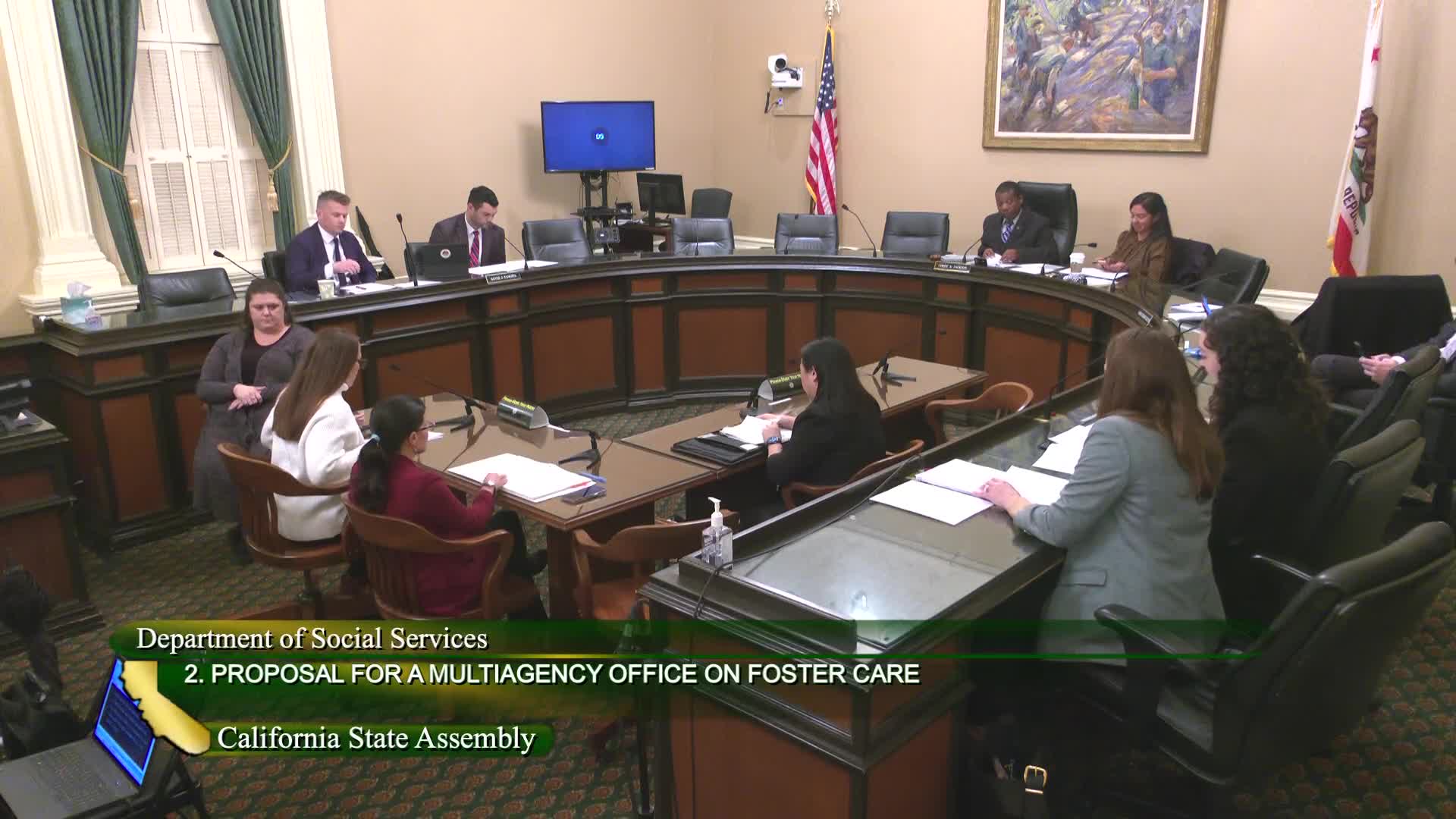
Summary
Witnesses told the Assembly panel a multi-agency office could centralize coordination across education, health, probation and other systems to better serve foster youth, but members warned the office must have clear authority and sufficient funding to effect change.
Advocates, county representatives and state officials told Assembly members a proposed Foster Care Multi‑Agency Office could address long-standing coordination gaps that affect foster youth’s education, health and placement stability.
Simone Turek Lee of John Burton Advocates for Youth said the state’s county-based child-welfare system needs a centralized state office with authority to direct other agencies on matters that affect foster youth, such as ensuring schools deliver required comprehensive sexual-health education. "A foster care multi agency office would ideally have the ability and authority to direct public agencies outside of the foster care system to play their role as it relates to the needs of foster youth," Lee said, referencing implementation challenges under SB 89.
Jennifer Troia of the California Department of Social Services told the committee that existing structures — including interagency leadership teams created by AB 2083, a state Child Welfare Council and a complex care steering committee — provide frameworks for collaboration, and urged building on those tools. CDSS also noted it houses the office of the foster care ombudsperson, an autonomous entity that investigates complaints and makes recommendations.
Assemblymembers and advocates repeatedly raised the question of operational authority, implementation timelines and funding. "Creating a position without the proper funding and the proper authority is not setting it up for success," said one Assemblymember, pressing witnesses on whether the office would have real power to enforce cross-agency cooperation. John Burton Advocates and others said the office should be elevated above CDSS into the Health and Human Services Agency to increase its reach.
Witnesses cited concrete problems the office could address, including coordination with school districts, access to mental-health care, and targeted services for small populations such as expectant and parenting foster youth. Supporters argued that centralized coordination could make existing laws and investments more effective without necessarily requiring large new program budgets.
Committee members asked staff to circulate bill language and indicated willingness to work with advocates and the administration to refine authorities, funding and implementation details.