Get Full Government Meeting Transcripts, Videos, & Alerts Forever!
Get email alerts on the Mandated Reporting Reform topic
No spam. Unsubscribe anytime.
California lawmakers, advocates debate mandated-reporting reform, training and alternative response
Summary
A State Assembly subcommittee heard hours of testimony on proposals to standardize mandated-reporter training, reduce unnecessary child-protective reports and pilot alternative responses that route some referrals to community supports instead of investigations.
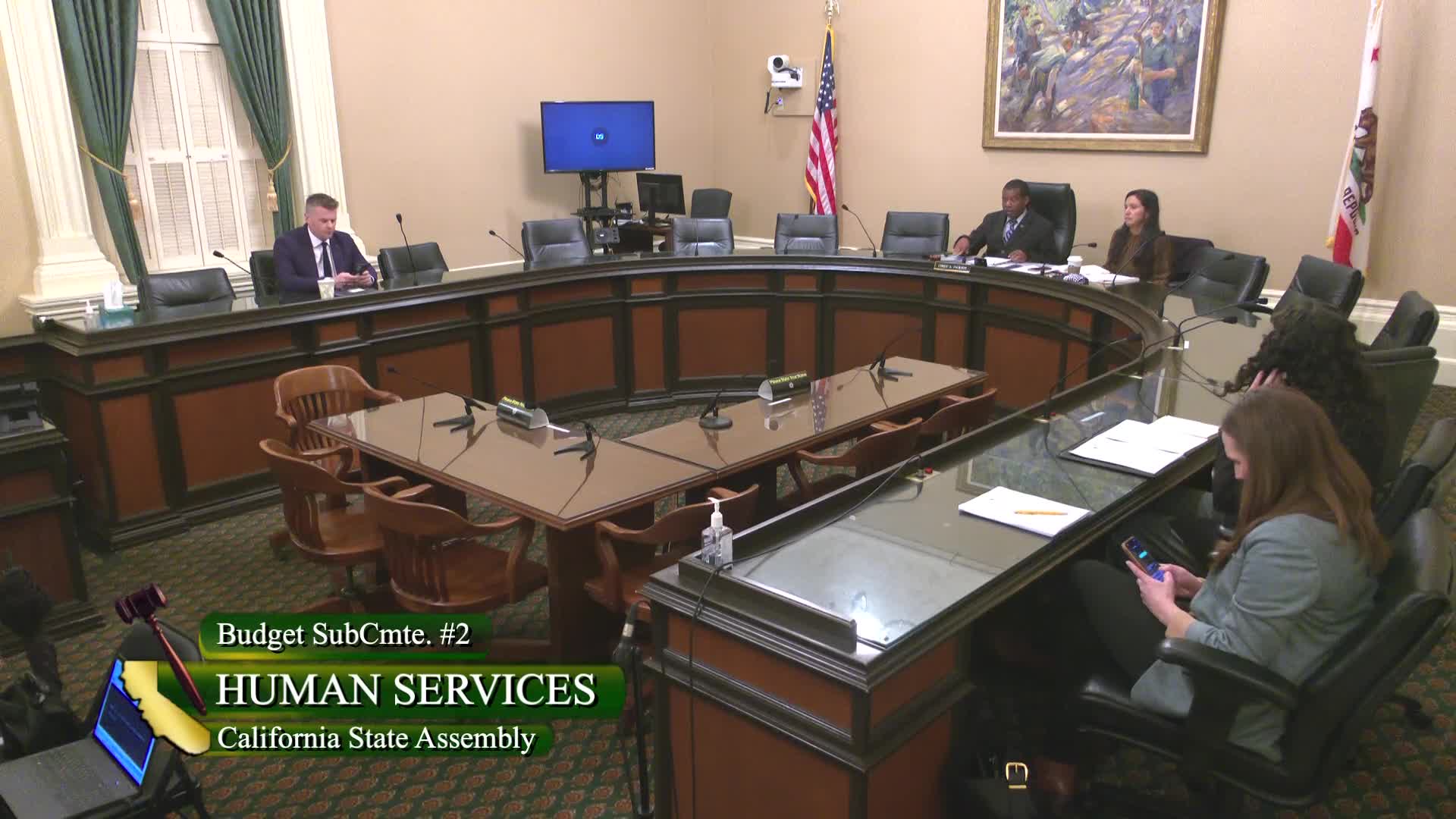
Chair Camille Jackson convened the Assembly Budget Subcommittee No. 2 on Human Services for an informational hearing that focused heavily on proposals to reform California’s mandated-reporting system.
Advocates, people with lived experience and state officials said the current system sends thousands of reports each year that do not lead to substantiated findings. "Our current mandated reporting system has a nearly 90% failure rate," said Dana Blackwell, senior director of strategic consultation at Casey Family Programs, summarizing task force data and urging standardized training and alternative pathways to community services.
Roger De Leon Jr., who identified himself as a parent partner and minister with lived experience, urged the committee to center communities and families in reforms and to avoid creating “shadow hotlines” that still record families in systems that cause trauma. "Prevention is less costly financially to California and emotionally to families than intervention," De Leon told the committee.
State officials said work is underway to translate task force recommendations into implementable policies. Jennifer Troia of the California Department of Social Services said CDSS has launched focus groups to redesign mandated-reporter training, will convene a mandated-reporting advisory committee and will evaluate the 49 categories of mandated reporters to determine whether all remain necessary.
County and labor representatives supported reform goals while urging caution on implementation. Diana Boyer of the County Welfare Directors Association said counties back reducing hotline calls but noted that AB 2085, which raised the legal threshold for general neglect, already changed on-the-ground practice and resulted in fewer in-person investigations in Los Angeles County. Tiffany Whiten of SEIU California warned that insufficient training or funding could leave both families and workers at risk, and cited examples where initial calls later revealed abuse.
The Legislative Analyst’s Office and other panelists recommended standardized decision-making tools for frequent reporters (for example, teachers and medical personnel), stronger fidelity monitoring of training, and careful oversight to ensure reforms do not divert cases that truly need child-welfare intervention. Panelists and lawmakers emphasized that any alternative response must keep child safety paramount.
The hearing did not include any votes. Committee members asked the administration for cost estimates to develop the standard training curriculum and for more detailed timelines and implementation plans as drafting proceeds.