Get Full Government Meeting Transcripts, Videos, & Alerts Forever!
Get email alerts on the Urban Renewal Tif topic
No spam. Unsubscribe anytime.
Advisory committee recommends Bend Urban Renewal Agency back five TIF-aided housing projects
Summary
At its March meeting, the Affordable Housing Advisory Committee recommended that the Bend Urban Renewal Agency move forward with tax-increment financing support for five housing projects that together would deliver 893 units and a portion of rent-restricted housing targeted at households at or below 90% of area median income.
At its March meeting, the Affordable Housing Advisory Committee recommended that the Bend Urban Renewal Agency provide tax-increment financing (TIF) support for five proposed housing projects that together would deliver 893 housing units, 153 of which the city presentation said would be rent restricted for households earning 90% of area median income or less.
Jonathan Taylor, the City of Bend’s urban renewal manager, told the committee the batch of proposals would ‘‘generate 893 residential units with 150 of those being rent restricted for households earning 90% AMI or less’’ and that the portfolio would ‘‘contribute to 12% of the Oregon housing needs assessment 5 year goal for the city of Bend.’’
The projects are a mix of sites on Bend’s west side and one core-area site. Staff presented project-level details: the Century Drive proposals (Century Project 1 and Century Project 2), Bridal Ridge, Viridian (location and address clarified in staff materials), and Project Platform in the core area. Staff said the proposals vary in unit mix and affordability commitments: for example, Century Project 1 was described as a 152‑unit, roughly $60 million development proposing to dedicate 20% of units at 90% AMI for 30 years; Century Project 2 was described as a 297‑unit project proposing 15% at 90% AMI for 20 years and LEED Silver certification; Bridal Ridge proposed 78 units with a 20% enhanced affordability commitment for 30 years; Viridian and Meridian (smaller projects) had lower portfolio investments and differing AMI targets. Project Platform, in the core area, was described as a $79 million project that would dedicate 20% of units at 90% AMI for 23 years and pursue Earth Advantage certification.
Taylor and staff framed the program as a replacement for the 2022 Multi‑Unit Property Tax Exemption program, focused on a narrower set of eligibility criteria to target housing affordability and to allow smaller-scale projects (e.g., fourplexes). Taylor summarized market context and program rationale, noting higher construction costs and reduced leverage compared with 2019. ‘‘Cost per unit in 2019 based on that was a hundred and $47,000. Cost per unit today is 330,000,’’ he said, and added that average market rent comparisons informed the estimated household savings staff presented.
City attorney Elizabeth Osho clarified the difference between deed‑recorded and contract rent restrictions in response to questions: ‘‘They are binding obligations on the owner of the property to rent a unit for a restricted rent amount... Contract restriction is a legally binding agreement that may or may not be recorded against the property. They have the same legal effect,’’ she said.
Staff presented a portfolio-level economic summary, including staff’s estimate that, if all five projects were built, the portfolio would generate several hundred million dollars in local economic activity over time and would save households an estimated sum in reduced rent payments compared with fully market‑rate units. Staff told the committee that the urban renewal agency’s investment across the proposed portfolio would represent roughly 21% of total development cost and that the agency’s investment was under typical guidance to keep public assistance under roughly 25% of total development cost.
Committee members asked about unit mix, whether restricted units would be deed‑recorded or contractually restricted, ADA accessibility, timing for certificate of occupancy, and how the projects interact with other incentives such as low-income housing tax credits. Staff said some details (for instance, how deed restrictions would interact with particular tax credit requirements) would require project‑level legal review and were not finalized.
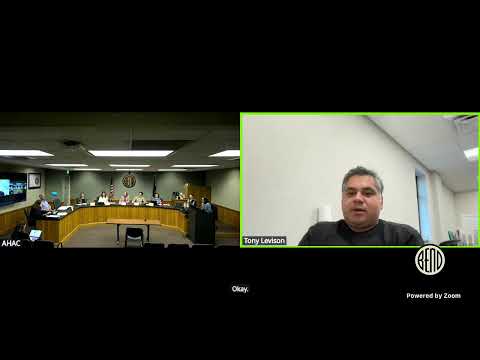
After discussion, the committee voted to recommend the urban renewal agency move forward with awarding TIF assistance for the first batch of projects and, in a separate motion, to award core‑area TIF funds to Project Platform. Both motions were approved by the committee at the meeting (committee members present raised hands in favor), and staff said the recommendations would be forwarded to the Bend Urban Renewal Agency.
Votes at a glance: committee records show two formal recommendations voted at the meeting: a recommendation that the Bend Urban Renewal Agency award TIF assistance to the portfolio of projects presented (staff package lists five project applications) and a separate recommendation that the Urban Renewal Agency award core‑area TIF funds to Project Platform. Committee members raised hands in support for both motions and the chair declared the motions approved (the transcript records ‘‘all in favor’’ during both votes). The meeting transcript did not record a roll‑call tally of named yes/no votes.
The committee asked staff to provide application packages and economic reports for members to review in full and discussed the program review timeline: staff said the program would run another application round, then pause for a market and data update in the fall, with a planned one‑year review in August.