Get Full Government Meeting Transcripts, Videos, & Alerts Forever!
Get email alerts on the Solid Waste Master Plan topic
No spam. Unsubscribe anytime.
Broward Solid Waste Authority unveils 40-year master plan roadmap, seeks countywide participation
Summary
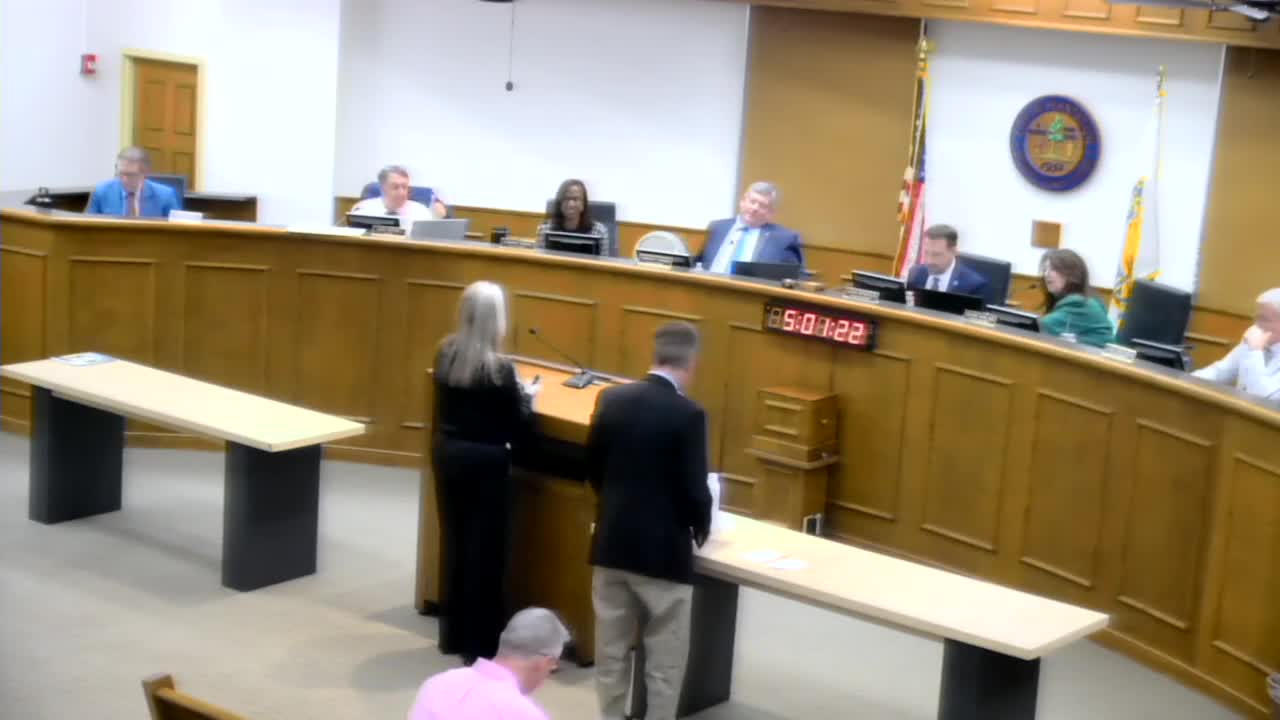
Todd Storte, executive director of the Solid Waste Authority of Broward County, outlined a draft 40-year master plan for countywide waste disposal and recycling at the City of Plantation CRA workshop on March 12.
Todd Storte, executive director of the Solid Waste Authority of Broward County, outlined a draft 40-year master plan for countywide solid-waste disposal and recycling at the City of Plantation Community Redevelopment Agency workshop on March 12.
Storte said 28 of the county’s 31 municipalities have signed on to the authority and that the plan—intended to set disposal and processing standards countywide—will offer options for processing material once it is collected, not for changing individual cities’ curbside collection contracts. “The Solid Waste Authority is not gonna be getting into your collection agreements. The Solid Waste Authority is front where the material has actually been picked up on the curb and put in a vehicle for processing,” Storte said.
The presentation described a multi-decade roadmap that addresses recycling, material recovery facilities (MRFs), organics processing, transfer-station logistics and construction-and-demolition (C&D) diversion. Storte said the draft master plan is scheduled to be published in April, with a final plan expected by August after governing-board approval; the authority will return to member cities afterward to discuss joining and implementation.
Why it matters: the plan frames long-term infrastructure decisions that could change where and how Broward County materials are processed, affect contract negotiations and influence future costs for municipalities. Storte emphasized that many options are capital intensive—he said a modern MRF can cost roughly $70,000,000 and a new landfill startup can exceed $50,000,000—so the authority is evaluating scenarios meant to balance diversion goals, proven technology and fiscal prudence.
Key details and scenarios - Draft and timeline: Storte said the authority expects a draft master plan to be available in April and the final master plan by August, with further presentations after the governing board signs off. He cautioned that the draft was delayed by extended data collection but that the authority compressed its schedule to meet the April target.
- Coverage and participation: 28 of 31 Broward municipalities had signed interlocal agreements to participate; several holdouts had expressed interest in reviewing the master plan before committing.
- Goals and targets: the authority’s analysis uses scenarios projecting through 2045, and the presentation cited a countywide goal to reduce the residual (landfill/waste-to-energy) rate toward about 25 percent while increasing recovery. Storte referenced a Florida goal of 75 percent recovery as an aspirational benchmark.
- Capacity and facilities: Storte described options to use existing county assets and private facilities where possible rather than immediately building new plants. He cited Waste Management’s new material recovery facility in Pembroke (opening next year) as an example of advanced technology that could be used under a contracting model. The presentation included scenario C, which produces the lowest landfill output but is also among the most expensive.
- Timing and procurement: Storte warned that RFP and procurement processes and equipment acquisition can be long: RFPs may take up to a year and equipment 16–24 months. He also said some changes—such as standardizing curbside recycling countywide—would take time to phase in and depend on city buy‑in.
- C&D and bulk waste: the authority flagged construction-and-demolition (C&D) material and mixed bulk collections as a near-term “low-hanging fruit,” noting that when clean green material and bulk/C&D are mixed at curbside it becomes unrecoverable. Storte said the authority is working with the county and third-party processors and drafting a C&D ordinance for discussion with member cities.
- Organics and composting: the plan contemplates organics-processing campuses and composting sites, potentially using county-owned pads for pilot operations. Storte said a fully scaled organics system would take years and that some organics processing capacity currently exists outside the county (near Homestead).
Capacity and numbers cited - Storte said roughly 60–70 percent of the municipal waste stream is technically recyclable; actual recovery is lower. - He estimated a modern single-stream MRF cost at about $70,000,000 and noted a new landfill start-up can exceed $50,000,000. - Waste‑to‑energy capacity figures mentioned included a current facility capacity of about 750,000 tons annually that could reach about 1,000,000 tons with an additional boiler; Storte and other officials noted the county may face roughly 1,300,000 tons to manage under certain growth scenarios. - The authority’s scenarios incorporate a projected population increase of about 2,000,000 by 2045.
Community engagement and next steps Storte said the authority is pushing public education and outreach, posting white papers on its website and planning additional workshops and online content, including short “eco talks” produced with high school students and community events; he cited the authority website (browardswa.org) as the central repository for materials. Storte urged cities to pass on public outreach materials and surveys to boost participation.
Council members and staff questioned siting, cost and timing. Council member Fratjana asked about siting and whether large county parcels exist for composting or landfill expansion; Storte said some county sites are reserved for disaster staging and that portions could be used for composting while preserving emergency capacity. Council member Andrea asked whether holdout municipalities would join; Storte said Pembroke Park and several others have expressed interest but want to review the master plan before signing.
No formal decisions or votes occurred at the Plantation workshop. Storte said the authority will return to member bodies after the governing board finalizes recommendations so each city may decide whether to join or accept specific contracts and operational recommendations.
Quotes “The Solid Waste Authority is not gonna be getting into your collection agreements. The Solid Waste Authority is front where the material has actually been picked up on the curb and put in a vehicle for processing,” Todd Storte said, describing the authority’s role.
“0 waste is aspirational,” Storte said, adding that even the most advanced systems worldwide still produce a residual fraction that must be managed by waste-to-energy or landfill.
Ending The authority’s immediate next steps, as stated at the Plantation workshop, are to publish the draft master plan in April, continue public outreach and present a final plan to the governing board with a target of late summer; member cities will be invited to review and decide whether to participate in implementation and related procurement processes.