Get Full Government Meeting Transcripts, Videos, & Alerts Forever!
Get email alerts on the Land Use Rural Business topic
No spam. Unsubscribe anytime.
Supervisors send Magnolia Rose wedding-venue request to business meeting after neighbors cite road, noise and water worries
Summary
The board voted March 12 to forward the Magnolia Rose 1880 minor special-exception request to the April 15 business meeting after residents cited narrow, blind gravel roads, noise, and potential well impacts; the applicant reduced the requested number of annual events from 100 to 75 during the hearing.
Loudoun County supervisors on March 12 voted to forward a minor special exception request for a banquet and event facility called Magnolia Rose 1880 to the board's April 15 business meeting after lengthy public comment and technical questions from supervisors.
Supervisor Kershner moved to send the case to the April meeting; the motion was seconded and recorded by staff as passing 6-0-3. The vote did not grant the special exception; it deferred final action while staff and the applicant prepare any additional responses and documentation for the business meeting.
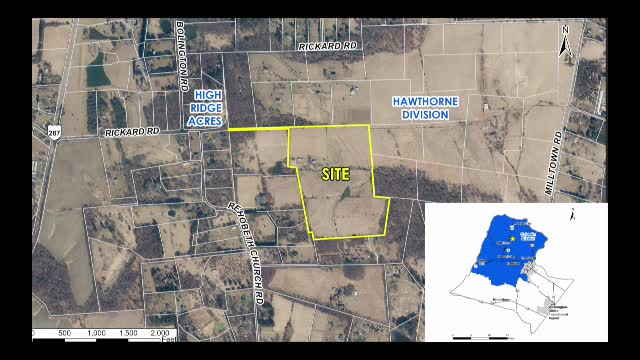
The site is a little over 50 acres east of Berlin Turnpike and west of Milltown Road in the Catoctin election district; it is currently zoned AR-1 in the rural policy area (Rural North place type). The applicant asked for a minor special exception to operate a banquet and event facility with a maximum of 199 attendees and up to 100 events a year and to modify a required road access easement width from 40 feet to 30 feet for an internal driveway. The application includes a proposed 7,200-square-foot indoor event building and parking.
Staff recommended approval subject to a set of conditions aimed at limiting community impacts. Those recommended conditions include: a limit of 199 attendees; no more than 100 events per year (the applicant offered to reduce that to 75 during the hearing); prohibition of fireworks; limits on exterior lighting and requirements that lighting not exceed four feet in height and be shielded to reduce spillage; two stormwater volume-reduction measures and reforestation where floodplain exists on site; and restrictions on outdoor amplified music to end by 7:30 p.m. and indoor activity to end no later than 10 p.m.
Transportation was the focal point of much of the public comment and supervisor questioning. Allison Britton of the Department of Planning and Zoning told the board Rickard Road, the primary route to the site, currently carries about 330 vehicles per day, based on county counts. Many residents and supervisors said the road is narrow, unpaved in places and has multiple blind crests and turns that create safety concerns when unfamiliar visitors and commercial vendors arrive for events.
"Rickard Road's cross section is not designed for that level of vehicular demand," said Rick Denny, a traffic engineer and resident who opposed the application. "A significant increase in demand from vehicles will fundamentally undermine its uses for other modes," he said, citing frequent pedestrian, bicycle and equestrian use of the gravel roads.
The applicant and their representative said they had engaged neighbors and revised the project in response to earlier feedback. Ben Wales, the applicants' land-use counsel, said the Bakers propose a limited program and multiple conditions to reduce off-site impacts. "This is a small-scale operation," he said, noting the property owners live on the farm and plan to operate a family business. Applicant representatives said, as part of their commitments, they will preserve tree conservation areas, provide enhanced buffering near neighboring residences and comply with VDOT's requested turn-lane or taper construction. VDOT originally requested a 200-foot right-turn taper at Berlin Turnpike but later accepted a 100-foot taper as the design requirement for the case.
Neighbors urged denial or tighter limits. Speakers described frequent pedestrians, equestrians and cyclists on Rickard Road; examples of blind intersections and potholes; dust and potential water-well impacts; and the difficulty of safely accommodating large numbers of unfamiliar vehicles on rural lanes. Several speakers asked whether the venue would draw water from new or existing wells and whether that would affect neighbors' wells; staff said hydrology and well impacts would be evaluated during site-plan review and permitting.
After public comment, the applicant told the board they had reduced the number of annual events from 100 to 75 at staff and supervisor request. Supervisors asked staff to provide additional details about water, septic and any limits on on-site restrooms if the venue relies on portable restrooms rather than the applicant's well system.
The board's vote to send the application to the April 15 business meeting keeps the case active while the applicant and staff complete technical follow-up and finalize any conditions the board will consider for final action.