Get Full Government Meeting Transcripts, Videos, & Alerts Forever!
Get email alerts on the Active Transportation topic
No spam. Unsubscribe anytime.
Committee refines trail and pathway language to emphasize access, not overclaim benefits
Summary
Members simplified consultant text about trails and sidewalks, removing awkward phrasing and limiting unsupported claims about trails as the primary alternative to automobiles; they also raised questions about equestrian access and definitions of 'pathways' versus 'trails.'
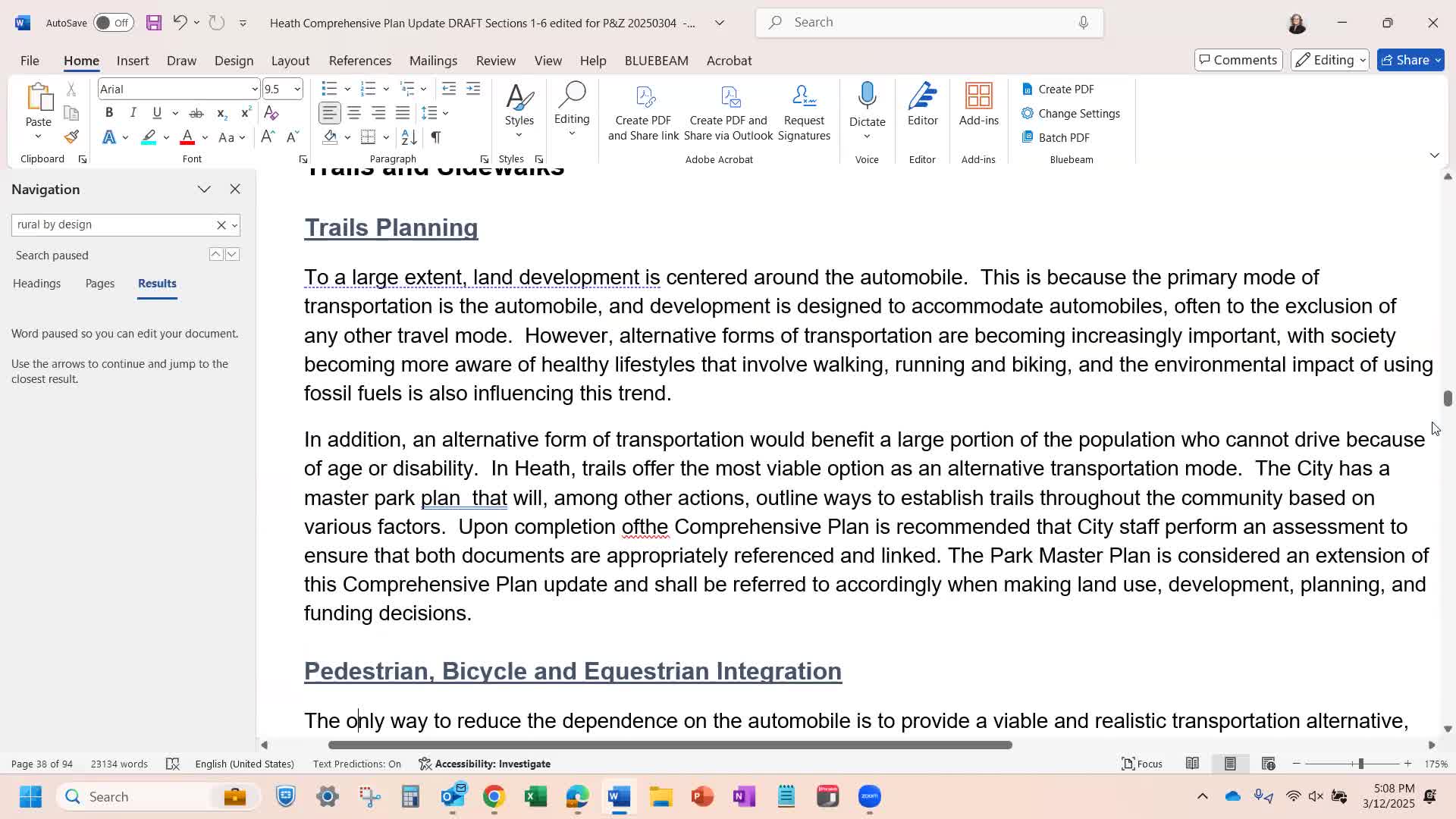
The steering committee revised several paragraphs describing the city’s trail and sidewalk system to make wording clearer and avoid overstated claims.
Committee members replaced a consultant sentence that said the trail system would serve a “large portion of the population who cannot drive because of age or disability,” with simpler wording that “trails could provide access” and “trails could provide a form of transportation.” Members removed the word “only” from a sentence that previously framed trails as the “only way” to reduce automobile dependence.
The committee also debated whether to include equestrian access in the trails policy. Some members questioned its relevance; others noted local interest in equestrian amenities. The group agreed to retain a flexible reference to pedestrian, bicycle and equestrian integration while clarifying language so it does not overpromise multimodal alternatives where practical connections do not exist.
On pathways vs. trails, staff explained that “pathways” can refer to smaller pedestrian connections that are distinct from regional trails; the committee moved language about pathways to the resource-protection section and asked staff to ensure the plan’s open-space and trail-related objectives are consistent with the parkland-dedication recommendations.
Staff will present revised wording and a consolidated trail/sidewalk objective to the committee for final review.