Get Full Government Meeting Transcripts, Videos, & Alerts Forever!
Get email alerts on the Government Transparency topic
No spam. Unsubscribe anytime.
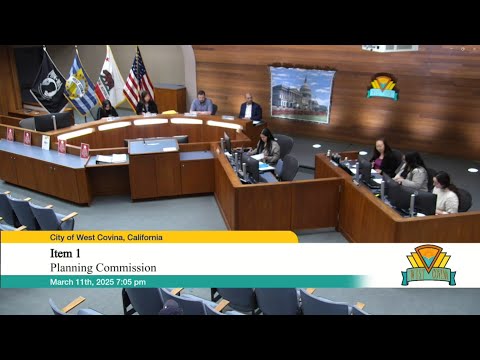
Deputy city attorney leads Brown Act refresher for West Covina Planning Commission
Summary
Deputy City Attorney Rosemary Ku gave a detailed study session on the Brown Act covering what constitutes a meeting, prohibited serial communications, social media rules, remote participation limits, public comment procedures, ADA access, disruption removal and legal consequences for violations.
Deputy City Attorney Rosemary Ku presented a Brown Act study session to the West Covina Planning Commission, reviewing the statute’s scope and practical rules for commissioners and staff.
Ku opened by explaining the Brown Act’s basic requirement that public agency actions and deliberations be conducted openly and cited the body of law commonly referred to as Government Code section 54950 et seq. She said the rules apply to governing bodies and to commissions created by formal action of those bodies, and that a “meeting” occurs when a majority of members congregate to hear, discuss, deliberate or take action on matters within the body’s jurisdiction. For the five‑member Planning Commission a majority is three members.
Ku described common Brown Act traps: serial meetings (chains of communications that together involve a majority), reply‑all email chains and social‑media interactions that create a perception of collective deliberation. She advised commissioners to use official city email and devices for city business, warned that private accounts and devices can be subject to public records requests, and said reaction emojis or brief reply‑all confirmations can create an unlawful serial communication if a majority participates.
On remote participation Ku summarized recent rules allowing teleconferencing under specified circumstances, noting limits such as a five‑meeting annual cap for individual remote attendance (for commissions that meet twice monthly) and technical requirements including real‑time audio and video for the remote member. Ku advised that a quorum of members cannot be remote unless they are within the city jurisdiction and the platform used preserves public access. She also reviewed agenda posting timelines (regular meetings: 72 hours; special meetings: 24 hours), ADA access and accommodations for translation (timed public comment is doubled for speakers needing translator assistance unless simultaneous translation is provided), and statutory exceptions that allow closed sessions only when expressly authorized in statute.
Commissioners asked several follow‑up questions. One commissioner said the city council had adopted an ordinance prohibiting “profane” remarks and asked how that interacts with the First Amendment. Ku said federal constitutional standards govern and advised following U.S. Supreme Court guidance: obscenity (as defined by the Court) and defamatory statements are not protected speech, but profanity alone is a fact‑dependent inquiry and the city should apply the federal standards. On whether a speaker card cutoff rule prevents additional speakers from joining mid‑period, Ku said she did not have the ordinance language available and agreed to follow up with the commissioner after reviewing the ordinance.
Ku closed by outlining potential consequences for intentional Brown Act violations, including criminal prosecution (statutory penalties noted on the record), civil actions and the possibility that actions taken in violation could be set aside by a court. She encouraged commissioners to consult the city attorney’s office with specific questions and offered one‑on‑one follow‑up trainings for social media and other evolving issues.
A number of commissioners thanked Ku and discussed operational practices—for example, using blind carbon copy to circulate staff emails to avoid inadvertent reply‑all communications—and staff noted legal and procedural follow‑up would be available.