Get Full Government Meeting Transcripts, Videos, & Alerts Forever!
Get email alerts on the Special Education topic
No spam. Unsubscribe anytime.
Bristol Warren officials report special education at about 19% of enrollment, outline services and new family resources
Summary
Dr. Colwell told the Bristol Warren Regional School Committee that roughly 19% of students have individualized education programs and reviewed staffing, preschool 5‑star Bright Stars recognition, a new family guide, and rollout plans for electronic special-education records and a Section 504 module in Aspen.
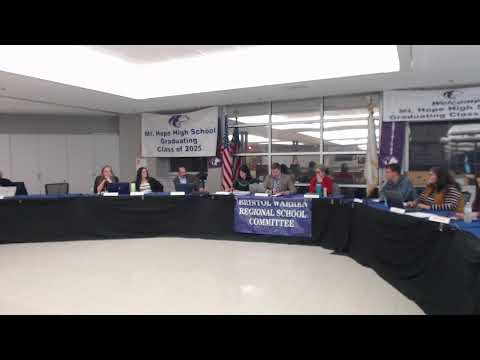
Dr. Colwell, director of pupil personnel services and special education for the Bristol Warren Regional School District, told the school committee on March 12 that students with individualized education programs (IEPs) account for about 19% of the district’s enrollment.
The percentage is “approximately 19% of our total population of students,” Dr. Colwell said, and she explained that the count includes students receiving speech-and-language-only services and students who attend career-technical education (CTE) programs or out-of-district placements.
The family guide and preschool rating
Dr. Colwell described several projects underway in the special education office, including a family-facing guide to special education that she said is live on the district website and written in “parent-friendly language.” She also announced that the district preschool received a five‑star rating through the state’s Bright Stars quality program, saying the preschool “was rated in all areas with a 5.”
Colwell said the family guide is intended to help caregivers understand the special education process and legal requirements under IDEA and to suggest questions families might ask when meeting with school teams.
Program data and categories
On a slide shown to the committee, Colwell told members that learning disability is the most common classification in the district (about 31.4%), followed by speech‑language impairment (about 26%), with other health‑impairment and autism next most frequent. She explained that the district’s totals also include students placed outside the district and that a portion of the count reflects a change in state rules that extended eligibility for speech-only services through grade 12.
Services, staffing and operations
Colwell said the district maintains several special education coordinators and support staff who work directly with families and teams in schools. She described ongoing efforts to build the district’s electronic special education file system in Aspen and to complete a purpose-built Section 504 module to improve consistency and reduce missed steps in 504 planning.
She also described work to standardize speech-language eligibility criteria so teams evaluate students consistently and to use the Department of Education’s new facilitated‑IEP process as an option for resolving disputes voluntarily between families and teams.
Questions from committee members
During public comment and committee Q&A, resident Jessica Almeda urged the committee to “keep the students’ best interest … at the forefront of every vote.” Committee members asked Colwell about staffing and resources. In response to a question about elementary staffing levels, Colwell said, “If we didn't [have enough staff], I'd have to alert the superintendent that we're going to need more staff,” and added that the district has hired 1:1 paraprofessionals when required by students’ needs.
Committee members also asked for counts of staff that support special education. In the meeting Colwell and other staff reported about 60 teacher assistants, four school psychologists, five speech pathologists, two certified occupational therapy assistants, and roughly 20–28 special education teachers (the presenter characterized her quick tally as approximate).
Planning and next steps
Colwell said extended school year (ESY) planning is underway and noted staffing and facility challenges for summer programming. She expects to complete Aspen electronic file rollout by the end of the summer and to continue professional learning for coordinators and staff. She closed by thanking the special education coordinators and support staff present at the meeting.
The committee’s next Special Education Local Advisory Committee (CLAC) meeting was announced for March 27 at Kickingiewa Middle School.
Ending
Committee members thanked Colwell and the special education team for the presentation and for completing the family guide and preschool accreditation. No formal committee action on special education was taken that evening; the presentation was informational.