Get Full Government Meeting Transcripts, Videos, & Alerts Forever!
Get email alerts on the Renewable Energy topic
No spam. Unsubscribe anytime.
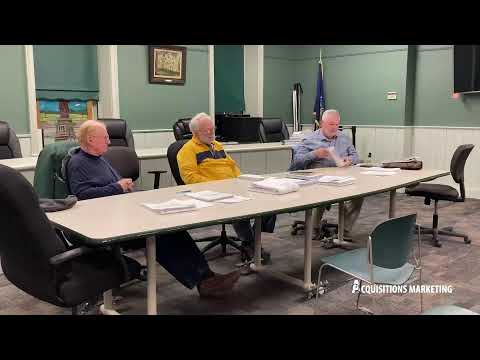
Board members flag glare, construction impacts and emergency-response costs for proposed solar farms
Summary
Members asked that solar projects address construction vibration, post-construction glare, tree screening, site maintenance, and emergency-response training/costs; suggestions included a one-year glare complaint window and emergency-response funding.
Board members reviewed solar-project concerns including pile-driving vibration, glare impacts on nearby homes, vegetation management, and the need to fund emergency-response training and equipment for fire, police and EMS in jurisdictions hosting utility-scale solar and battery storage.
Why it matters: Solar projects are sited on open land across the town; while they produce renewable energy, they also create localized impacts during construction and operation — glare, vehicular activity, changes to stormwater routing and potential new training needs for emergency responders, particularly where battery storage is included.
Key concerns and recommendations - Construction impacts and vibration: Several members recalled past construction activities that caused well problems in neighboring properties and recommended low-vibration mounting options (screw piling rather than impact pile-driving) where feasible. One member asked for a construction-bond mechanism so neighbors would have recourse if wells or other assets were damaged. - Glare and visual impacts: Members asked for a one-year window after commissioning during which neighboring residents could report glare problems; the board suggested an operational commitment by the project to mitigate identified glare (for example, adjusting panel tilt or temporarily deactivating or reorienting panels during problem periods). - Maintenance and mowing: The board discussed sheep grazing as an option for vegetation management and recommended robust perimeter fencing and wildlife considerations (coyotes, deer). Members also asked that projects plan for long-term decommissioning — making sure foundations, piles and wiring can be removed at end of life. - Emergency response and training: Reviewers asked that solar developers contribute to an emergency-response fund or otherwise support training and equipment for local fire and EMS providers, particularly if batteries are sited on property. They discussed the challenge that New York law limits some kinds of local impact fees, and suggested the town examine creative funding or pilot approaches.
Board follow-up The board said it would continue to require project-level mitigation for verified glare and construction impacts, and that it will explore mechanisms to ensure emergency services can respond safely and affordably to incidents on solar sites, including training and possible local agreements.