Get Full Government Meeting Transcripts, Videos, & Alerts Forever!
Get email alerts on the Humanitarian Funding topic
No spam. Unsubscribe anytime.
U.N. emergency relief chief warns funding cuts force ‘calculated regrouping,’ says millions face reduced aid
Summary
Tom Fletcher, the U.N. emergency relief coordinator, told reporters the humanitarian system must prioritize lifesaving work after steep funding cuts, citing 300 million people needing assistance and describing dire conditions in Gaza and other crises.
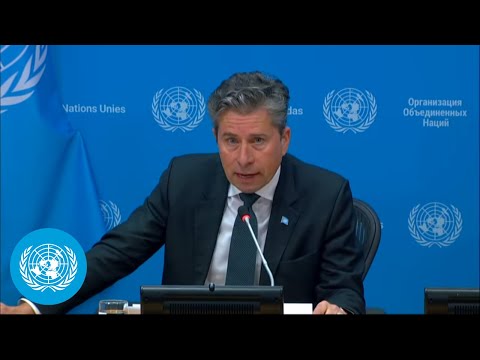
Tom Fletcher, the United Nations emergency relief coordinator and under‑secretary‑general for humanitarian affairs, told reporters at a U.N. press briefing that sharp funding cuts have forced the humanitarian system to “make a calculated regrouping” and prioritize saving as many lives as possible with far fewer resources.
Fletcher said more than 300 million people worldwide currently need humanitarian support and described the pace and scale of funding reductions as a “seismic shock” to the sector. “We will have to save as many people as we can with the money we have, not the money that we had nor the money that we would like,” he said.
The coordinator said the sector’s priorities will change as agencies and local partners submit revised plans. “I’ll receive at the end of this week… detailed plans from all of our humanitarian coordinators,” he said, referring to country teams that combine U.N. agencies, non‑governmental organizations and local partners. Fletcher also pointed to a 10‑point plan posted by the Inter‑Agency Standing Committee (IASC) as part of a broader push to improve efficiency and prioritize lifesaving operations.
Nut graf: The shifts Fletcher described come after recent reductions in major donor funding, notably U.S. aid, which he said the U.N. has relied on heavily. With appeals underfunded, humanitarian agencies face choices about which populations and programs to scale back — a decision he warned will mean people will not receive assistance they have received in prior years.
Fletcher gave examples from front lines where operations are already under strain. He described his January visit to Gaza, saying the scale of destruction and human suffering “was much, much worse than I’d anticipated.” He said that during an earlier period of access he and partners delivered hundreds of trucks a day — noting the target had been roughly 600–700 trucks per day and that partners at one point delivered “over thousand trucks” and fed about 2 million people — achievements he contrasted with more recent days when borders and crossings have been closed.
On accountability and protection, Fletcher said humanitarian workers face unprecedented threats. He said last year was the deadliest on record for humanitarian personnel and that there must be “accountability for anyone who is blocking aid getting to civilians.” He referred reporters with questions about legal responsibility to lawyers and other parts of the U.N. system while stressing that humanitarians must be allowed to do their work.
Reporters asked for more precise figures about how many people will lose assistance because of the cuts and whether the U.N. has identified the programs and countries most at risk. Fletcher reiterated the scale of need, citing the U.N.’s Global Humanitarian Overview as the source for the roughly 300 million figure, and said the sector had earlier prioritized a subset of roughly 90 million people as those in the direst need. He said the appeal for that prioritization had been about $47 billion and that he could not “sit here and say with any confidence at all that we’ll get anywhere near $47 billion.”
Fletcher described other country situations discussed in the briefing, including Sudan and Darfur, where he said needs had grown: a figure he referenced for Sudan rose from roughly 25 million to about 30 million people in need between his initial visit and the briefing. He said the Sudan campaign remained severely underfunded and that agencies were making “brutal choices” about access and which lives to prioritize.
He also recounted a recent week in Syria and said operating conditions there had in some places become easier than under the previous authorities, allowing more aid to be delivered, while stressing that needs remain very large and unexploded ordnance and electricity shortages were serious obstacles to returns and reconstruction.
On fundraising, Fletcher said the U.N. is stepping up diplomatic outreach to traditional and new donors, including trips to Gulf capitals and private‑sector engagement. He urged a broader “humanitarian movement” that includes more citizen and private giving and said he had begun an internal efficiency drive that he and humanitarian partners hope will make appeals easier for donors to target.
Ending: Fletcher took questions from a wide group of reporters and said he planned further travel; he also said he would return to the briefing room in the future. The briefing included questions on other specific allegations and investigations; Fletcher said he would pursue evidence of any wrongdoing by U.N. staff or use of U.N. premises in hostage taking, adding, “if we get evidence… yes, of course, we can investigate.”