Get Full Government Meeting Transcripts, Videos, & Alerts Forever!
Get email alerts on the Budget topic
No spam. Unsubscribe anytime.
Superintendent warns of mid-seven-figure shortfall; tri-board meeting set to advise FY26 strategy
Summary
Superintendent Kelli told the Ashland School Committee that the town and schools face a multi-million-dollar shortfall for FY26, with the schools' portion estimated at roughly $1.1'$1.2 million. A Tri-Board meeting with select board and finance committee is scheduled for April 5 to discuss whether to use one-time funds or make structural cuts.
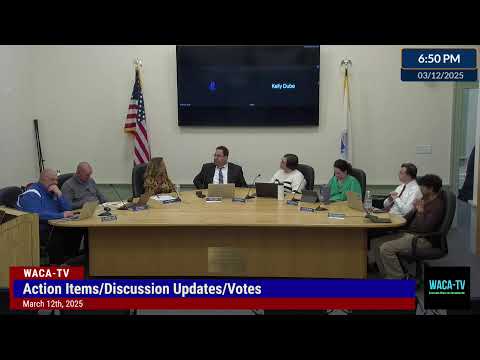
The Ashland School Committee on March 12 heard from district leadership that the town and school budgets face a multi-million-dollar shortfall heading into fiscal 2026, and set a Tri-Board meeting with the select board and finance committee for April 5 to discuss options.
Superintendent Kelli said the combined deficit between general government and schools was described at the Tri-Board meeting as "about a $2.6-2.7 million" shortfall, and that the schools'share of that gap was roughly "$1.1 to $1.2 million," figures she said vary daily as staff refine estimates. The superintendent warned those numbers represent current estimates and that positions funded through federal entitlement grants (for example, three Title I teachers) and other account balances could affect operating needs.
The district is weighing whether to use one-time funds to smooth FY26 spending or to recommend structural reductions. Board members asked for more detailed material ahead of the April 5 Tri-Board meeting, including the slide deck presented by town finance staff, a line-item list of fixed costs (bond payments, utilities and other unavoidable costs), and a clear inventory of one-time funds available on the town side (stabilization, overlay surplus, special-stabilization accounts) and school side (school-choice fund, building rental fees, Special Education Stabilization Fund).
At the meeting, staff noted the Special Education Stabilization Fund balance discussed was approximately $600,000. Board members also discussed town policy that targets a stabilization account at roughly 10% of the budget and expressed a preference for a cautious, transparent approach to use of one-time funds.
The committee agreed to request the town slide deck, projected expense and revenue curves for new growth and fixed costs, and an inventory of one-time fund balances before the April 5 meeting so the three boards can consider whether to cover a portion of the FY26 gap with one-time funds or to recommend cuts that would persist into later years.
The district plans a public budget hearing on April 9 and intends to have a budget ready for committee approval around May 12; members noted the district will miss the charter'required 55-day deadline before town meeting, as it did last year, but said the timing has been discussed with the other boards.
Committee members emphasized the need to protect services for the district's most vulnerable students while also considering fiscal prudence amid uncertain revenue projections and rising costs.