Get Full Government Meeting Transcripts, Videos, & Alerts Forever!
Get email alerts on the School Building Project topic
No spam. Unsubscribe anytime.
Stoughton officials present educational plan for proposed consolidated South elementary; MSBA grants extension through April vote
Summary
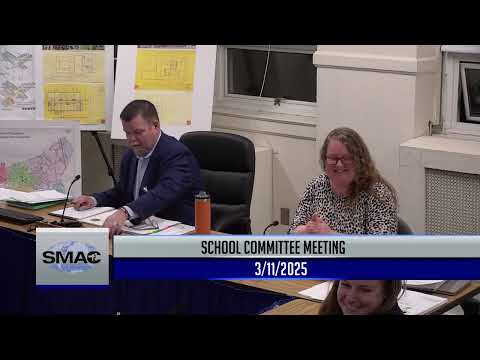
Principals from Wilkins and South elementary schools presented a detailed educational program for a proposed consolidated elementary school on March 11, and district leaders confirmed the Massachusetts School Building Authority extended the district’s timeline through April 30 so voters can decide a debt‑exclusion question April 8.
Principals from the Wilkins and South elementary schools presented a detailed education plan on March 11 to the Stoughton School Committee for a proposed consolidated elementary school, and district leaders said the Massachusetts School Building Authority extended the district’s timeline so voters can decide this spring.
The education plan, prepared by school staff and used by the district’s architects, lays out priorities including separate community entries for gym/cafeteria use, a centralized learning commons for multi‑grade learning, collaboration spaces, a dedicated K–5 STEAM lab, spaces for differentiated instruction and special education, updated safety features, outdoor learning areas and sustainability measures such as rooftop stormwater features. The plan is roughly 80 pages, the presenters said.
Why it matters: The district said the consolidated building is intended both to replace aging facilities and to create learning spaces the town currently lacks. The School Committee chair noted the MSBA granted an extension through April 30 so the town can include a debt‑exclusion question on the April 8 election ballot. The committee emphasized the vote would be a debt exclusion — not a permanent tax override — and that a failure of the revote would force the district to pursue modular classrooms and other costly stopgap options.
"This is the blueprint for the future of elementary education in Stoughton, not just for a new building," said Kathleen Monahan, Wilkins principal, summarizing the document she and colleagues drafted after multiple stakeholder meetings.
The plan groups grade levels into three floors with two grade communities per floor and places student support services within each cluster. Presenters said that unlike current buildings, the new design would provide dedicated support spaces (counseling, occupational/speech therapy), differentiated playgrounds by developmental age, and staff collaboration spaces for professional development.
"It was derived out of identified needs from students, teachers, administration, parents, and community members," said Jake Dorr, South principal, who described the stakeholder process used to draft the plan and the district architects’ role in converting that work into a schematic design.
The committee addressed concerns about special education placements and out‑of‑district tuition costs. Superintendent Dr. Baeta said the district currently sends roughly 50 students to out‑of‑district placements while supporting about 30 in‑district specialized settings. He described out‑of‑district tuition as ranging from roughly the mid‑$50,000s to as much as $300,000 annually for residential placements, and said bringing more programs in‑district could reduce those tuition costs over time.
Student representative Angie Berry, a senior, told the committee she grew up near the South School and described long‑standing building problems — frozen pipes and repeated leaks — she said students had experienced over years. "It's been an ongoing issue that I've known about my whole life," Berry said, urging support for better learning spaces.
The School Committee discussed contingency options if voters reject the debt exclusion. Dr. Baeta warned that modular classrooms for multiple sites would cost more than $22 million to deploy, and that funding modulars within the town budget — rather than as a debt exclusion — would pressure the school department’s operating budget and likely lead to cuts in programs, larger class sizes and staffing reductions.
Committee members and presenters encouraged public engagement in the weeks ahead, including a series of public forums and a TV Q&A; the next building committee meeting was set for March 19, hybrid. The chair reiterated that the April 8 ballot will carry the question to authorize a debt exclusion to fund the elementary school project, and urged residents to review town clerk information about voter registration and mail‑in ballots.
Ending: Presenters said the educational program remains the core justification for the project and urged the community to review the plan and attend upcoming forums. The MSBA extension gives the town more time to present the schematic and answer questions ahead of the April vote.