Get Full Government Meeting Transcripts, Videos, & Alerts Forever!
Get email alerts on the Environmental Restoration topic
No spam. Unsubscribe anytime.
Kuleana Coral Restoration replants broken reef to support fisheries and shoreline protection
Summary
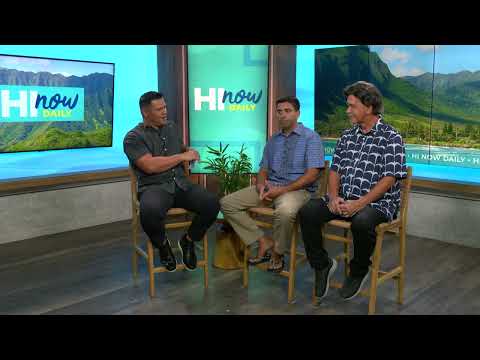
On Hi Now Daily, Alika Garcia, executive director and co-founder of Kuleana Coral Restoration, described techniques for restoring damaged coral reefs around the islands and said the nonprofit works with local partners to preserve cultural and ecological benefits.
Alika Garcia, executive director and co-founder of Kuleana Coral Restoration, told Hi Now Daily listeners that her nonprofit locates broken reef pieces and replants them on the seafloor to restore coral habitat and support local fisheries.
Garcia said the group “focus[es] essentially on restoring degraded coral reef ecosystems,” using scuba diving and underwater drills to secure broken coral so it can regrow and provide food and shoreline protection. The work, she said, reduces reliance on imported food and helps protect homes and businesses from wave energy and storms.
The work matters locally, Garcia said, for both ecological and cultural reasons. “Culturally, I mean, in Hawaii, it’s huge,” she said. “If we think about it in that context, I think coral is like family… the ocean has provided so much for us and that’s why it’s important.” She framed reef care as a responsibility: “it’s our kuleana to now provide for it.”
Robert Crowell of the Office of Hawaiian Affairs described OHA as a partner for the restoration work, saying an OHA program identified in the interview as the Malama Lom program provided equipment and other resources that supported Garcia’s transition from commercial fishing to nonprofit reef restoration. “They… provided us resources… especially like the scuba tank compressor that we have,” Crowell said, adding that the equipment allowed the team to conduct underwater work.
Garcia said Kuleana Coral Restoration looks for broken coral “whether it’s broken by, like, a ship’s anchor or even just natural wave energy,” and reattaches fragments so they can continue producing fish habitat. She invited listeners to volunteer or learn more at kuleanacoral.org.
The interview included discussion of how reef restoration links to food security, coastal protection and cultural practice, and noted OHA’s role in providing equipment and business support during the group’s transition to a nonprofit.