Get Full Government Meeting Transcripts, Videos, & Alerts Forever!
Get email alerts on the Educator Paid Pregnancy Leave topic
No spam. Unsubscribe anytime.
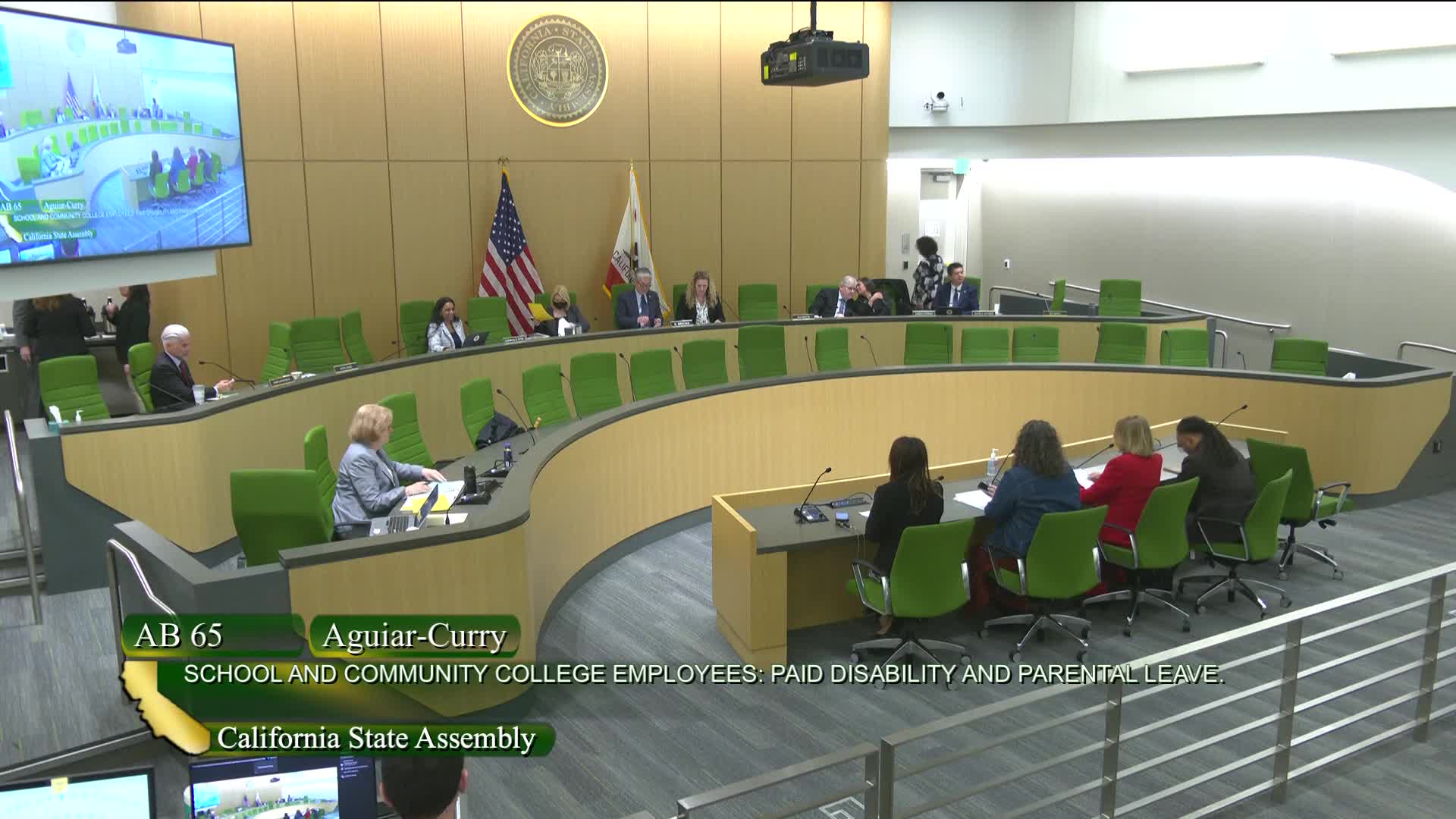
Committee advances bill to provide paid pregnancy leave for California educators
Summary
AB 65, which would create paid pregnancy leave for K–12 educators, passed the Education Committee and will go to Higher Education; supporters framed it as key to recruitment and retention, opponents raised fiscal concerns and urged identification of funding sources.
Majority Leader Ayaire Curry authored AB 65 to create paid pregnancy leave for California educators, arguing current rules force teachers to exhaust sick leave, accept differential pay, or schedule pregnancies around the academic calendar. The measure would give educators paid pregnancy leave without forcing them to use all sick leave first and aimed at addressing staffing shortages and disparities in retirement outcomes that disproportionately affect women.
Speakers in support included State Treasurer Ma (who said CalSTRS data show women may lose nearly $100,000 in retirement benefits due to leave-related effects), Mara Harvey (Natomas Teachers Association president and CTA cosponsor), union and education groups (California Teachers Association, CFT), school employee associations and the state superintendent’s office among others. Many classroom teachers and district staff from Irvine and other districts testified in strong support.
Opponents — including the Association of California School Administrators, California Association of School Business Officials (CASBO), Small School Districts Association, and county superintendents — said the bill would impose a large, ongoing unfunded mandate on local education agencies and could force reductions in services or require recognition of new local costs. They urged that any benefit be funded outside of Prop 98 or other dedicated student funds and recommended collective‑bargaining or local options until a stable funding source is identified.
Committee members expressed support for the policy goal while emphasizing fiscal questions. Several members, including those serving on education budget subcommittees, said they wanted to see funding plans before final endorsement. The author said she would continue negotiations and engage budget committees; the committee voted to pass AB 65 out to Higher Education (recorded roll call in the transcript shows a 6‑0 vote on the motion recorded during the hearing).