Get Full Government Meeting Transcripts, Videos, & Alerts Forever!
Get email alerts on the Student Rights Animal Dissection topic
No spam. Unsubscribe anytime.
Assembly committee advances bill to strengthen students' opt-out rights for animal dissection
Summary
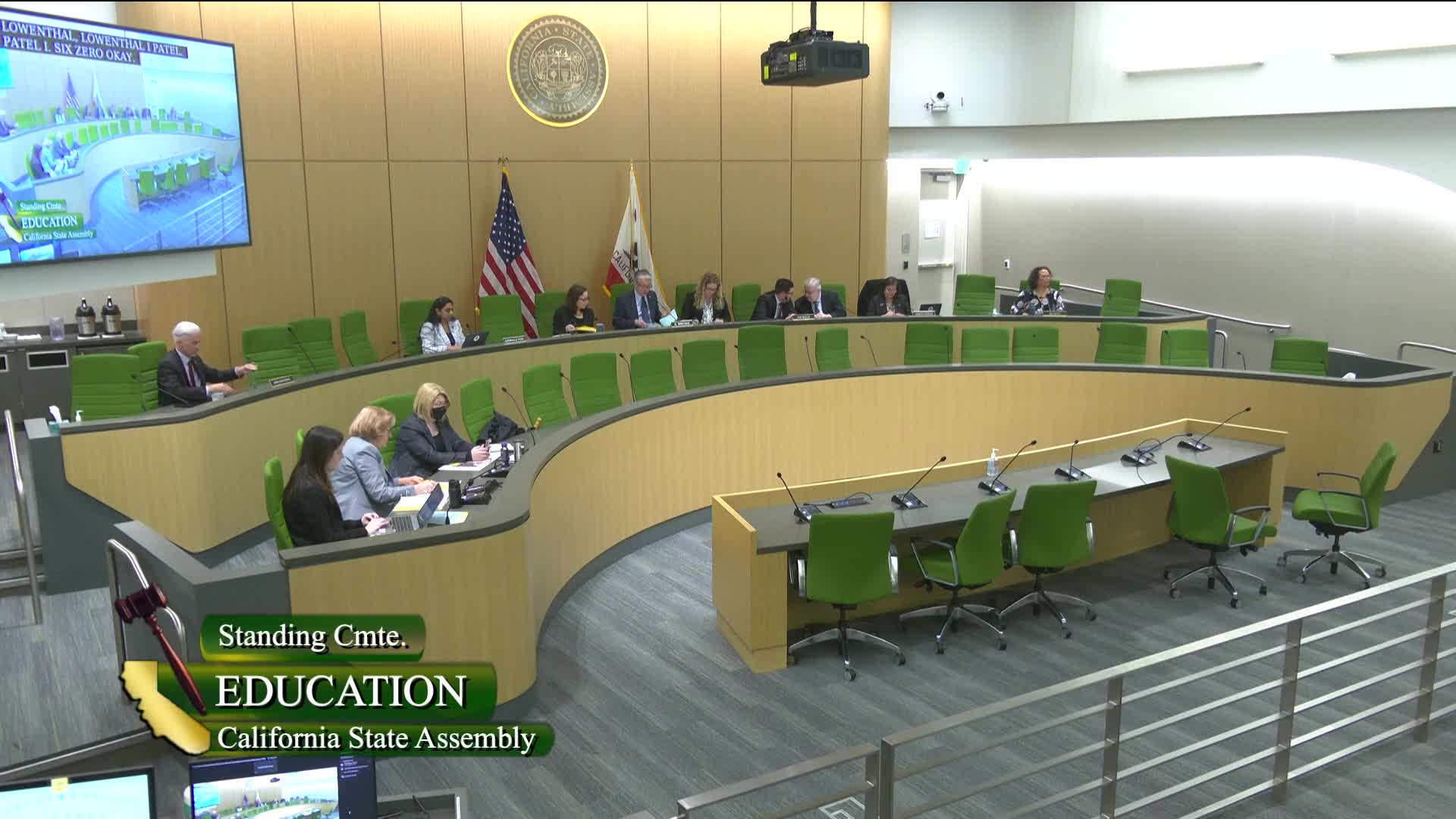
The Assembly Education Committee voted to send AB 347 (the CLASS Act) to appropriations after hearing testimony from students, educators and scientists about alternatives to animal dissection and classroom impacts.
Assemblymember Carlra, author of AB 347, told the Assembly Education Committee that the Compassionate Learning Advancement for Science Students Act (CLASS Act) would require schools to give students written notice of their right to opt out of animal dissection and guarantee a comparable alternative assignment. The committee voted to pass the bill as amended to the Appropriations Committee.
The bill would add requirements that students be informed in writing about their right to decline participation in animal dissections and that districts provide an alternative assignment to achieve the same learning outcomes. The author said the measure preserves an existing agricultural exemption for classes that provide instruction in the care and management of domestic animals. Carlra also said alternatives (synthetic models, licensed software) have become more affordable and, in some cases, reusable, producing long-term cost savings for districts.
Student testimony came from Sienna Roth, who described difficulties obtaining an alternative assignment when she opted out of a high school anatomy class and said a written notification and a standardized complaint procedure would prevent similar experiences. Samantha Crowe, program manager for PETA's humane science education division, testified that research shows animal-free methods can match or exceed performance outcomes for students and said alternatives are acceptable to colleges and university admissions programs.
Opponents included Dr. Peter Reinthal (Hands on Science Partnership), who said in his university teaching experience fewer than 5 percent of students opt out and that students who opted out often performed worse on tests. High school teacher Josh Krieger testified that anatomy and physiology courses can rely heavily on dissections—several weeks per dissection across a year—and that requiring alternative curricula for one-third of the course would create substantial additional workload for teachers and could reduce college readiness for students pursuing medical careers.
Committee members pressed the author on funding and practical implications. Carlra said long-term cost savings from reusable alternatives could offset upfront expenses, and any fiscal need would be considered in appropriations. The committee accepted author amendments and voted 7-0 to pass AB 347 as amended to the Appropriations Committee.
The bill does not change the existing agricultural exemption and, as presented, would not mandate particular alternative products; it would require notice and a comparable alternative where a student elects to opt out.
The committee hearing included multiple public supporters and opponents; staff and members noted the need to balance students' rights and teacher workload as the bill advances to the next committees.
AB 347 now moves to the Appropriations Committee for fiscal review and any further amendments before possible floor consideration.