Get Full Government Meeting Transcripts, Videos, & Alerts Forever!
Get email alerts on the Nepa Eis topic
No spam. Unsubscribe anytime.
ATP reports strong public engagement on draft environmental impact statement; comment period closed March 11
Summary
ATP said the draft Environmental Impact Statement for Project Connect was released in January and the 60‑day public comment period closed March 11; staff reported more than 74 events, over 2,800 in‑person contacts and major themes including support for an airport extension, concerns about park‑and‑ride locations and South Congress right‑of‑way.
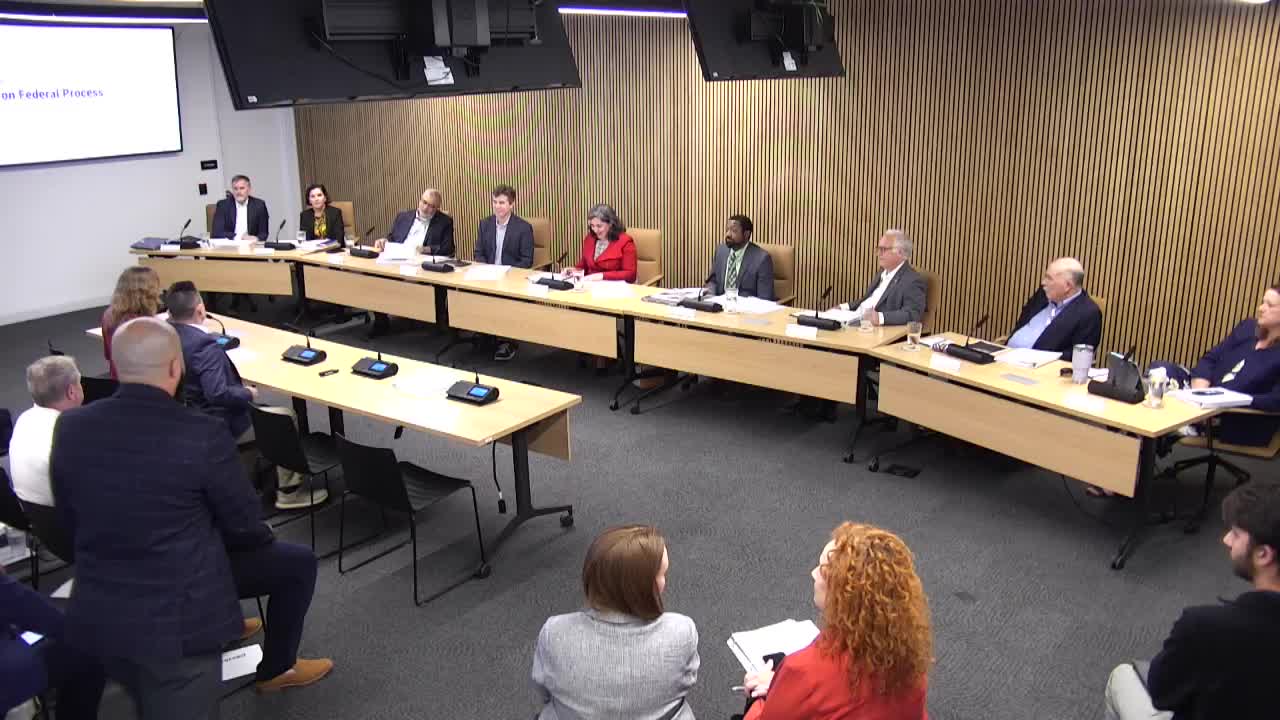
Austin Transit Partnership staff told the board on March 12 that the draft environmental impact statement (EIS) for the Project Connect light‑rail project was released in January, the 60‑day public comment period closed March 11, and the agency received substantial public input to inform the final EIS.
ATP planners said they ran 74 public events over the 60‑day comment period, including four ATP‑hosted public meetings that attracted more than 600 attendees, about 40 stop‑level outreach events coordinated with CapMetro, and thousands of website visits. Staff reported that, counting in‑person events, more than 2,800 people engaged directly with ATP during the outreach.
Jennifer Pine, an ATP planner who presented the update, said staff will assemble and analyze all comments and use them to develop the final EIS, with a target to complete the final document by the end of the calendar year. Darren (last name not specified in the transcript), another ATP presenter, told the board the team is still cataloging comments and will produce responses in the final EIS.
Themes reported by staff included strong public interest in extending the system to the airport, general public support for several design options (including station options and an elevated crossing for a greenway), and requests for more analysis or community conversation on potential park‑and‑ride locations and the use of public right of way along South Congress for competing uses (light rail, parking, wider sidewalks, and bike facilities).
Staff highlighted public engagement features such as a virtual‑reality simulation shown at the University of Texas meeting; ATP said the simulation was a popular way for people to visualize the proposed alignment.
Board member questions focused on next steps for comment responses and how the public will see those responses. Pine said responses and comments will be published in the final EIS; the board confirmed that the final EIS will include verbatim comments and dispositions. ATP staff said they may also publish interim summaries online and host additional community meetings to clarify comments and gather follow‑up input.
Next steps: ATP staff said they will compile and analyze comments, complete additional targeted analysis where needed (for example, on park‑and‑ride options and South Congress right‑of‑way), and submit the final EIS to the Federal Transit Administration to support the Capital Investment Grant process. Staff reiterated the agency's target of completing the final EIS by year‑end.