Get Full Government Meeting Transcripts, Videos, & Alerts Forever!
Get email alerts on the Special Education topic
No spam. Unsubscribe anytime.
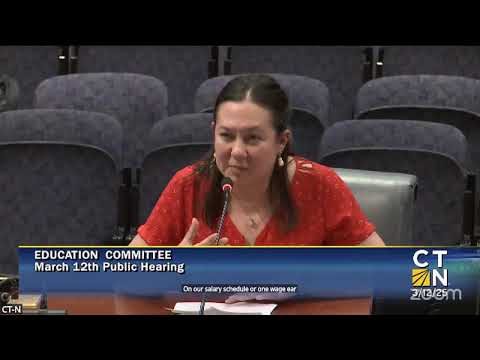
Parents, advocates and providers press committee to overhaul special education oversight and financing
Summary
Parents, providers and regional education centers told the Education Committee that Connecticut’s special education system needs stronger state enforcement, better in‑district capacity and clearer rules on restraint and seclusion.
Parents, advocates, RESC leaders and providers used the public hearing to press for changes to special education oversight, funding and practice. Testimony focused on four recurring themes: enforcement and monitoring, outplacement costs and in‑district capacity, transition services for older students, and restraint/seclusion practices.
State enforcement and monitoring Several parent advocates and attorneys told the committee they frequently rely on the state department and the legal process to obtain services for individual children. They said the state's role has concentrated on data collection and guidance but lacks adequate enforcement capacity. One advocate requested clearer, faster responses to complaints and stronger auditing of systemic problems so families need not shoulder the enforcement burden.
Outplacements, RESCs and in‑district capacity RESC leaders and approved private program representatives said Connecticut has a complex mix of regional center programs, non‑profit approved special schools and private placements. They urged the committee to take a broad view in any study (HB 5,001) and to include RESCs in the analysis. Providers argued that higher outplacement costs do not necessarily mean better outcomes, and that building in‑district capacity through regional collaboratives can be both more effective for students and more cost efficient for districts. Several RESCs offered examples of multi‑district programs that return students to local settings after targeted interventions.
Transition services Parents and advocates pressed the committee on transition planning for students aged 18‑22. A family advocate described a statewide survey showing parents frequently feel excluded and under‑supported during transition planning. Those witnesses urged better parent inclusion, simplified communication protocols, clearer timelines for evaluations, and support for families navigating complex adult services systems.
Restraint and seclusion practices Advocates called for policy changes to seclusion and restraint. A parent‑advocate and the disability rights representative asked for same‑day notification when a child is physically restrained and for seclusion rules that require a trained mental‑health professional to be present during any seclusion placement. They described examples of students returning from school with unexplained bruises and urged video evidence and stronger transparency to ensure safety.
Committee takeaways The committee heard consensus around three points: (1) special education costs and outcomes require a statewide, coordinated response; (2) any study of outplacement rates and costs must include RESCs and both nonprofit and for‑profit providers; and (3) parents need timely, clear communication and stronger state monitoring. Several committee members asked for written recommendations, a clear scope for the select committee’s study and a timeline for delivering actionable reforms.