Get Full Government Meeting Transcripts, Videos, & Alerts Forever!
Get email alerts on the Firearm Industry Liability topic
No spam. Unsubscribe anytime.
Judiciary committee hears hours of testimony on bill to let Connecticut courts sue firearm manufacturers and dealers
Summary
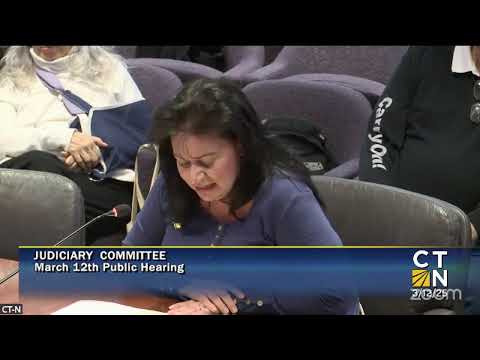
Connecticut's Judiciary Committee took up hours of testimony March 12 on HB 7042, the Firearm Industry Responsibility Act, a proposal that would let victims, municipalities or the attorney general sue firearm manufacturers, distributors and sellers in Connecticut courts for unlawful sales, marketing or other conduct that foreseeably causes harm.
Connecticut's Judiciary Committee took up hours of testimony March 12 on HB 7042, the Firearm Industry Responsibility Act, a proposal that would let victims, municipalities or the attorney general sue firearm manufacturers, distributors and sellers in Connecticut courts for unlawful sales, marketing or other conduct that foreseeably causes harm.
Supporters said the bill is meant to close an accountability gap left by federal law and reduce the flow of crime guns into the state. "This legislation does not target responsible gun owners or responsible businesses," testified Earl Bloodworth, executive director of Connecticut Against Gun Violence. "It sets clear, enforceable deterrence measures for those in the firearm industry who fail to implement basic safeguards." He cited a national statistic — provided by Brady — that roughly 5% of dealers are linked to a large share of crime guns.
The bill's proponents included policy and research witnesses. Ramya Swamy, policy counsel at the Brady Campaign, told the committee that the federal Protection of Lawful Commerce in Arms Act (PLCAA) has been interpreted by some courts to bar many suits against the industry and that HB 7042 would create a state statute that fits a PLCAA exception, allowing actions where industry members knowingly violate sale or marketing laws. David Pacino, legal director at Giffords Law Center, said the draft would create a path for suits against out‑of‑state suppliers when their products are trafficked into Connecticut, and pointed to examples in other states where similar laws have been used to target irresponsible sellers or manufacturers.
Opponents — including dozens of Connecticut gun store owners, manufacturers and trade groups — urged rejection. Matthew McBrien, co‑owner of Patriot Wear Holsters, said the bill's language could spark "frivolous lawsuits that could legitimately bankrupt my company overnight." Multiple independent federal firearms licensees warned insurers would raise premiums or refuse coverage; Ed Rando, partner at Ron's Guns in East Lyme, told the panel his shop's liability policy has risen from $5,000 to about $20,000 a year and said further cost pressure could force stores to close.
Several gun rights and retailer witnesses framed the bill as an attempt to use civil litigation to punish lawful commerce. "Holding manufacturers and retailers responsible for the criminal misuse of their products by third parties is a direct assault on the foundational American principle of personal responsibility," said Rob Sampson, a shooting‑sports industry representative.
Committee members pressed witnesses on practical questions: how to define the proposed law's core terms, how a retailer would know a purchaser was a straw buyer, and how background checks and ATF oversight intersect with civil liability. Representative Fishman asked whether the bill as written left too much to judges and juries; Professor Jennifer Deneen of UConn's ARMS center, who supports measures to tighten industry accountability and to consider neighboring states' laws in background checks, acknowledged the complexity and urged lawmakers to weigh evidence linking industry practices to trafficking.
No vote was taken. The committee heard related testimony on other bills in the hearing — including proposals on merchants' payment codes and cross‑state background check recognition — and several witnesses asked the panel to narrow the bill's language to specify what "reasonable controls" would be.
Supporters said HB 7042 would give victims a path to justice and create financial incentives for safer industry practices; opponents said it would impose vague duties, chill lawful business, and duplicate or conflict with federal law. The panel did not immediately act on the bill.
Sources and quotations in this story come from testimony in the March 12, 2025 Judiciary Committee hearing on HB 7042. "This legislation does not target responsible gun owners or responsible businesses," Earl Bloodworth told the committee. "PLACA was passed" and has been interpreted in ways that block suits, Ramya Swamy told lawmakers. "This bill would allow for a path against the irresponsible conduct that put that shooter in that supermarket," David Pacino said in an example. Opponents included small business owners who warned that a single civil settlement could close their shops.
Looking ahead, the committee faces questions about statutory definitions, insurance market effects, and whether to add more detail on what constitutes reasonable controls or targeted marketing that would be unlawful. The bill's backers pointed to similar statutes in other states and to research on trafficking patterns; its critics urged narrower, clearer language or other enforcement approaches.