Get Full Government Meeting Transcripts, Videos, & Alerts Forever!
Get email alerts on the Education Policy topic
No spam. Unsubscribe anytime.
State education officials urge caution before overhauling Alliance Districts; bill would cut oversight to 15 districts
Summary
The Connecticut State Department of Education asked the Legislature on Wednesday to delay sweeping changes to the Alliance District and Commissioner's Network programs until a statutorily required evaluation of effectiveness is completed, arguing that abrupt reform could disrupt ongoing improvement work and federal plan obligations.
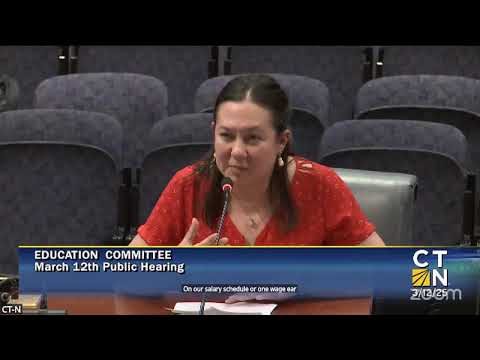
The Connecticut State Department of Education told the Education Committee that major revisions to the Alliance Districts and the Commissioner's Network should wait for the department's mandated effectiveness study. At a public hearing, the department asked lawmakers not to make “wholesale modifications” before the report, due under statute in 2026, is complete.
The department's witness emphasized the program's design and federal ties: Alliance grants come from set‑aside changes to the Education Cost Sharing (ECS) formula established years ago and the Commissioner's Network schools are embedded in the state plan that the U.S. Department of Education approves. The department argued an abrupt rewrite would force a rework of the state consolidated plan and create uncertain federal consequences.
Why this matters: SB 1458 would reduce the number of districts receiving Alliance District oversight and grants to 15 “opportunity districts,” and would phase out the Commissioner's Network. Department witnesses and district officials warned the change would remove supports that some districts and individual schools still use to guide improvement. Several legislators said they want reform but sought more data about which interventions led to durable improvement.
What the department told lawmakers - The Alliance District grant is funded from a carve‑out of ECS increases tied to districts identified years ago; it is not an additional, separate stream of new state money. - The department is collecting longitudinal outcome and financial data to comply with General Statutes 10‑262w and asked lawmakers to wait for that report (due 01/01/2026) before making sweeping statutory changes. - The Commissioner's Network provides school‑level flexibility and accountability in exchange for autonomy; department staff said some network schools and districts still request time to complete transformations under current arrangements.
Lawmakers' concerns and questions Lawmakers said they want fewer, deeper, higher‑touch interventions and asked whether concentrating state oversight on fewer districts would free staff to work more intensively in the places with the lowest performance. Representatives pressed the department for evidence on which Alliance and network practices produced measurable gains and asked how long on‑the‑ground support—visits, planning reviews and implementation monitoring—actually lasts.
Local and state voices District leaders and RESC representatives urged caution about abrupt changes that would reallocate carved‑out ECS dollars and potentially require districts to sustain programs without the current grant structure. Several lawmakers and advocacy witnesses also requested transparency: regular updates and clear performance dashboards so legislators can track progress in real time.
Outlook and next steps The department recommended the legislature let the statutorily required evaluation finish and then use that evidence to craft reforms. Lawmakers signaled support for redesigning state oversight in principle but asked for a phased approach—allowing districts and network schools time to plan for any change in funding or status. Committee members asked the department to provide interim data and a clearer accounting of how Alliance funds are currently spent before advancing statutory changes.