Get Full Government Meeting Transcripts, Videos, & Alerts Forever!
Get email alerts on the E Bike Rebate topic
No spam. Unsubscribe anytime.
Senate committee approves e‑bike rebate changes: lottery, income limits and lower cap
Summary
Lawmakers in the Senate Transportation Committee on March 12 approved an amendment to an e‑bike rebate program that replaces first‑come, first‑served distribution with a lottery, reduces the maximum rebate to $750, and sets income eligibility thresholds, sponsors said.
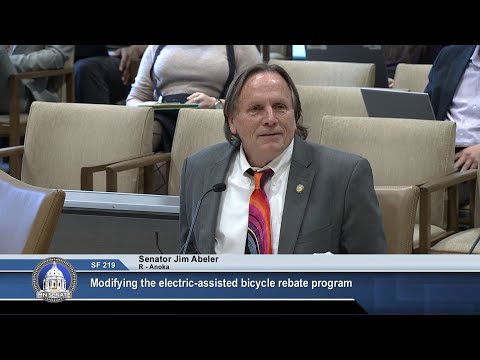
Senator Abler presented an amendment on March 12 to modify the state e‑bike rebate program, proposing a lottery distribution, income‑based eligibility limits and a reduced maximum rebate. The committee adopted the amendment and advanced the bill to the Committee on Taxes.
Under the amendment, the rebate would be limited to households under specified income thresholds (the amendment lists $78,000 for married couples filing jointly and $41,000 for other filers) and the maximum rebate would be reduced to $750. The distribution method would change from the original first‑come, first‑served model to a lottery intended to give all eligible applicants a fair chance when demand exceeds available funds. The bill would also move administration to the commissioner of revenue for tax processing.
Senator Abler and proponents said the change is a pragmatic response to overwhelming demand for earlier rounds of the program. "We crashed a Salesforce server," Michael Wojcick, executive director of the Bicycle Alliance of Minnesota, said, describing how the initial rollout drew tens of thousands of applicants in seconds. Victor Moore, a lobbyist representing bicycle advocates, told the committee the prior program was designed to reserve a share for lower‑income households and that costs for quality e‑bikes have declined, supporting the case for a lower per‑unit rebate and broader distribution.
Advocates said the lottery and means‑testing would make the program fairer and more likely to serve people who cannot afford e‑bikes without assistance. "A lottery is a much more equitable system; everyone can put in their applications," Wojcick said.
Opponents raised budgetary priorities and questioned whether the state should spend on rebates for what some described as a nonessential, consumer product. "Did anybody suggest maybe we shouldn't fund this? Maybe we should take the money to help schools or something else?" asked Senator Farnsworth, citing local school and waiver funding concerns.
Committee discussion included questions about how the income thresholds and the reduced rebate amount were set. Proponents said the thresholds came from earlier program rules and that the $750 level reflects falling e‑bike prices and a policy decision to serve more households with the same appropriation. Witnesses said the initial program, funded at roughly $2 million, was oversubscribed almost immediately; testimony described very high demand and limited initial funding. Exact statutory citations for the prior program were not specified in the hearing record.
After questions and discussion, Senator Dibble moved that Senate File 2‑19 as amended be recommended to pass and referred to the Committee on Taxes; the motion carried on a voice vote and is recorded as approved in committee. The transcript does not include a roll‑call tally.
The committee's action keeps the program alive in the legislative process while changing distribution and eligibility to prioritize equity and broaden participation among lower‑income households.