Get Full Government Meeting Transcripts, Videos, & Alerts Forever!
Get email alerts on the Peer Recovery topic
No spam. Unsubscribe anytime.
Senate lays over $1M‑plus recovery community appropriation after testimony from Generation Hope
Summary
An appropriation request for culturally specific peer recovery services from Generation Hope was presented to the Senate Human Services Committee; the bill (SF2347) was laid over for possible inclusion in an omnibus bill.
Senate File 2347, an appropriation to support peer recovery outreach and a recovery community organization, was presented March 12 to the Senate Human Services Committee and laid over for possible inclusion in the human services omnibus bill.
Abdermal (Abdi) Sawasamy, co‑founder and executive director of Generation Hope, described the organization’s work providing culturally specific peer recovery services in the Twin Cities and in regional Somali/Multi‑cultural communities. Sawasamy said Generation Hope began in 2019 as a grassroots effort after a spike in overdose deaths in his community and that the group now provides peer recovery coaches, outreach and culturally tailored supports.
Several people with lived experience testified about the organization’s role in connecting people to treatment and helping them remain in recovery. “They were the people that I would've called when I didn't know where to get support,” said Shamar Ki Abdi, who described becoming a certified peer recovery specialist and now employed by Generation Hope.
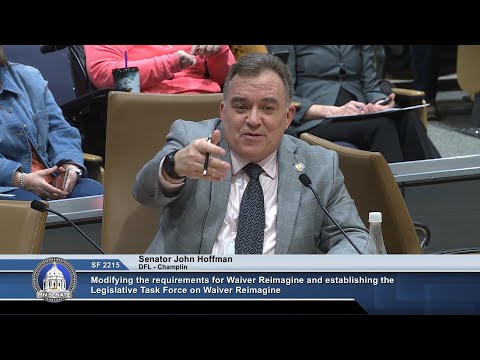
Senator Hoffman told the committee the bill is a simple appropriation to support a recovery community organization. The committee did not take a fiscal vote on the floor; the chair laid SF2347 over for possible inclusion in an omnibus bill and requested fiscal review as part of the broader budget process.
The witnesses asked legislators to fund outreach and peer‑to‑peer recovery supports outside mainstream service channels and to increase training capacity for peer recovery specialists so organizations can reach more people across the state.