
Maryland Ways and Means hears hours of opposition to 2.5% business-to-business services tax bill
Get AI-powered insights, summaries, and transcripts
Sign Up Free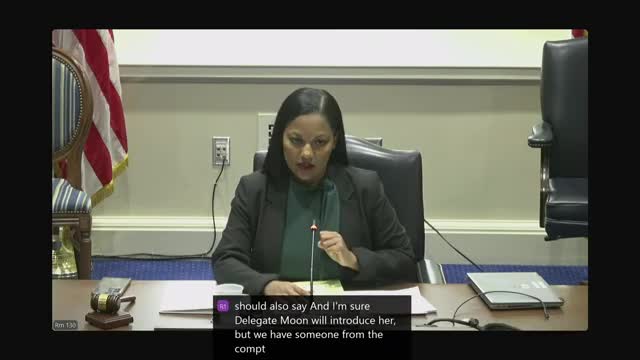
Summary
Delegate David Moon, the bill sponsor, told the House Ways and Means Committee on March 12 that House Bill 1554 would create a 2.5% tax on business‑to‑business services as one option to address looming state budget shortfalls.
Delegate David Moon, the bill sponsor, told the House Ways and Means Committee on March 12 that House Bill 1554 would create a 2.5% tax on business-to-business services as one option to address looming budget shortfalls and shifting federal funding. “I am not here to push this particular plan on you,” Moon said, “but it did seem prudent to add options to the table.”
The bill prompted nearly four hours of testimony and extensive questions about scope, implementation and economic impact. Moon framed the proposal as a sales-tax‑style expansion aimed at business purchases; Deborah Gorman, director of the legal division at the comptroller’s office, told the committee the office could implement the bill’s sales-tax model by the proposed effective date and was available to answer technical questions. “We can implement by the implementation date,” Gorman said.
Why it matters: The state is confronting a multi‑hundred‑million dollar revenue gap and officials have proposed a mix of cuts and revenue changes. Moon and other lawmakers said the panel needed additional options as revenues and federal supports shift; opponents argued the proposal would slow growth and worsen affordability across Maryland. The hearing drew dozens of trade associations and hundreds of witnesses representing hotels, manufacturing, technology firms, accountants, trucking and property industries.
What the bill would do and key uncertainties - Structure: HB 1554 would impose a 2.5% tax on certain business‑to‑business services, implemented through the state’s existing sales‑tax framework. Sponsor testimony and the draft fiscal analysis treated the measure as a sales tax on specified services rather than a gross‑receipts levy. - Scope questions: Committee members and witnesses repeatedly noted the bill does not define “business entity” or resolve how sole proprietors, single‑member LLCs, related corporate entities, and nonprofit or government contractors would be treated. In the hearing, the comptroller’s office said the fiscal estimate did not attempt to model sole proprietor impacts and recommended the panel clarify definitions. - Nexus and out‑of‑state suppliers: Moon and the comptroller cited the Wayfair framework for remote sellers—i.e., use‑and‑nexus rules that require remote vendors who cross statutory thresholds to collect sales tax—but members queried how that precedent would translate across thousands of service providers and small vendors.
Industry concerns raised at the hearing - Administrative burden and compliance costs: Accounting and tax groups said the plan would create ‘‘administrative chaos’’ because services are hard to locate and allocate across jurisdictions. Rebecca Olson, CEO of the Maryland Association of CPAs, told the committee: “This bill is a tax on compliance itself.” Several witnesses noted the state’s comptroller would need additional staff and IT changes to carry out the expansion. - Fiscal and implementation details: The committee heard that the fiscal note assumes the comptroller’s office would add three compliance auditors and about $250,000 for computer programming to implement the change; committee members pressed whether that capacity and the short implementation timeline were realistic. - Economic competitiveness and relocation risk: Large employers and statewide trade groups — including the Maryland Chamber of Commerce and individual headquarters firms — warned that taxing business services disproportionately penalizes companies headquartered in Maryland and could prompt relocations or deter expansions. Paul Nolan, vice president of tax at McCormick & Company, told the panel: “This is the wrong tax at the wrong time.” Multiple witnesses said firms could shift services across state lines or move functions to neighboring states. - Sectoral impacts cited by witnesses: tech and professional services (significant share of the bill’s projected revenue), hotels and lodging (thin margins and government‑rate business), trucking and repair shops (frequent safety repairs), construction and real estate (consultants and permitting), and health‑care providers and Medicaid‑funded services (which cannot pass costs to state clients). - Pyramiding and final‑consumption concerns: Many witnesses argued the tax would ‘‘pyramid’’ as services were resold down supply chains and ultimately raised costs for end consumers; analysts from taxpayer groups told the panel that applying a sales tax to intermediate business services is effectively a tax on taxes.
Committee questions and sponsor responses - Definitional ambiguities: Multiple members asked the sponsor and the comptroller to clarify who would pay, how related‑party transactions would be treated, and whether common accounting approaches (for example, consolidated parent reporting) would be recognized. The comptroller repeatedly recommended statutory clarity on the term “business entity.” - Interaction with other proposals: Legislators noted the bill is one option among many revenue and cut scenarios, and asked how it would trade off against Governor Moore’s revenue proposals, proposed corporate tax changes, or targeted exemptions. Moon said he offered the bill to expand options but did not speak for the budget negotiating team.
Public testimony snapshot - Professional associations: Maryland CPAs, the Maryland State Bar Association, the American Advertising Federation, and engineering and architectural societies strongly opposed the bill on compliance and competitiveness grounds. - Business and industry: Hotel operators, restaurant and food distributors, trucking associations, staffing firms and technology companies told the committee that costs would be passed on, or that firms would move activity to other states. The Maryland Chamber said the bill threatened the state’s ability to attract and retain headquarters and tech investment. - Local chambers and small‑business owners from across Maryland’s regions — rural and suburban — urged rejection, saying small margins and cross‑border options would amplify harm.
What the record shows and what it does not - The committee received extensive testimony showing widespread opposition and many detailed cost concerns; advocates for the bill emphasized it as a revenue option amid a tightening fiscal picture. The transcript documents multiple specific fiscal‑note figures and implementation assumptions but does not record committee action, amendments, or a vote on the measure during the March 12 session.
Next steps: The Ways and Means Committee will weigh the testimony, possible drafting changes (for example, clearer definitions and carveouts), and competing revenue/cut packages as budget negotiations continue. Sponsor Moon said he would remain to hear opposition testimony and review comments submitted to the committee.
Ending: Committee members repeatedly framed the hearing as part of a broader budget conversation in which any single revenue proposal must be compared with cuts and other tax options. The hearing record leaves detailed drafting questions for staff and the comptroller to resolve before the bill could move further.