Get Full Government Meeting Transcripts, Videos, & Alerts Forever!
Health and Government Operations Committee advances slate of health, procurement and public-safety bills
Summary
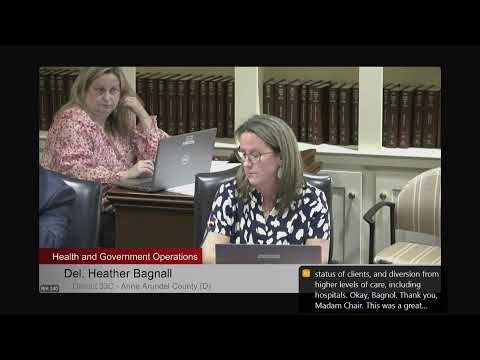
The Health and Government Operations Committee on June 12 advanced a package of health, procurement and public-safety bills, approving most as amended and withdrawing three, with extended debate on prior-authorization fee bans, a phased restriction on PFAS pesticides and additional requirements for the state 988 crisis response system.
The Health and Government Operations Committee on Wednesday considered a slate of bills on procurement, behavioral health, pesticides containing PFAS, Medicaid and disability advisory groups and several other health-related measures, approving most as amended and withdrawing three. The panel discussed several measures at length — including a prohibition on provider charges for prior authorization requests, a compromise to limit certain PFAS pesticides, and expanded requirements for the state's 988 crisis response system — and referred the bills to the House floor.
The committee chair opened the session by noting the bills had been vetted in subcommittee and would move quickly. A pair of bills were withdrawn before the committee took up substantive items.
The most contested items centered on prior-authorization billing, PFAS in pesticides and crisis-response oversight. On House Bill 1314, the committee approved an amendment that removed proposed restrictions on the use of artificial intelligence and clarified the prohibition would apply to in-network (contracted) providers. Delegate Lisa M. Collison, sponsor of HB1314, told the committee the amended bill "prohibits a healthcare provider from charging a fee to obtain a prior authorization from a health insurer, a nonprofit health service plan, a health maintenance organization, any other entity that provides health benefit plans subject to state regulation or a Medicaid managed care organization." Delegate Hill said she remained uncertain about codifying practices already governed by contracts, saying she was "very uncertain about why we want to codify something that we're not sure is a major practice." The committee added language limiting…
Already have an account? Log in
Subscribe to keep reading
Unlock the rest of this article — and every article on Citizen Portal.
- Unlimited articles
- AI-powered breakdowns of topics, speakers, decisions, and budgets
- Instant alerts when your location has a new meeting
- Follow topics and more locations
- 1,000 AI Insights / month, plus AI Chat