Get Full Government Meeting Transcripts, Videos, & Alerts Forever!
Get email alerts on the Veterinary Workforce topic
No spam. Unsubscribe anytime.
Senate bill would create service‑cancelable loans to place veterinarians in Georgia shelters
Summary
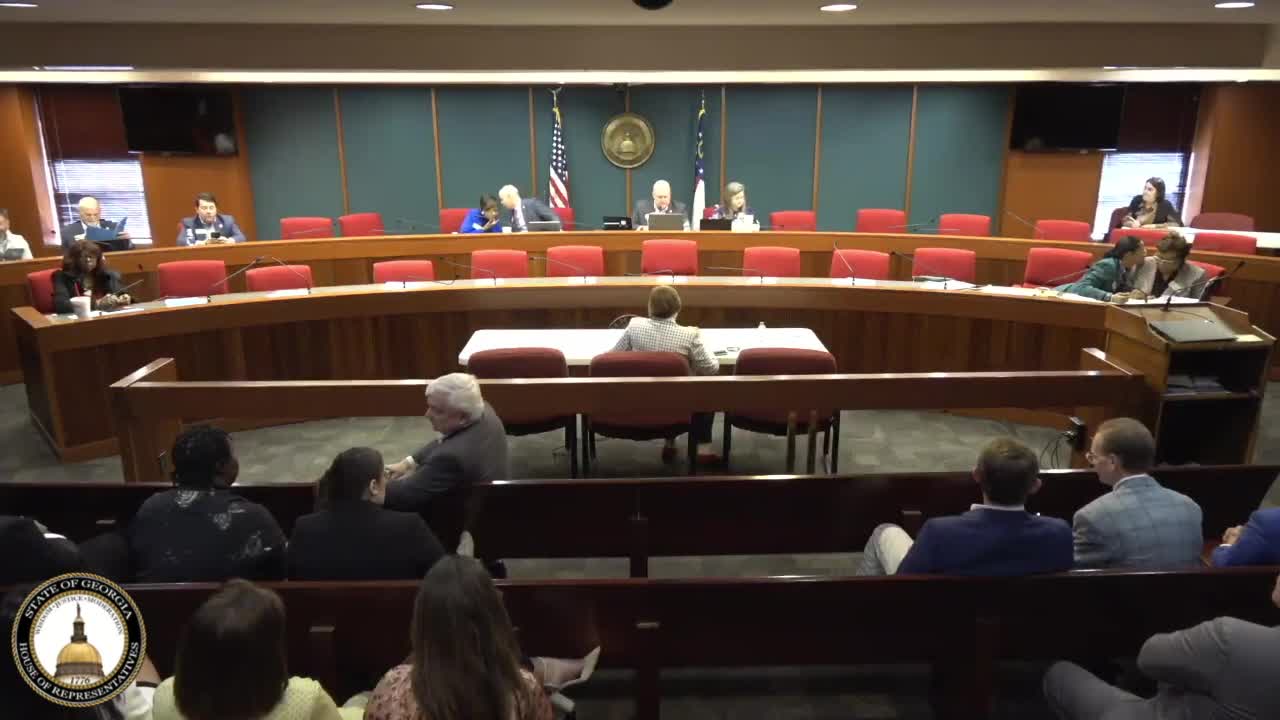
Sen. Kirkpatrick presented SB 20, a hearing‑only bill to create service‑cancelable loans of $25,000 per year (up to three years) to incentivize veterinarians to practice in shelter medicine and nonprofit sterilization clinics; program would sit in the Department of Agriculture and be subject to appropriation.
Senator Kirkpatrick introduced Senate Bill 20 (LC 610138 S) as a hearing‑only measure to address a reported shortage of veterinarians working in shelter medicine and nonprofit pet sterilization clinics across Georgia. "This bill is an attempt to help with the shortage of veterinarians practicing in shelter medicine and nonprofit pet sterilization clinics around the state," Kirkpatrick said.
Kirkpatrick told the committee the proposal would offer service‑cancelable loans tied to a three‑year designated period of practice. Awards would be structured at $25,000 per year of service, up to three years, with a plan for four awards the first year subject to appropriations. She described a backlog of spay/neuter procedures, average wait times of two to four months at some clinics, and a doubling of shelter intake and euthanasia since 2021 as motivating factors for the measure.
The bill assigns administration to the Georgia Department of Agriculture and creates a committee within the existing veterinary education board to draft qualifications; the substitute language preserves the existing food animal program's appropriations as separate from the proposed shelter program. Kirkpatrick said she had worked with the commissioner of agriculture, the Georgia Veterinary Medical Association and the state veterinary board while drafting the substitute.
Members asked about program design and funding. Committee members noted the $25,000 award amount “is consistent with the other service cancelable loan programs” and that veterinarians commonly graduate with high educational debt (Kirkpatrick cited roughly $185,000). Kirkpatrick said shelter veterinarians typically earn about 30% less than private‑practice vets. Committee members also asked whether non‑veterinarian staff could perform sterilizations; Kirkpatrick replied she would not get into scope‑of‑practice debates but said some nonprofit workers already perform such work and would be eligible where appropriate.
Funding and appropriations were discussed; Kirkpatrick said the program would be "subject to appropriations" and that the bill requests $100,000 for the first year. She urged that the bill proceed without amendment because of months of stakeholder work.
Because the committee held the session as a hearing only, no vote was taken on SB 20. The author and members agreed to follow up with staff and stakeholders for technical refinements.
The transcript shows committee members pressed on program scope, funding and interplay with an unrelated veterinary technician bill that had been introduced the same day; Kirkpatrick said she had learned of that other bill at noon and preferred not to combine measures without more vetting.
Ending: The committee completed the hearing and moved on to the next item. No formal action or vote was recorded on SB 20 during the session.