Get Full Government Meeting Transcripts, Videos, & Alerts Forever!
Get email alerts on the Fire District Consolidation topic
No spam. Unsubscribe anytime.
Panel advances bill to let fire districts consolidate budgets and levies
Summary
The committee sent House Bill 208 to the floor with a due-pass recommendation after sponsors said it would remove a budget-growth disincentive to consolidation and create a process for contiguous fire districts to combine while preserving local control and public hearings.
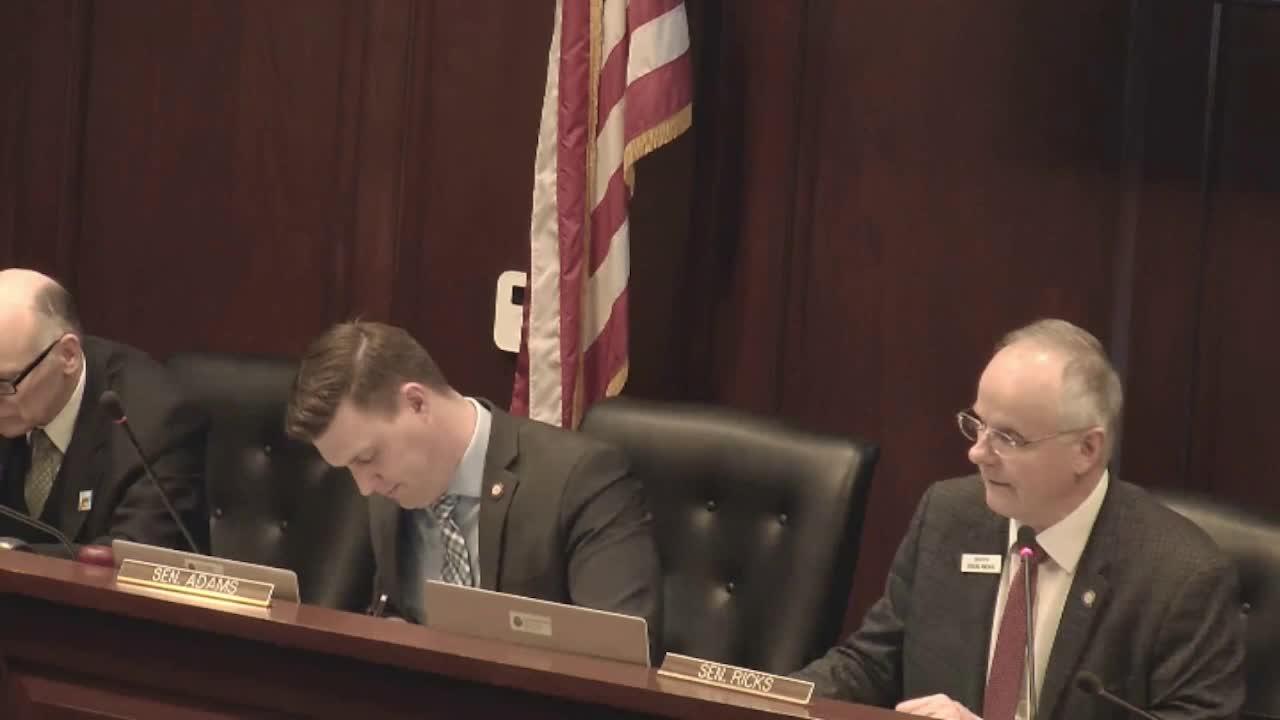
The Senate Local Government and Taxation Committee voted to send House Bill 208 to the Senate floor with a due-pass recommendation after hearing testimony that the bill would remove a budget-growth disincentive and allow fire districts to consolidate budgets and set a combined levy.
Senator Jim Woodward (Legislative District 1) and Representative Mark Sauter, the bill’s presenters, said the measure responds to an unintended consequence created when a 3% statutory cap on budget growth was combined with fire-district-specific budget rules. The presenters said the existing rules can penalize districts that seek to consolidate because the combined entity’s budget growth can be constrained by historic caps.
Representative Sauter, a retired fire chief, described the bill as a tool to allow districts to pursue economies of scale without forcing consolidation. “This bill does not enable one fire district to gobble up another,” Sauter said. He and other witnesses said the proposal preserves elected local fire-district boards, requires public hearings on consolidation proposals and includes an appeals process.
Chief Greg Tominski (Middleton and Star Fire District) explained how levies would be recalculated when two districts combine: the districts’ budgets would be combined and a new levy would be set based on the combined assessed value; individual taxpayers in different parts of the new district could see increases or decreases as the levy averages out across the new district.
Committee members raised questions about contiguous boundaries and how noncontiguous districts might seek authorization to combine; presenters said they would work with members to address language and that the measure’s process includes public hearings. Senator Grohl moved to send HB 208 to the floor with a due-pass recommendation; Senator Taylor seconded. The motion passed by voice vote, and the committee designated Senator Woodward to carry the bill on the floor.
The committee’s action advances a statutory change intended to make consolidation an administratively feasible option for fire districts while retaining local control and public input.