Get Full Government Meeting Transcripts, Videos, & Alerts Forever!
Get email alerts on the Healthworkforce Delegation topic
No spam. Unsubscribe anytime.
Committee advances bill allowing nurses to delegate tasks to medical assistants in provider offices
Summary
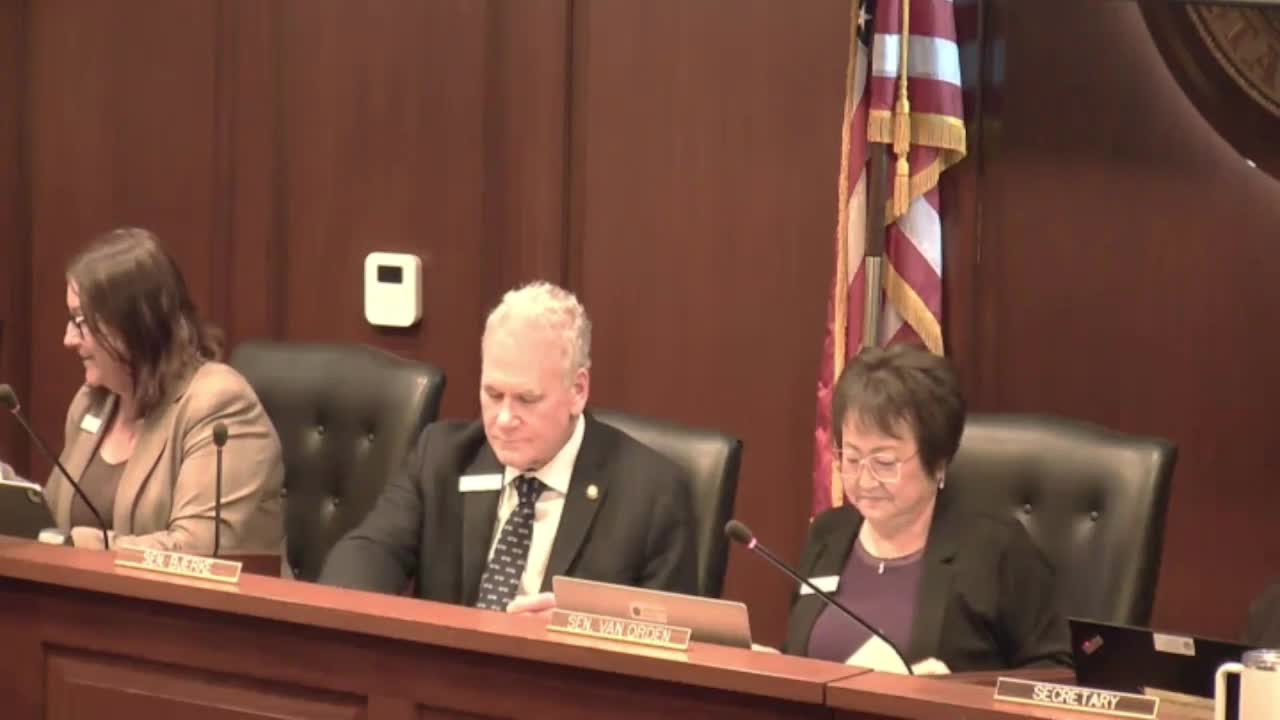
The Senate Health and Welfare Committee advanced House Bill 327, which would explicitly allow nurses to supervise and delegate certain non‑clinical tasks to certified medical assistants in provider offices. Supporters said the change reflects modern staffing models; some senators asked for clarity about delegation limits and certification.
Representative Healy told the Senate Health and Welfare Committee that House Bill 327 would update code to reflect current clinical staffing models by allowing advanced practice registered nurses to oversee medical assistants in provider offices. "This bill does simply puts it into code that a nurse can oversee a medical assistant in this setting," Representative Healy said, adding that medical assistants are "different than CNAs, LPNs, RNs" and often fall into a regulatory "black hole."
Healy described the intent as clarifying supervision and delegation so medical assistants can perform routine tasks under nurse oversight without exercising independent clinical judgment. "So they can go in and they can obtain medical information...they can obtain labs or they can obtain vital signs and they can obtain that information," Healy said, "But they are not making clinical judgment based off of that." He added that the bill leaves the precise scope intentionally broad so existing organizations with detailed delegation lists would not be disrupted while smaller providers could adopt similar practices.
Senator Blaylock said delegation is important for healthcare staffing and asked why the change needed to be codified. Representative Healy replied that medical assistants are not currently addressed in the nursing code or IDAPA nursing rules and so lack explicit statutory recognition: "When you read that code it really spells out nursing, nursing, nursing...But nowhere does it call out this profession of medical assistance." Healy pointed to language in the bill that defines "non-nurse" duties as those for which the individual has received formal training and national certification acceptable to the board.
Committee members asked for scenarios and clarity about whether the bill would restrict current delegation practices. Healy said many organizations already use medical assistants and maintain can/cannot lists; the bill intentionally avoids detailed limits so as not to interfere with existing, robust delegation practices while enabling smaller clinics to adopt similar supervision. "That's why we left this really vague, because we don't want to step on their toes," Healy said.
Robert Vandermeer, who identified himself as supporting the bill, told the committee that nurses frequently need to delegate routine tasks when physicians are not present and that the change would reflect contemporary clinic staffing. "I'm here to testify in favour of this bill...nurses delegate to nursing assistants, physicians delegate to medical assistants, but the physician might not be there, the nurse might be there and they have to make a decision...the nurse could then say I'm delegating this task to a medical assistant," Vandermeer said.
Senator Keiser moved and Senator Blaylock seconded that the committee send House Bill 327 to the floor with a due-pass recommendation. The committee approved the motion by voice; no recorded no votes were noted in the transcript. The transcript records the committee adjourned after the vote.