Get Full Government Meeting Transcripts, Videos, & Alerts Forever!
Get email alerts on the Charter School Finance topic
No spam. Unsubscribe anytime.
Committee approves House Bill 331 to expand charter school credit‑enhancement program; sponsors say change will allow more schools to refinance at lower rates
Summary
The Senate Education Committee voted to send House Bill 331 to the floor with a due‑pass recommendation. The bill changes how the state calculates capacity for a charter school credit‑enhancement program and lifts the program cap, a change proponents say will allow additional charter schools to lower borrowing costs and direct savings into the课堂.
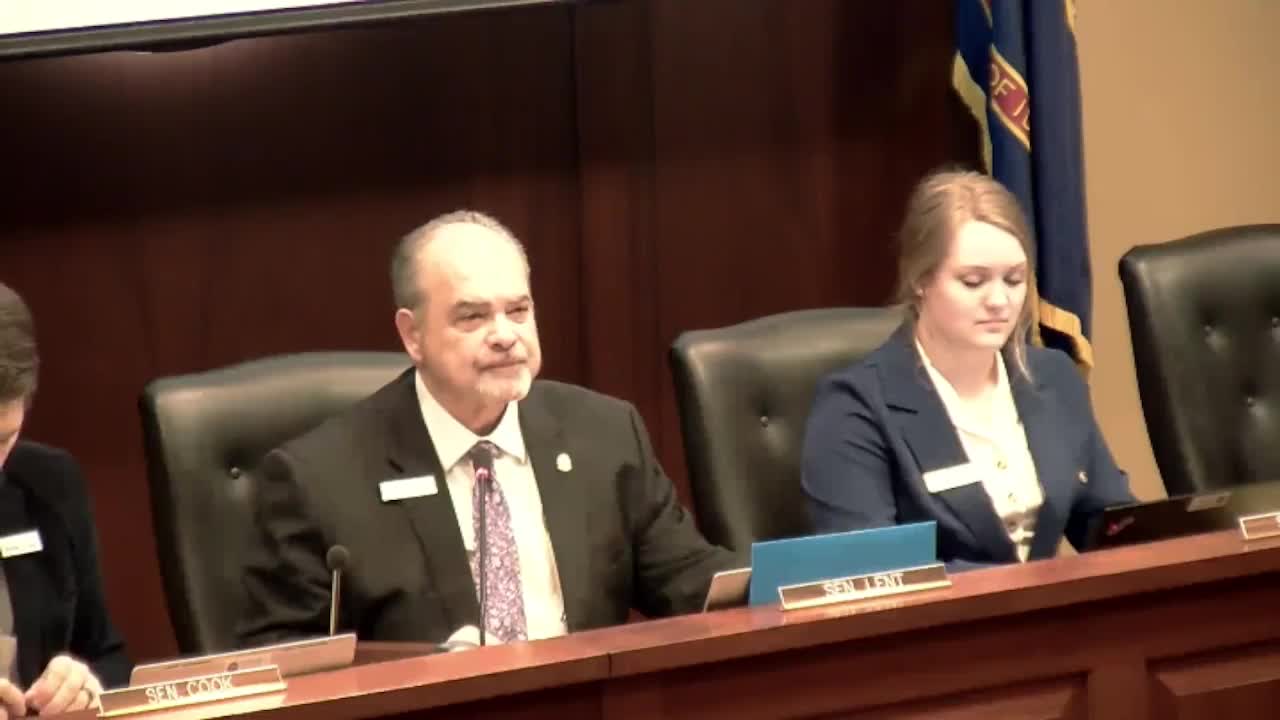
The Senate Education Committee voted to send House Bill 331 to the Senate floor with a due‑pass recommendation after sponsors and charter‑school representatives described changes to the state’s charter school credit‑enhancement program designed to allow more schools to participate.
State Senator Lori Denhartau, the bill sponsor appearing before the committee, described the proposal as a revision to the program’s formula and removal of the existing cap so that more public charter schools can access the state’s credit enhancement when refinancing or financing facilities. “This piece of legislation modifies the formula and lifting the cap, it allows more schools to participate,” Denhartau said, and noted the statutory transfer into the charter school revolving loan fund already occurred last year.
Denhartau said the program has helped 18 charter schools since its creation in 2019 by lowering bond interest rates by about 2%, producing estimated annual interest savings she described as being put back into classrooms. She outlined how Idaho Housing and Finance Association (IHFA) would evaluate an applicant’s debt-service impact across the portfolio and calculate a maximum aggregate annual debt service to determine whether a new applicant fits under the program cap. Denhartau said the current maximum aggregate annual debt service is $11,400,000 and that scheduled transfers into the Charter School Facilities Fund would substantially increase program capacity in coming years.
Representatives from charter schools and financiers told the committee the change is important because facility costs are high and the credit enhancement enables charter operators to lower borrowing costs and use savings for instruction and student supports. Monica White, CEO and co‑founder of Elevate Academy, said a typical new campus budget in today’s market is about $18 million and that refinancing with state credit enhancement could reduce her schools’ annual interest payments by roughly $289,000 per campus. “Being able to access the credit enhancement program would decrease our interest rate to 5% … that will save Elevate $850,000 each year if three of our schools access the program,” White said.
Emily Downey, chief financial officer for Sage International Charter Schools, said the program has produced concrete savings at her schools: $119,000 per year for one refinancing and $239,000 per year for another purchase and construction project. Terry Ryan, CEO of Bloom, told the committee that charter expansion in Idaho has produced substantial new public‑school seats and praised the state program as a model that helps finance those seats.
Robin Odlin, president of Building Hope Finance, a community development financial institution that lends to charter schools, said the credit enhancement is a critical long‑term source of capital for lenders. Blake Yood of the Idaho Charter School Network said the bill’s formula was developed with input from the treasurer’s office and that the revised cap remains conservative compared with similar programs in Colorado and Utah. He said the program’s capacity estimate can fluctuate with interest rates and financing amounts but that safeguards — such as required deposits and front‑end intercepts — limit the state’s exposure.
After testimony and brief questions about long‑term state exposure and program safeguards, a motion to send House Bill 331 to the floor with a due pass recommendation was moved and seconded. The chair called for the ayes and declared the motion carried by voice vote; no recorded roll‑call was taken.
The committee did not record specific vote tallies in the hearing transcript. Sponsors asked for prompt floor consideration; Senator Jen Hartog closed by asking the committee to support a due pass recommendation.