Get Full Government Meeting Transcripts, Videos, & Alerts Forever!
Get email alerts on the Criminal Law Human Trafficking topic
No spam. Unsubscribe anytime.
Committee holds bill that would make first-time commercial solicitation a felony
Summary
The Senate Judiciary and Rules Committee held House Bill 88 after extended debate over removing a misdemeanor penalty and treating all commercial solicitation of adult sexual services as a felony. Supporters cited an attorney general report; opponents said a felony for first-time conduct risks unfairly punishing isolated mistakes.
Representative Britt Raybould, sponsor of House Bill 88, told the Senate Judiciary and Rules Committee that the bill would remove the misdemeanor provision from Idaho’s commercial solicitation statute and leave only the felony offense in place, aligning the statute with language in an attorney general human‑trafficking report.
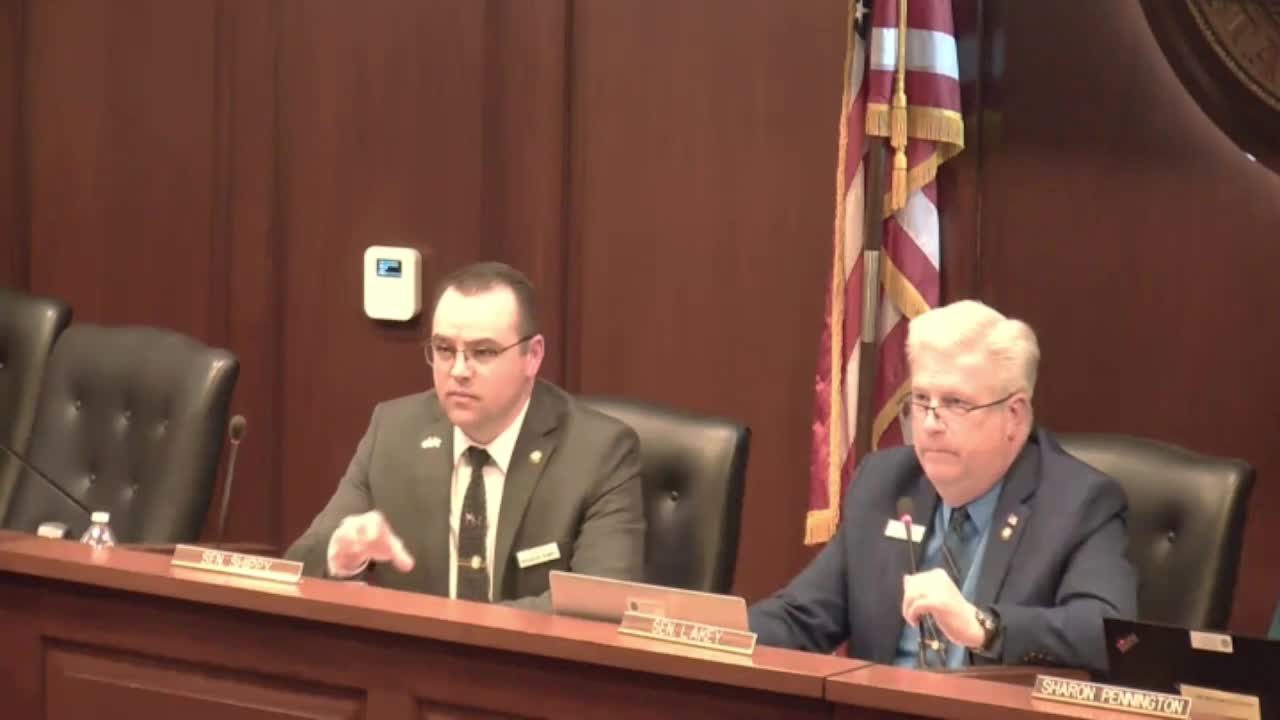
The measure drew sustained questioning from senators concerned that converting the first offense to a felony would impose a harsh penalty for isolated or youthful mistakes. “Five years in prison for trying to do business with a person of ill repute on the first offense...that’s overly harsh,” Senator Foreman said. Senator Shippey and others warned the change could sweep up one‑time actors who, under current law, would be charged only with a misdemeanor on first offense and a felony only on repeat conduct.
Raybould, a Republican representative from District 34, said the attorney general’s 2023 human‑trafficking report recommended strengthening penalties to address the demand side of commercial sexual exploitation. “The revision would make the purchase of commercial [sexual] activity a felony,” she said, pointing to Idaho Code 18‑112 for the felony sentencing range — imprisonment up to five years, a fine up to $50,000, or both. Raybould also cited data she said show repeat purchasers account for the bulk of the market: “Of those who purchased in the last year, over six plus times, that’s 72 percent of that particular population,” she said.
Several senators repeatedly raised hypothetical cases — including a young adult who makes a single mistake — and questioned whether elevating the first offense to a felony was the right tool. Senator Wintrow urged a victim‑centered focus and cautioned against adding felonies without careful thought. Senator Rekke and others noted that existing human‑trafficking statutes already criminalize conduct involving coercion or trafficking of minors and that proving trafficking can be difficult in court.
After debate and competing motions, the committee voted on a motion to hold House Bill 88 in committee. The motion carried 6–3; the bill will not move to the Senate floor from this committee at this time.
Votes at a glance: Motion to hold House Bill 88 in committee — motion carried 6–3.
The committee did not take final action to advance the bill; sponsors and opponents can pursue further amendments or reintroduction elsewhere in the legislative process.