Get Full Government Meeting Transcripts, Videos, & Alerts Forever!
Get email alerts on the Children Device Safety topic
No spam. Unsubscribe anytime.
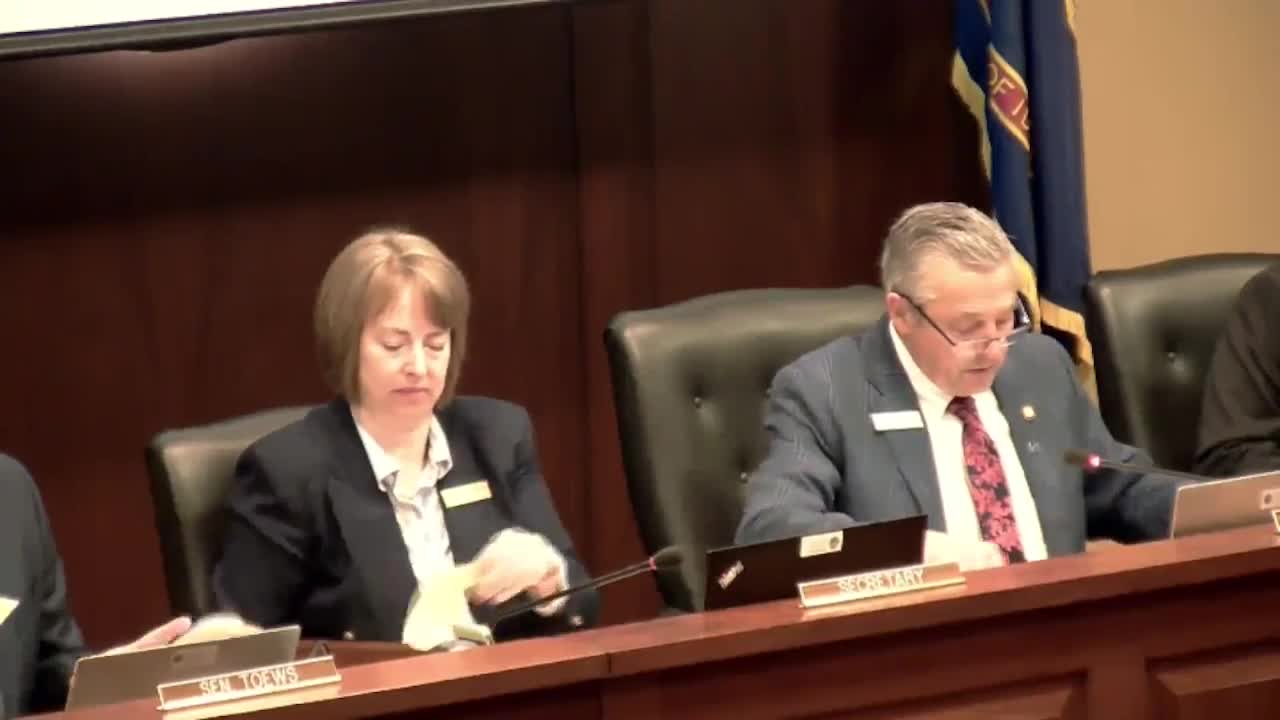
Idaho Senate committee debates device filter bill after hours of testimony; motion to send bill to floor fails 4-5
Summary
Senate State Affairs heard extended testimony Wednesday on Senate Bill 11‑58, the Children’s Device Protection Act, which would require manufacturers to enable native device search filters for minors by default and allow adults to turn those filters off.
Senate State Affairs heard extended testimony Wednesday on Senate Bill 11‑58, the Children’s Device Protection Act, which would require manufacturers to enable native device search filters for minors by default and allow adults to turn those filters off.
The sponsor, Sen. Kevin Cook (R‑LD32), told the committee the bill would ask manufacturers to turn on software already present on devices so minors would not be exposed to explicit material through native search engines. "It is not a hard thing to do," Cook said, adding that the measure is narrowly tailored to native search engines and would not require retailers or wireless carriers to change operations.
Supporters, including parents, mental‑health professionals and representatives of advocacy groups, described personal and clinical harms they said followed early exposure to explicit material. Scott Coleman, director of the Safe Passage Children’s Advocacy Center in Coeur d'Alene, said his center saw roughly 225 victims last year and that the majority involved sexual exploitation. Chris McKenna, founder of Protect Young Eyes, testified the change is "technically feasible, intentionally narrow, and simply asks devices to do what they already know how to do." Several parents and community witnesses gave accounts of children exposed to explicit material as young as eight and urged the committee to approve the bill.
Opponents included trade groups and tech‑policy experts. Amy Voss, director of state and federal affairs at NetChoice, argued that mandated filters create a "false sense of security" because tech‑savvy minors can use VPNs, proxy servers or alternate browsers to circumvent native filters, and she raised concerns about the law’s potential constitutional exposure. Jonathan Decker of the Parkview Institute warned the bill could discourage private market innovation for filtering and called its definitions "overly broad and ambiguous." Benjamin Bull, general counsel for the National Center on Sexual Exploitation, countered that mandatory filtering at the device level has been endorsed by the U.S. Supreme Court as a less‑restrictive means of protecting children, and he said Utah’s similar law had been defended in court.
Committee members pressed on technical details and limits. Senators asked whether a hard reset would remove protections, whether pop‑up ads could be blocked by the native filter, and whether minors could defeat the age setting by entering a false birth date. Cook and technical witnesses said the filter relies on account birth dates that devices already collect and that a hard reset would generally prompt re‑entry of the user’s birth date, which would reapply protections in most cases; one technical witness said he would follow up with a written clarification about pop‑up ads.
After more than two hours of testimony and debate, a motion to send SB 11‑58 to the Senate floor with a "do pass" recommendation failed in a roll call, 4‑5. The clerk announced, "That motion has failed 4 to 5." Several senators who opposed the motion said they supported addressing the problem but doubted the bill would be effective because it targets device manufacturers and only native search engines.
The committee also had testimony on related draft legislation, RS32628, which Cook said would expand the approach to app stores and developers; the sponsor asked for a future print hearing on that draft.
Why this matters: supporters called the bill a practical safety‑net for parents and children, while opponents said it could be legally vulnerable, technically circumventable and could shift responsibility away from platform enforcement and parental action. The committee vote leaves further action uncertain.